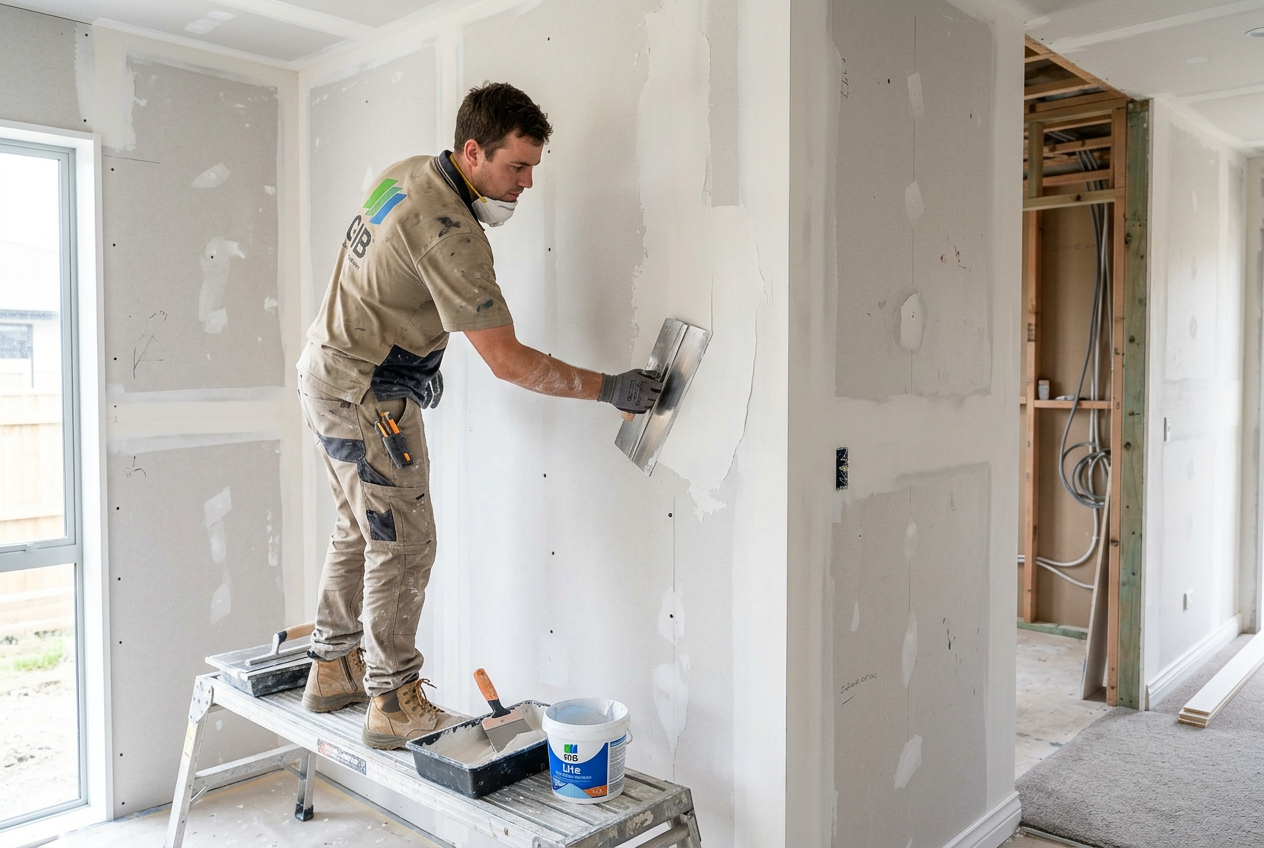
In New Zealand, most professional plasterers will supply their own materials and factor the cost into their quote — but this isn't a hard-and-fast rule. Arrangements vary between tradespeople, project types, and regions, so it always pays to clarify upfront before any work begins.
How It Typically Works
The most common approach is a supply-and-install quote, where the plasterer sources all the materials they need — plasterboard, stopping compounds, mesh tape, bonding agents, and finishing plaster — and includes everything in a single price. This is convenient for homeowners and means the tradesperson takes responsibility for ordering the right products in the right quantities.
However, some plasterers, particularly those working on smaller jobs or day-rate arrangements, may prefer you to supply certain materials yourself. This can sometimes reduce your overall cost if you shop around, but it also puts the responsibility for correct product selection on you.
What Materials Does a Plasterer Typically Use?
Depending on the type of plastering work, your tradesperson may need some or all of the following:
- Plasterboard (GIB board) – The most common interior lining in NZ homes. GIB is the dominant brand, and different thicknesses and types are used for walls, ceilings, wet areas, and fire-rated assemblies.
- Stopping compounds and jointing tape – Used to finish plasterboard seams and screw holes to a smooth, paintable surface.
- Bonding agents and base coats – For solid plastering, texture coats, or repairs to existing plaster.
- Finishing plaster – A fine-coat product applied as the final layer before painting.
- Fibreglass mesh or paper tape – Reinforces joints and repairs.
- Beading and trims – Corner beads and stopping beads for clean edges.
For exterior work, materials such as fibre cement sheet (for example, James Hardie products) or proprietary texture coatings may also be involved.
Supply-and-Install vs. Labour-Only: Pros and Cons
| Arrangement | Pros | Cons |
|---|---|---|
| Plasterer supplies materials | Convenient, plasterer is accountable for product choice, less risk of wrong materials | You have less control over brand selection |
| You supply materials | Potential cost savings, you choose preferred brands | Risk of ordering wrong products or quantities, delays if stock runs out |
| Mixed arrangement | Flexibility for large or staged projects | Requires clear communication to avoid confusion |
Getting a Clear Quote
When you receive a quote, always check whether it is supply-and-install or labour only. A good plasterer will spell this out clearly. If it's not obvious, ask these questions:
- Does this quote include all materials?
- Which brands or products do you typically use?
- If I supply materials, what exactly do I need to provide?
- Are there any materials I should source separately (e.g., specialty products)?
For larger projects — such as a new build or full renovation — the plasterer may be working alongside a builder or main contractor who coordinates material supply. In this case, materials may be ordered through a trade account at suppliers like PlaceMakers or Mitre 10, often at trade pricing that isn't available to the general public.
Can You Save Money by Buying Materials Yourself?
Sometimes, but be cautious. Plasterers often have trade accounts and can purchase materials at a discount. If you buy retail, you may end up paying more than the plasterer would have charged you anyway. You also risk buying the wrong product — for example, using a standard stopping compound in a wet area where a moisture-resistant product is required under the NZ Building Code.
If you do want to supply materials, discuss it with your plasterer first and get their specific product recommendations in writing.
Brand Preferences and Quality
NZ plasterers commonly work with well-known brands. For interior stopping and finishing, GIB system products are widely used and trusted. For paints and primers applied after plastering, brands like Resene, Dulux, and Wattyl are popular choices — though paint is usually supplied separately by the painter, not the plasterer.
For adhesives, waterproofing membranes, and specialty compounds, products from Ardex, Mapei, and Sika are commonly specified, particularly in wet areas like bathrooms.
When to Call a Professional
Plastering is a skilled trade, and poor workmanship is difficult and expensive to fix once paint is applied. While minor crack filling or small patch repairs may be within a confident DIYer's ability, anything involving new linings, fire-rated walls, or wet-area waterproofing should be handled by a qualified plasterer. For work that forms part of a building consent, the Licensed Building Practitioners scheme may require certain work to be carried out or supervised by an LBP.
If you're unsure whether your project needs a building consent, check with your local council — some work is exempt under Schedule 1 of the Building Act, but it's always best to confirm rather than assume.
You can find qualified, local plasterers in your area right here on tradedirectory.co.nz.

 Master Painters NZ member








