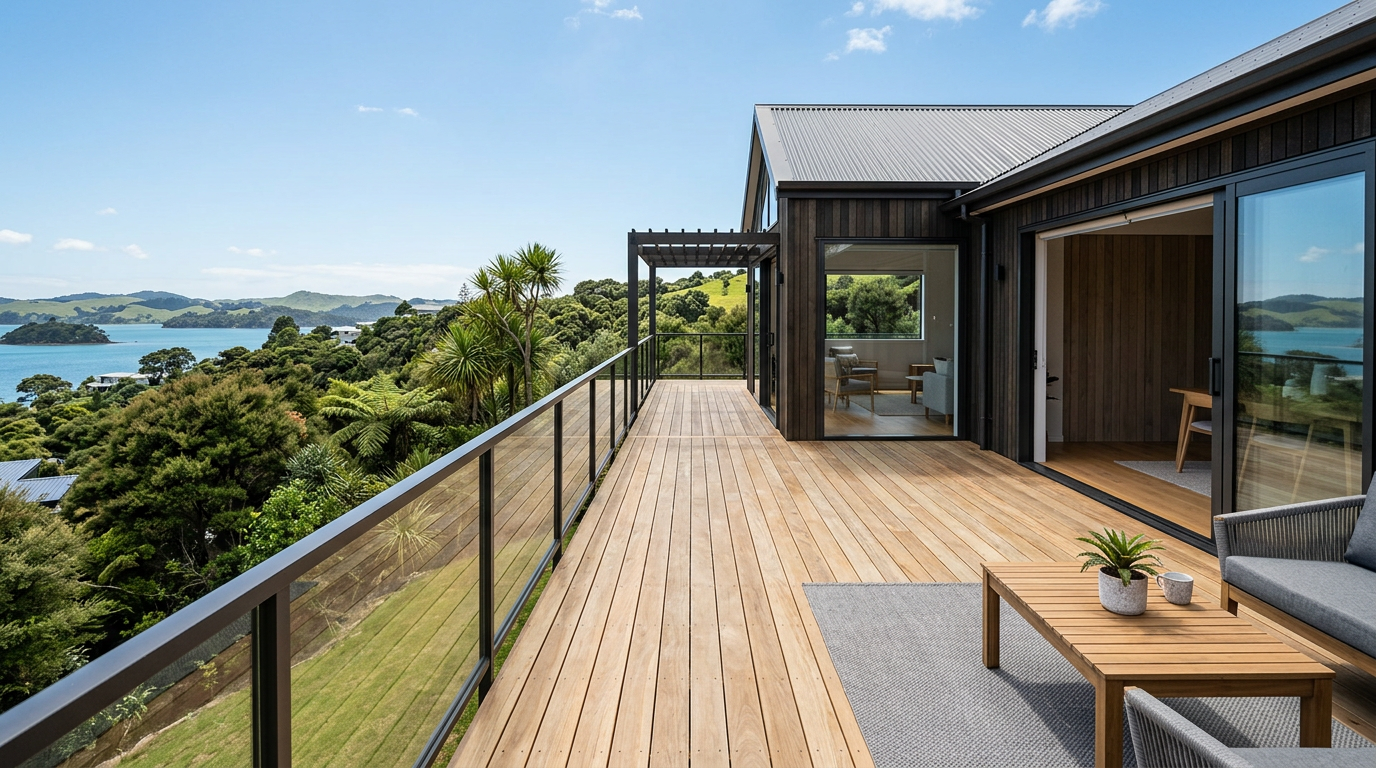
A new deck can absolutely add value to your NZ home — but how much depends on several factors, including the quality of the build, the materials used, and how well it suits your property and local market. Done right, a deck extends your living space outdoors, which is a big selling point in New Zealand's mild climate. Done poorly, it can actually put buyers off or create liability issues at sale time.
How Much Value Can a Deck Add?
There's no single figure that applies to every home, and anyone quoting you an exact percentage return should be treated with caution. As a broad guide, a quality deck that genuinely extends usable living space tends to recover a good portion of its build cost at resale — particularly in warmer regions like Auckland, the Bay of Plenty, and Nelson-Marlborough, where outdoor living is a year-round priority.
What matters most to buyers and valuers is:
- Quality of construction — a structurally sound, well-finished deck signals a well-maintained home
- Integration with the house — decks that flow naturally from indoor living areas add more perceived value
- Size and usability — a deck large enough to entertain on is more appealing than a token platform
- Materials — durable, low-maintenance options like hardwood timber or composite decking are viewed more favourably than ageing treated pine
- Consent status — an unconsented deck can complicate or even derail a sale
Consents and the NZ Building Code
This is where many homeowners come unstuck. In New Zealand, most decks require a building consent from your local council. Under Schedule 1 of the Building Act, some low-level decks may be exempt — generally those no more than 1.5 metres above ground — but the rules have specific conditions and vary by council. Always check with your local council before starting work, rather than assuming your deck qualifies as exempt.
If you sell a home with an unconsented deck, you're legally required to disclose this. Buyers may request a price reduction, demand the deck be removed, or walk away entirely. Lenders and insurers can also raise issues. Getting consent upfront protects your investment and makes the sale process much smoother.
For guidance on the NZ Building Code and consent requirements, MBIE Building Performance is the authoritative source.
Choosing the Right Materials
Material choice affects both the upfront cost and the long-term appeal of your deck.
| Material | Pros | Cons |
|---|---|---|
| Treated pine | Affordable, widely available | Needs regular maintenance, can warp |
| Hardwood (e.g. kwila, vitex) | Durable, attractive | Higher cost, some sustainability concerns |
| Composite decking | Low maintenance, consistent look | Higher upfront cost, can feel less natural |
| Modified timber (e.g. Accoya) | Stable, durable, sustainable | Premium price |
For finishing and protecting timber decks, well-known NZ paint and stain brands like Resene, Dulux, and Wattyl all offer exterior timber coating systems suited to NZ conditions. Regular maintenance — oiling, staining, or painting — keeps a deck looking good and signals to buyers that the property has been cared for.
Design Tips to Maximise Resale Appeal
- Connect to indoor living areas — bi-fold or sliding doors opening onto the deck create a seamless flow that buyers love
- Consider aspect and shade — a north-facing deck gets the most sun in NZ; think about afternoon shade for summer comfort
- Add built-in features carefully — built-in seating or planters can look great but may not suit every buyer's taste; keep it versatile
- Ensure good drainage — decks that pool water or sit too close to the house cladding can cause moisture issues, which will show up in a pre-purchase inspection
- Use appropriate fixings — stainless steel or hot-dipped galvanised fixings are essential in coastal areas to prevent corrosion
For technical guidance on weathertightness and moisture management around decks, BRANZ publishes research and best-practice guidance relevant to NZ conditions.
What Buyers and Valuers Look For
A registered valuer will assess a deck as part of the overall property. They'll consider whether it adds genuine usable space, whether it's consented, and whether it's in good condition. A deck that's rotting, structurally questionable, or unconsented may actually reduce a valuation. Consumer NZ has useful general guidance on home improvements and resale value that's worth reading before you commit to a project.
When to Call a Professional
Deck building involves structural work — posts, bearers, joists, and connections to the house — that must comply with NZS 3604 (Timber-framed buildings) and the NZ Building Code. While a competent DIYer can tackle some aspects, structural work on a deck that requires consent should be carried out or signed off by a Licensed Building Practitioner (LBP). This is especially important if the deck is elevated, attached to the house, or part of a larger project.
You can verify an LBP's licence at Licensed Building Practitioners. Hiring a qualified deck builder also means the work is done to code, which protects you at resale and gives buyers confidence.
If your deck project involves any electrical work — outdoor lighting, power points — this is restricted electrical work and must be carried out by a registered electrician. Check the Electrical Workers Registration Board to verify any electrician you engage.
Find qualified local deck builders in your area on tradedirectory.co.nz.




 Licensed Building Practitioner (LBP)