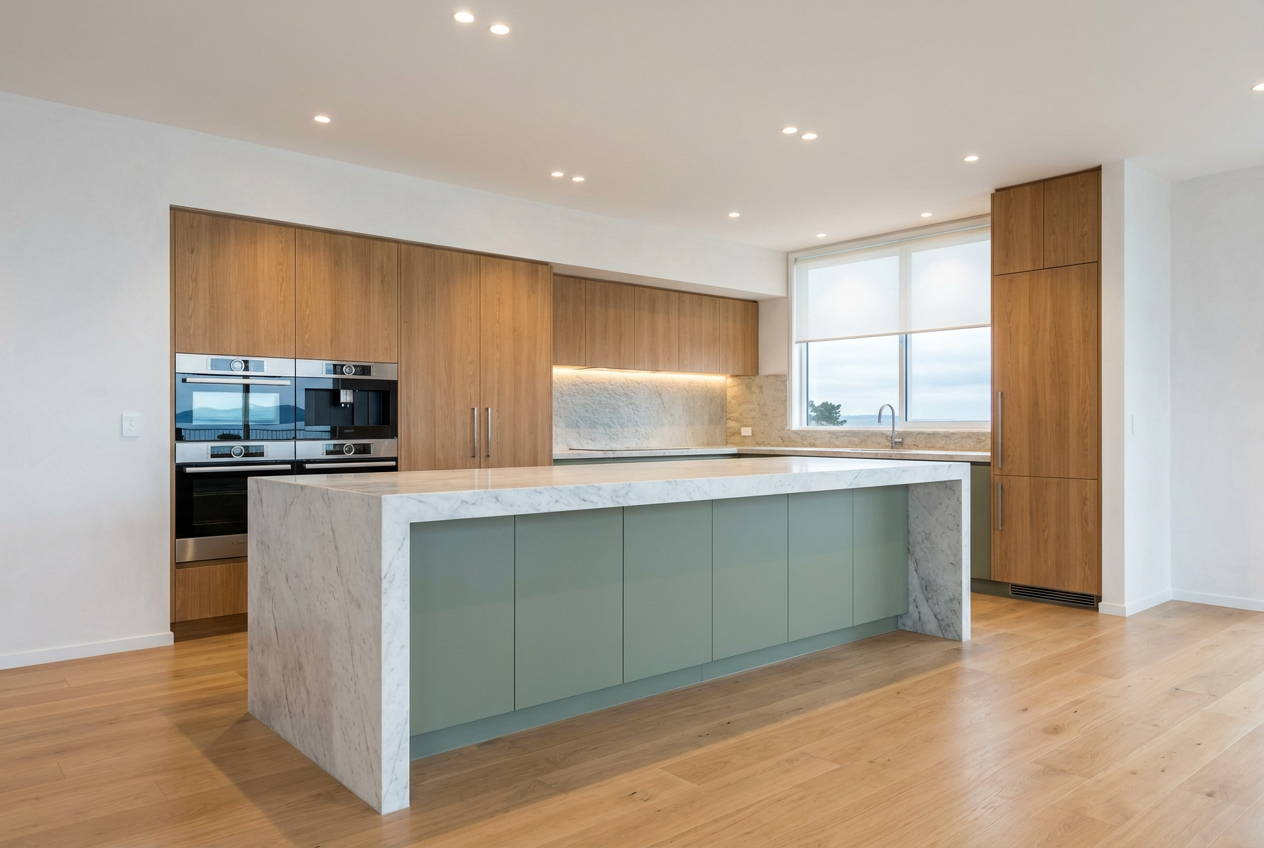
In most cases, your joiner will supply the materials needed for your project — it's the most common arrangement in New Zealand and generally makes the process smoother for everyone. That said, the exact setup depends on the type of job, your budget, and what you agree on before work begins. Understanding how it works helps you avoid surprises and get the best outcome.
How Material Supply Typically Works in NZ Joinery
Most qualified joiners operate on a supply-and-install basis. This means they source the timber, sheet goods, hardware, adhesives, and finishes themselves, then build and install the finished product. This is the standard approach for custom cabinetry, kitchen joinery, wardrobes, doors, windows, and staircases.
There are good reasons joiners prefer this arrangement:
- They know exactly which materials suit the job and will meet quality expectations.
- They have trade accounts with suppliers like PlaceMakers and Mitre 10, often getting better pricing than retail.
- They can guarantee the finished product because they controlled the inputs.
- It simplifies the quoting process — one price covers labour and materials.
When You Might Source Materials Yourself
There are situations where a homeowner supplies some or all materials:
- Specific product preferences — You've already purchased a particular benchtop, door hardware, or appliance and want the joiner to work with it.
- Budget management — You want to shop around for materials independently, though be aware this can complicate the job if specs don't match.
- Salvaged or recycled materials — You're using reclaimed timber or heritage materials for a renovation.
- Flat-pack or pre-made joinery — You've bought flat-pack cabinetry from a retailer like Bunnings and want a tradesperson to assemble and install it.
If you supply materials, be upfront with your joiner from the start. They'll need to assess whether the materials are suitable and may adjust their quote accordingly. Most joiners won't warranty work where they didn't control the material quality.
What to Discuss Before the Job Starts
A clear conversation upfront saves headaches later. Here's what to cover:
| Topic | What to Ask |
|---|---|
| Supply arrangement | Will you supply all materials, or do I source anything? |
| Material specifications | What grade of timber, board, or hardware will you use? |
| Pricing structure | Is the quote fixed-price (supply + labour) or labour-only? |
| Substitutions | What happens if a specified product is unavailable? |
| Waste and offcuts | Who is responsible for disposal? |
| Warranties | What's covered if materials or workmanship fail? |
Get everything agreed in writing before work starts. A written contract or detailed quote protects both parties.
Understanding Material Costs in a Quote
When a joiner supplies materials, those costs are built into the quote. Joiners typically apply a margin on materials — this is standard trade practice and covers their time sourcing, transporting, and managing materials. As a rough guide, material margins in the joinery trade commonly sit somewhere between 10–25%, though this varies by business and job type.
If you're comparing quotes, make sure you're comparing like for like — one quote might include premium hardware while another uses a budget alternative. Ask each joiner to specify the materials included so you can make a fair comparison.
Joinery and the NZ Building Code
For certain joinery work — particularly exterior joinery like windows and doors — the materials used must comply with the NZ Building Code, specifically clauses relating to weathertightness (Clause E2) and durability. This is another reason why letting your joiner source compliant materials is usually the safer option.
If your project requires a building consent, your council will want to see that specified materials and methods meet code requirements. Always check with your local council whether consent is needed before work begins — don't assume it's exempt. You can find general guidance on consents and Schedule 1 exemptions at MBIE Building Performance.
For structural joinery work, your joiner may need to be a Licensed Building Practitioner (LBP) — check this before engaging anyone for restricted building work.
Choosing Finishes and Colours
If your joinery will be painted or stained, your joiner may apply a primer or undercoat in the workshop, with you choosing the topcoat colour separately. Popular NZ paint brands like Resene and Dulux are widely used for interior joinery finishes. Discuss the finishing plan early — some joiners include finishing in their scope, others hand over primed joinery for you to paint.
When to Call a Professional
Joinery is a skilled trade. While some flat-pack assembly is DIY-friendly, custom joinery — especially anything structural, exterior, or requiring building consent — should always be handled by a qualified joiner. For work that forms part of the building structure or weathertight envelope, you may legally need a Licensed Building Practitioner. Check the LBP register to verify your tradesperson's licence.
You can find qualified local joiners in your area through tradedirectory.co.nz.