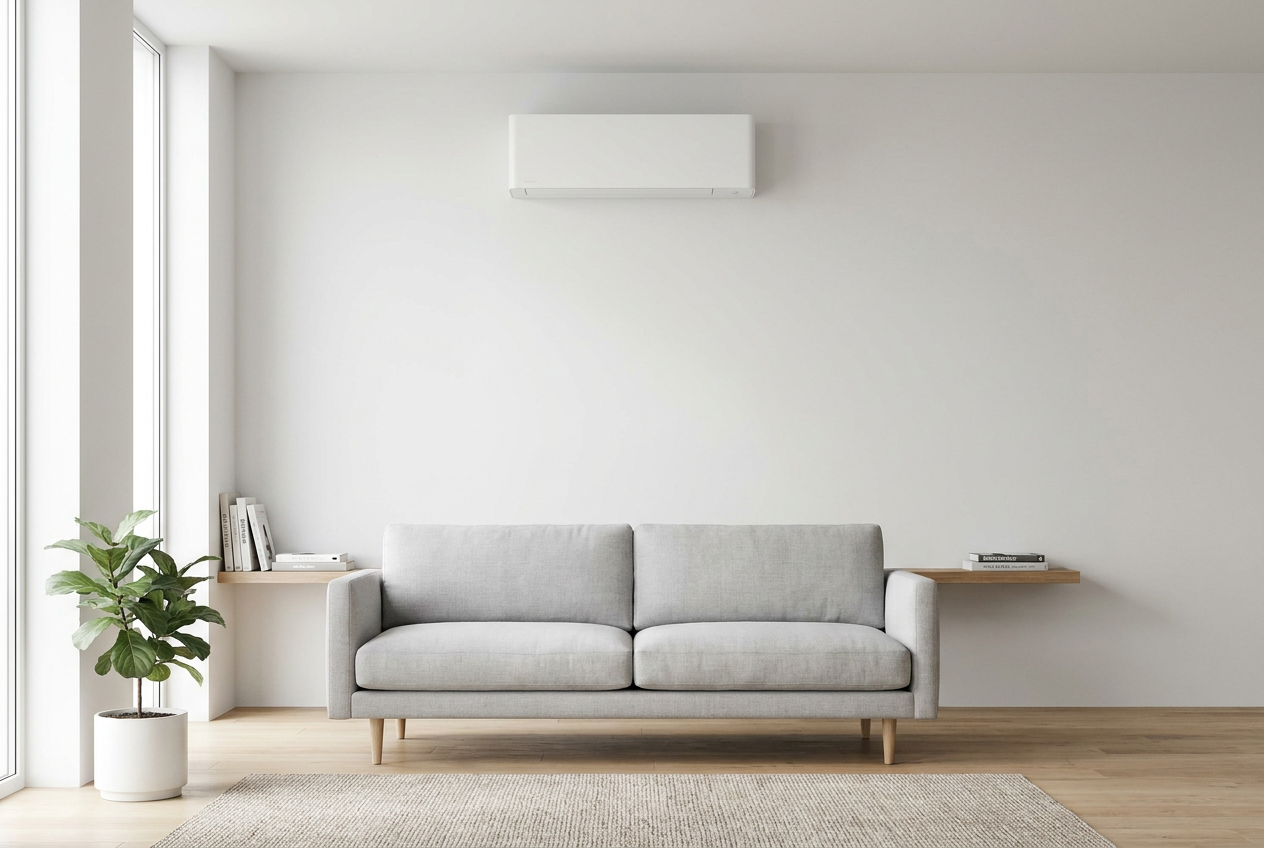
Yes, a reputable heat pump installer will always discuss and recommend the best position for your unit before starting work. Getting the placement right is one of the most important factors in how well your heat pump performs, how efficient it is, and how long it lasts — so any good installer will take the time to walk through your home and talk through the options with you.
What Does a Site Assessment Involve?
Before recommending a position, an experienced installer will look at several things:
- Room size and layout — to make sure the unit can heat or cool the space effectively
- Ceiling height — higher ceilings affect airflow and the unit's reach
- Insulation levels — a well-insulated room needs less capacity, which can influence unit size and placement
- Window and door positions — draughts and heat loss affect where the indoor unit should be aimed
- Existing wiring and power supply — the location of your switchboard and available circuits can influence where the unit is practically installed
- Wall construction — timber framing, concrete, or brick affects how and where the refrigerant pipe can be run
- Sun exposure — a south-facing outdoor unit in a shaded spot may struggle in winter; a north-facing wall is often preferred
A thorough assessment usually takes 20–30 minutes and should happen before any quote is finalised.
Indoor Unit Positioning: Key Considerations
The indoor (wall-mounted) unit is typically installed high on an interior or exterior wall. Your installer will consider:
- Airflow direction — the unit should be able to distribute air across the whole room without being blocked by furniture, curtains, or beams
- Distance from corners — units placed too close to a corner can create uneven heating
- Avoiding direct sunlight — sunlight hitting the unit's sensor can cause it to misread room temperature
- Proximity to the outdoor unit — shorter refrigerant pipe runs are more efficient and less expensive to install
- Noise — placing the unit above a bed or directly over a seating area can be disruptive; your installer should flag this
Outdoor Unit Positioning: What Matters
The outdoor (compressor) unit needs careful placement too:
- It must have clear airflow around it — at least 300–500 mm clearance from walls or fences is typical, though always follow the manufacturer's specifications
- It should be kept away from areas where it might be submerged in water or blocked by snow (in alpine areas)
- Noise is a real consideration — placing it directly outside a bedroom window or a neighbour's boundary can cause problems
- NZ Building Code requirements and local council rules may apply to where the outdoor unit can be placed, particularly near boundaries. Always check with your local council if you're unsure
- Some installations require a building consent, though many standard residential heat pump installations fall under Schedule 1 exemptions — your installer should be able to advise, but confirm with your council
Electrical Work and Restricted Trades
Heat pump installation involves restricted electrical work. In New Zealand, all electrical connections must be carried out by a registered electrician or a licensed heat pump installer who holds the appropriate electrical registration. This is governed by the Electrical Workers Registration Board (EWRB).
As a homeowner, you cannot legally connect the unit to your home's wiring yourself. Always ask your installer for a Certificate of Compliance (CoC) once the job is done — this is your proof the electrical work was done correctly and to code.
Safety note: Never attempt to connect or modify the electrical supply to a heat pump yourself. Incorrect wiring is a serious fire and electrocution risk.
How Placement Affects Efficiency
A poorly positioned heat pump can cost you significantly more to run over its lifetime. BRANZ and Energywise both highlight that correct sizing and placement are critical to getting the most from your investment. A unit that has to work harder because it's poorly positioned will use more electricity and wear out faster.
For guidance on energy-efficient heating choices, Energywise is a great NZ government resource.
Questions to Ask Your Installer
Before work begins, it's worth asking:
- Why are you recommending this position over alternatives?
- Will the outdoor unit comply with my council's boundary setback rules?
- How will the refrigerant pipe be routed, and will it be visible?
- What size unit do you recommend, and why?
- Will I receive a Certificate of Compliance after installation?
When to Call a Professional
All heat pump installation work — including positioning, mounting, refrigerant handling, and electrical connection — should be carried out by a qualified professional. Refrigerant handling in particular requires a certified refrigeration technician under NZ regulations. You can find qualified, local heat pump installers on tradedirectory.co.nz to get multiple quotes and compare recommendations.
For any questions about whether your installation needs a building consent, contact your local council or visit MBIE Building Performance.



 ISO 9001






