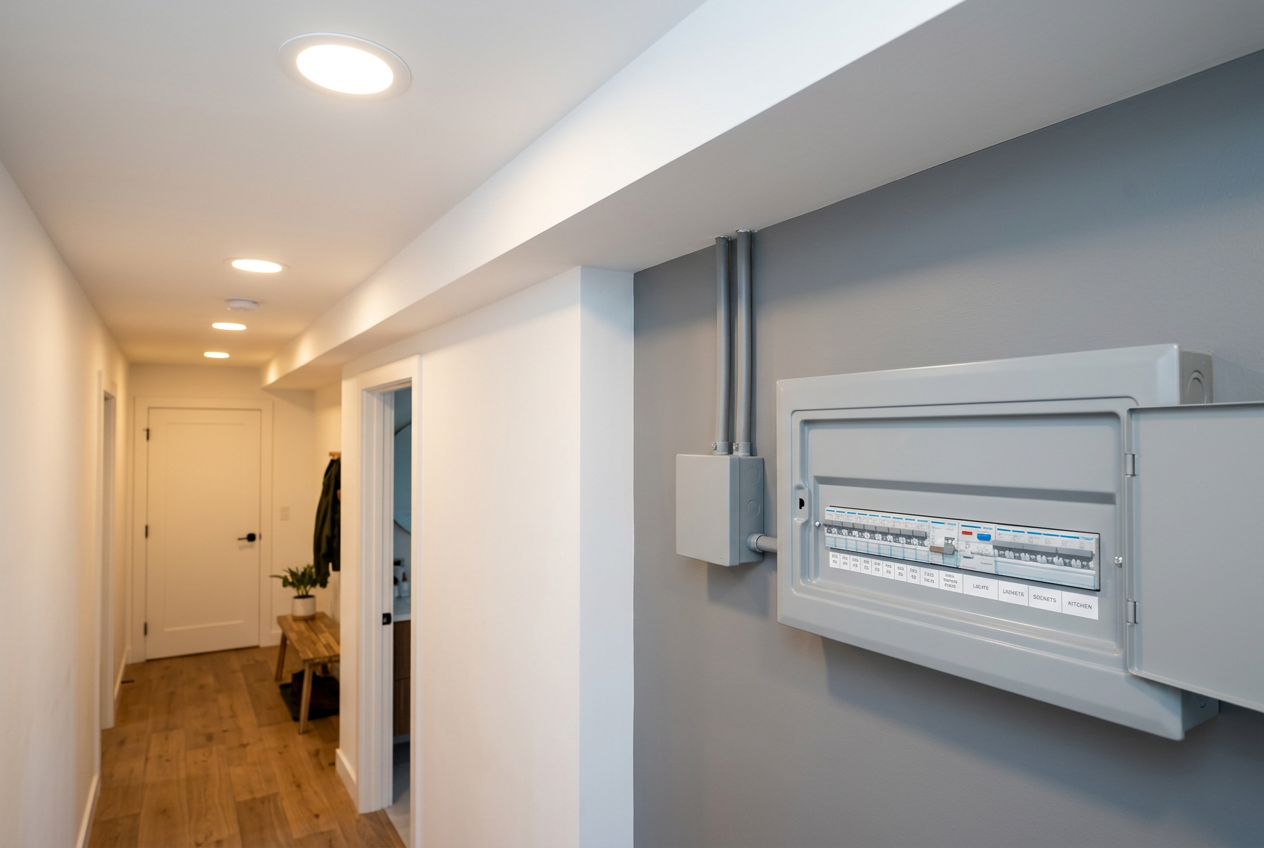
A tripping circuit breaker or RCD is one of the most common electrical complaints in New Zealand homes — and while it can be alarming, it is usually your switchboard doing exactly what it is designed to do: protecting you and your home from electrical faults. Understanding why it keeps happening, and knowing when to act, can save you time, money, and stress.
How Your Switchboard Protects You
Modern NZ homes have a switchboard (also called a fuse board or consumer unit) containing two key types of protective devices:
- Circuit breakers (MCBs) — trip when a circuit is overloaded or short-circuited, cutting power to that circuit.
- Residual current devices (RCDs), sometimes called safety switches — trip almost instantly when they detect electricity leaking to earth, which could indicate a fault or a person receiving a shock.
Older homes may still have ceramic fuse holders with rewirable fuse wire, which offer less protection and are a sign your switchboard may need upgrading. If your home has these, it is worth having a licensed electrician assess the board.
Common Causes of Tripping Power in NZ Homes
The existing causes — age and wear, weather exposure, poor original installation, lack of maintenance, and moisture — are all very real contributors. Here is how each plays out in a typical NZ context:
1. Overloaded Circuits
Plugging too many high-draw appliances (heaters, kettles, hair dryers) into the same circuit is the most frequent cause of a tripping MCB. NZ homes, particularly older villas and bungalows, were often wired with fewer circuits than modern living demands.
2. Faulty or Ageing Appliances
A single faulty appliance — a washing machine with a failing motor, a dishwasher with a leaking element, or an old electric blanket — can cause an RCD to trip every time it is switched on. Test this by unplugging all appliances on the affected circuit, resetting the breaker, and plugging them back in one at a time.
3. Moisture and Water Ingress
New Zealand's climate is notoriously variable — coastal salt air in Auckland and the Bay of Plenty, high rainfall in the West Coast and Northland, and freeze-thaw cycles in the South Island. Moisture inside light fittings, outdoor power points, or wall cavities can cause persistent RCD tripping. This is directly related to NZ Building Code clause E2 (external moisture) and E3 (internal moisture/wet areas) — both of which set standards for keeping water out of building elements, including those housing electrical wiring.
4. Age and Wear of Wiring
Insulation on older wiring (particularly rubber-insulated wiring found in pre-1970s homes) degrades over time, becoming brittle and cracking. This can cause intermittent faults that are hard to trace without professional testing equipment. Deteriorated wiring is a fire risk as well as a tripping hazard.
5. Poor Original Installation or Workmanship
If your home has had DIY electrical work done in the past — which is illegal in NZ for most tasks — connections may be loose, undersized cable may have been used, or circuits may not be correctly protected. Poor workmanship is a common root cause of recurring faults.
6. High-UV and Weather Exposure
New Zealand has some of the highest UV levels in the world. Outdoor wiring, conduit, and fittings exposed to direct sun can degrade faster than in many other countries, leading to cracked insulation and moisture entry points.
7. Earth Leakage from Appliances or Fixed Wiring
Some appliances — particularly older ones — have a small but measurable earth leakage current. If several such appliances are on the same RCD-protected circuit, their combined leakage can be enough to trip the device, even though no single appliance is technically faulty.
What You Can Safely Check Yourself
As a homeowner, there are a few safe, non-invasive steps you can take before calling a professional:
| Step | What to do | What it tells you |
|---|---|---|
| 1 | Note which breaker or RCD has tripped | Identifies the affected circuit |
| 2 | Unplug all appliances on that circuit | Rules out faulty appliances |
| 3 | Reset the breaker and plug appliances back in one at a time | Isolates the faulty appliance |
| 4 | Check for obvious moisture (wet outdoor socket, damp light fitting) | Points to moisture ingress |
| 5 | Note if tripping happens at a specific time of day | May indicate a heating element or timed appliance |
Do not open your switchboard, touch wiring, or attempt to bypass any protective device. This is both dangerous and illegal in New Zealand.
What Is Restricted Electrical Work in NZ?
Under the Electricity Act 1992 and associated regulations, almost all electrical wiring work in NZ is restricted work that must be carried out by — or under the supervision of — a registered electrician. This includes:
- Installing, altering, or repairing wiring, switchboards, or fixed appliances
- Adding new circuits or power points
- Replacing light fittings that involve wiring connections
The Electrical Workers Registration Board (EWRB) maintains the register of licensed practitioners. You can verify a tradesperson's registration at ewrb.govt.nz. Unlicensed electrical work is illegal, voids your home insurance, and can be fatal.
What homeowners can do without a licence includes replacing a like-for-like plug on an appliance cord, changing a light bulb, and resetting a tripped breaker — but nothing involving fixed wiring.
When to Call a Professional
If the problem is widespread, recurring, or you cannot identify a faulty appliance as the cause, it is time to call a licensed electrician. In particular, call one promptly if:
- The breaker trips again immediately after being reset with nothing plugged in — this suggests a wiring fault, not an appliance.
- Multiple circuits or the whole board are tripping.
- You smell burning near the switchboard or any outlet.
- Lights flicker or you notice scorch marks around sockets or switches.
- Your home is older than 30–40 years and has never had a wiring inspection.
- Moisture or water has entered a fitting or the switchboard.
- You are about to sell or rent your home — landlords must comply with the Healthy Homes Standards and electrical safety is part of a landlord's obligations.
A qualified electrician will use insulation resistance testing and other diagnostic tools to pinpoint faults quickly and safely. They will also issue the required Certificate of Compliance (CoC) for any restricted work completed.
Prevention and Maintenance
Regular maintenance is the best way to prevent recurring tripping issues. Include these in your seasonal home maintenance checklist:
- Test your RCDs every three months — there is usually a small test button on the device. Press it, confirm it trips, then reset. If it does not trip or will not reset, call an electrician.
- Have your switchboard inspected every 10 years, or sooner if your home is older or you are adding high-draw appliances like EV chargers or heat pumps.
- Check outdoor fittings after heavy rain or storms for signs of moisture entry.
- Replace ageing appliances — particularly those with heating elements — before they develop faults.
- Avoid daisy-chaining power boards or overloading single circuits with multiple heaters.
For rental properties, WorkSafe NZ provides guidance on electrical safety obligations for landlords and property managers.
Finding the Right Electrician
When choosing an electrician, always:
- Verify their EWRB registration before work begins.
- Ask for a written quote and scope of work.
- Confirm they will issue a Certificate of Compliance on completion.
- Check reviews and ask for references for larger jobs.
You can find qualified, local electricians on tradedirectory.co.nz — a straightforward way to connect with vetted tradespeople in your area.
Sources & Further Reading
- Electrical Workers Registration Board (EWRB) — verify your electrician's licence
- MBIE Building Performance — NZ Building Code guidance
- WorkSafe NZ — electrical safety in the home and workplace
- Tenancy Services — Healthy Homes Standards for rental properties
- BRANZ — building research and technical guidance for NZ homes

 Site Safe
 Licensed Electrical Inspector







