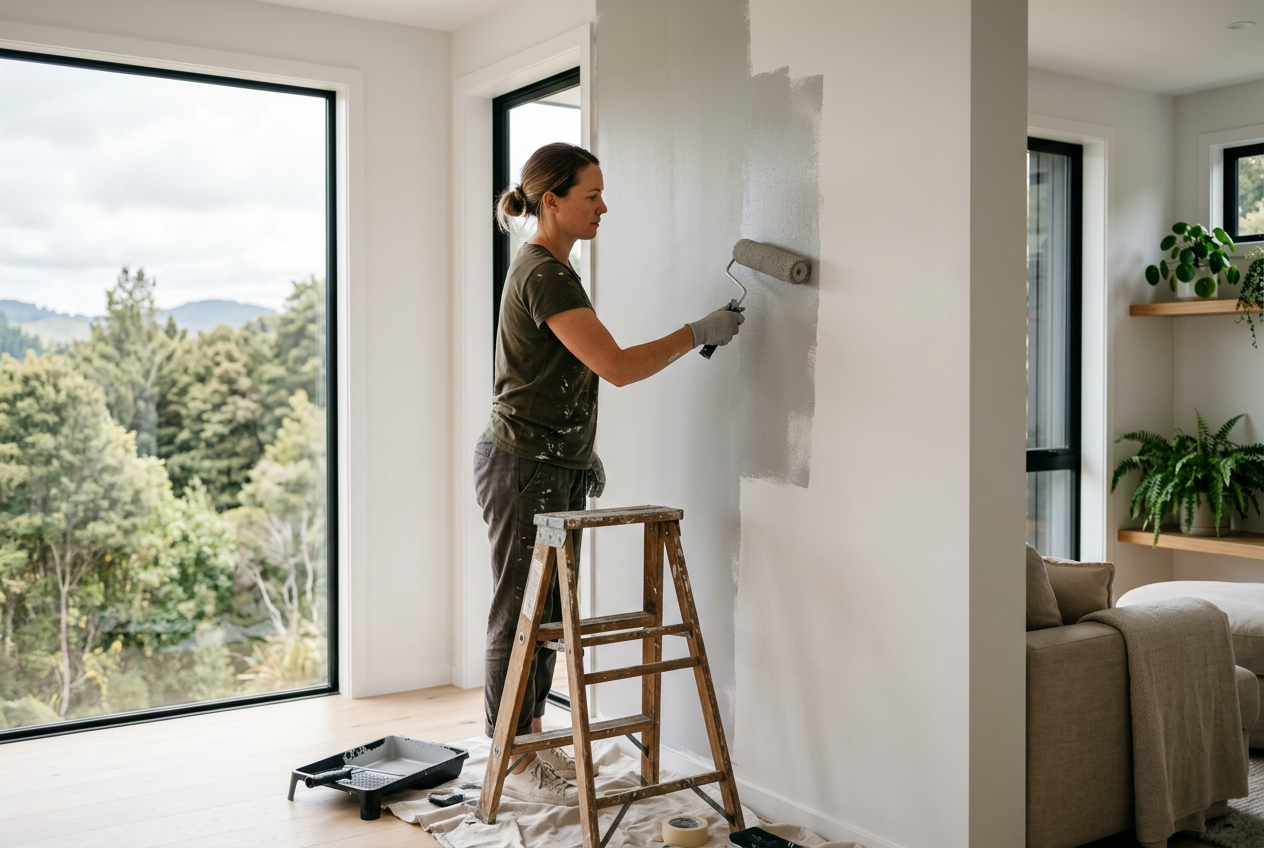
Peeling paint is one of the most frustrating problems NZ homeowners face — and it's far more common than you might think. Our climate, from the high-UV summers in the north to the cold, damp winters in the south, puts enormous stress on painted surfaces. Understanding why your paint is peeling is the key to fixing it properly and stopping it from coming back.
Common Causes of Peeling Paint in NZ
The existing causes — age and wear, weather exposure, poor original workmanship, lack of maintenance, and moisture — are all genuine culprits, but each works differently. Here's a closer look:
1. Moisture and Dampness
Moisture is the number-one cause of peeling paint in New Zealand homes. Water can get behind paint films in several ways:
- Rising damp from concrete floors or foundations without adequate DPC (damp-proof course)
- Condensation on cold walls and ceilings, especially in bathrooms, kitchens, and poorly ventilated bedrooms
- Roof or plumbing leaks that saturate wall linings from behind
- Wind-driven rain penetrating weatherboards, window joinery, or cladding joints
When moisture is trapped behind a paint film, the film loses adhesion and lifts — often in large sheets or bubbles. NZ's Building Code clause E2 (External Moisture) exists specifically because moisture management is so critical in our climate.
2. Age and Natural Wear
All paint films have a finite lifespan. Exterior paints in NZ are typically expected to last 8–15 years depending on the product quality, substrate, and exposure. High-UV regions (Northland, Nelson, Marlborough) and coastal areas with salt-laden air accelerate degradation significantly. As the binder in the paint breaks down, the film becomes brittle, chalky, and prone to cracking and peeling.
3. Poor Surface Preparation
This is the most common cause of premature peeling — paint applied over:
- Dirty, dusty, or oily surfaces
- Glossy surfaces that weren't sanded or primed
- Damp or wet substrates
- Old, chalky, or flaking paint that wasn't fully removed
Paint is only as good as what it's bonded to. Skipping prep steps is a false economy that always shows up later.
4. Incompatible Paint Systems
Applying water-based (acrylic) paint over oil-based paint without proper preparation is a classic cause of peeling. The two systems have different flexibility and adhesion characteristics. Similarly, using an interior paint outdoors, or a low-quality paint in a high-exposure area, will lead to early failure.
5. Lack of Primer
Primer is not optional — it seals the substrate, improves adhesion, and evens out porosity. Bare timber, new plasterboard, and repaired areas all need the correct primer before topcoats are applied.
6. New Zealand's Harsh Climate
NZ's climate is genuinely demanding on paint:
- High UV index breaks down paint binders faster than in many other countries
- Coastal salt air accelerates corrosion on metal substrates and degrades paint films
- Freeze-thaw cycles in alpine and southern regions cause substrates to expand and contract, stressing the paint film
- High rainfall in the west and south keeps surfaces wet for extended periods
How to Assess the Severity
Before deciding on a course of action, assess how widespread the peeling is:
| Severity | Description | Suggested Action |
|---|---|---|
| Minor | Small patches, isolated areas | DIY prep and repaint |
| Moderate | Multiple areas, some bubbling | Investigate moisture source; consider a professional |
| Severe | Large sheets lifting, recurring after repainting | Professional assessment essential |
| Structural concern | Soft or rotten substrate beneath | Licensed tradesperson required urgently |
Step-by-Step: What to Do About Peeling Paint
Step 1 — Find and Fix the Root Cause
Repainting over peeling paint without fixing the underlying cause is a waste of time and money. Check for:
- Leaking gutters, downpipes, or roof flashings
- Blocked or missing subfloor ventilation
- Bathroom or kitchen extractor fans that vent into the ceiling cavity rather than outside
- Cracked or open caulking around windows and doors
Step 2 — Remove All Loose and Peeling Paint
Use a paint scraper, wire brush, or oscillating multi-tool to remove all loose material back to a firm edge. Feather the edges with sandpaper so there's no sharp lip. For large areas, a heat gun can soften old paint for easier removal — use with care near glass and always follow WorkSafe NZ guidelines for working with older paints that may contain lead (common in homes built before 1980).
Lead paint warning: If your home was built before 1980, assume the existing paint may contain lead. Do not sand or dry-scrape without appropriate respiratory protection and containment. Consider having a professional handle removal.
Step 3 — Repair the Substrate
Fill cracks and holes with an appropriate filler. For exterior timber, use a flexible exterior-grade filler. For plasterboard, use a setting-type or ready-mixed compound. Allow to dry fully.
Step 4 — Prime
Apply the correct primer for your substrate and the topcoat you're using. Brands like Resene, Dulux, and Wattyl all offer substrate-specific primers and have technical helplines to guide your product selection.
Step 5 — Apply Quality Topcoats
Use a quality exterior or interior paint rated for your conditions. In coastal or high-UV areas, choose products specifically formulated for those environments. Apply the number of coats recommended on the tin — usually two.
DIY vs. Hiring a Professional Painter
Small, accessible areas with a clear cause are reasonable DIY projects for a competent homeowner. However, consider hiring a qualified professional painter if:
- The peeling is widespread or recurring
- You suspect a moisture or structural issue
- The work involves heights (scaffolding, multi-storey)
- Lead paint may be present
- You want a result that will last and potentially be covered by a paint manufacturer's warranty
A professional painter will also be able to identify whether the problem is a painting issue or a building defect that needs a builder, plumber, or roofer first. You can find qualified local painters on tradedirectory.co.nz.
Consent and Compliance Considerations
Repainting your home generally does not require a building consent. However, if peeling paint has revealed underlying damage — rotted framing, damaged cladding, or moisture ingress through the building envelope — repairs to those elements may require consent depending on scope. Always check with your local council. The MBIE Building Performance website has clear guidance on Schedule 1 exemptions.
For rental properties, landlords should also be aware that the Healthy Homes Standards require adequate ventilation and moisture control — both of which directly affect paint performance.
Prevention: Keeping Paint in Good Condition
- Inspect annually — walk around your home each spring and autumn looking for cracks, peeling, or discolouration
- Clean surfaces — mould and mildew accelerate paint breakdown; wash affected areas with an appropriate cleaner before they take hold
- Maintain caulking and sealants — reapply around windows, doors, and penetrations as needed
- Ensure good ventilation — particularly in bathrooms, kitchens, and subfloor spaces
- Touch up promptly — a small area of peeling caught early is a minor job; left alone, it becomes a major one
When to Call a Professional
If the problem is widespread, recurring after previous repaints, or if you find soft, rotten, or damaged substrate beneath the peeling paint, it is time to call a professional. A qualified painter or builder can diagnose the root cause — whether it's a painting issue, a moisture problem, or a structural defect — and recommend the right solution. Don't keep repainting over a problem that needs a proper fix first.

 BCITO Qualified

 Master Painters NZ
 Site Safe