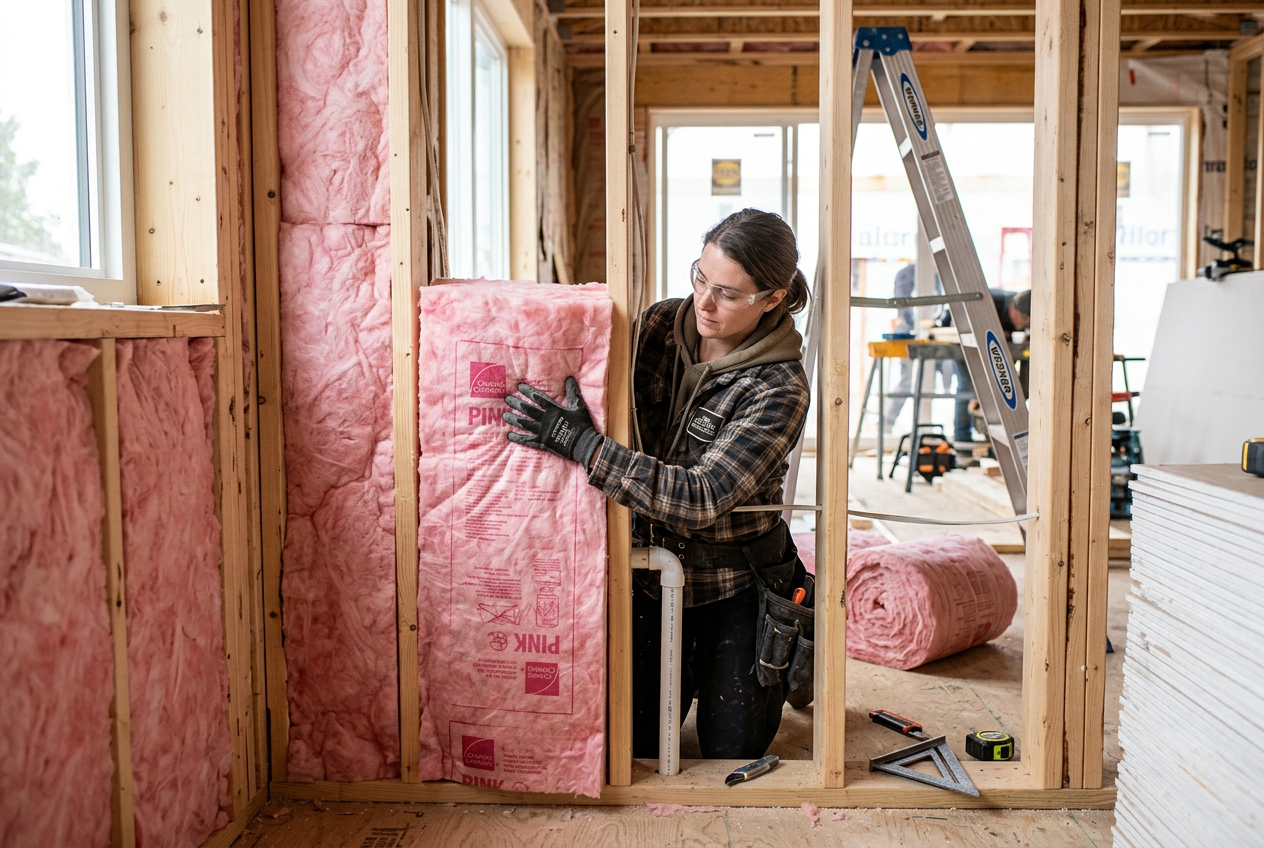
You've got insulation — so why are you still reaching for another blanket? It's a frustratingly common problem in New Zealand homes, and the good news is there's almost always a fixable reason. Insulation is only one part of a warm, energy-efficient home, and if other pieces of the puzzle are missing or the insulation itself has issues, you'll keep losing heat no matter how much you've spent.
Common Reasons an Insulated Home Stays Cold
Before assuming your insulation is faulty, it helps to understand that heat escapes through multiple pathways. Even well-installed insulation can be undermined by:
- Air leakage (draughts): Gaps around windows, doors, skirting boards, recessed lights, and penetrations let cold air flood in and warm air escape. Insulation slows heat transfer through materials — it does not stop air movement.
- Insufficient R-value: Older insulation or insulation installed to outdated standards may simply not be thick enough. BRANZ research shows many NZ homes built before 2000 have sub-standard insulation levels.
- Damaged or degraded insulation: Batts that have been wet, compressed, or disturbed by rodents lose much of their effectiveness.
- Gaps and voids in coverage: Insulation that doesn't fully cover the ceiling, walls, or underfloor — even small gaps — can account for a disproportionate amount of heat loss.
- Thermal bridging: Timber framing, steel elements, and concrete floors conduct cold directly into the living space, bypassing insulation entirely.
- No underfloor insulation: In many NZ homes, the floor is the biggest source of heat loss, especially in older villas and bungalows on piles.
- Condensation and moisture: Damp insulation performs poorly. If your subfloor is wet or your ceiling space has a leak, insulation effectiveness drops significantly.
- Inadequate heating: Sometimes the insulation is fine, but the heating system is undersized or inefficient for the space.
How to Diagnose the Problem Step by Step
1. Check Your Insulation's Age and R-Value
Find out when your insulation was installed and what R-value it was rated at. Current MBIE Building Performance guidelines recommend R-values of R6.6 in ceilings, R2.8 in underfloor, and R2.0 in walls for most NZ climate zones (higher for colder South Island regions). Anything significantly below these figures is likely contributing to your cold home.
2. Do a Visual Inspection
- Ceiling space: If you can safely access your ceiling cavity, look for gaps between batts, batts that have fallen or been pushed aside, and any signs of moisture or pest damage.
- Underfloor: With a torch, check that underfloor batts are still held up firmly and haven't sagged or fallen. Look for standing water or a damp ground surface.
- Walls: Wall insulation is harder to inspect without opening linings, but an infrared thermometer or thermal imaging camera (available to hire) can reveal cold spots.
3. Test for Draughts
On a cold, windy day, hold a lit incense stick or a damp hand near window frames, door edges, skirting boards, power points on external walls, and ceiling light fittings. Any flicker or chill indicates air infiltration.
4. Check for Moisture
Lift a corner of underfloor insulation if accessible. If it feels damp or smells musty, moisture is compromising performance. Check your subfloor for adequate ventilation and a ground vapour barrier.
5. Consider Thermal Bridging and Glass
Single-glazed windows and uninsulated concrete floors or slabs can radiate cold regardless of your insulation. These are separate issues that need separate solutions (double glazing, underfloor heating, or rugs over concrete).
What You Can Safely Fix Yourself
Some improvements are well within a capable homeowner's reach:
- Draught-stopping: Apply self-adhesive foam tape to window and door frames, install door sweeps, and use draught excluders. Products are available at Bunnings or Mitre 10.
- Replacing fallen underfloor batts: If you can safely access the subfloor and the batts are simply sagging, you can refit them using insulation support rods or wire. Wear a dust mask and gloves.
- Adding a ground vapour barrier: A polythene sheet laid over bare earth in the subfloor dramatically reduces moisture and cold rising from the ground.
- Topping up ceiling insulation: Loose-fill or batt top-up in an accessible ceiling space is a DIY-friendly job. Make sure you don't block eave ventilation.
- Sealing penetrations: Use appropriate sealant (such as products from Sika) around pipe and cable penetrations in ceilings and walls.
Safety note: Never walk on ceiling joists without a board to spread your weight, and always switch off power before working near ceiling light fittings. Recessed (downlight) fittings require a specific fire-rated insulation cover — do not cover standard downlights with insulation as this is a fire hazard.
What Requires a Professional
Some insulation and building work is best — or legally required — to be done by a qualified tradesperson:
- Wall insulation installation typically requires opening linings or using specialist injection/blown equipment.
- Full insulation replacement or upgrade in ceiling or underfloor is best assessed and quoted by a licensed insulation installer.
- Any electrical work — including installing insulation covers over downlights or moving wiring — must be carried out by a registered electrician under the Electrical Workers Registration Board (EWRB) rules. This is restricted work under NZ law.
- Plumbing or drainage issues causing subfloor moisture must be fixed by a licensed plumber or drainlayer registered with the Plumbers, Gasfitters and Drainlayers Board (PGDB).
- Thermal imaging assessment: A professional energy assessor with an infrared camera can pinpoint exactly where your home is losing heat.
If your home is a rental, landlords have legal obligations under the Tenancy Services Healthy Homes Standards to provide ceiling and underfloor insulation that meets minimum R-value requirements.
How to Prevent It Recurring
| Action | Benefit | DIY or Pro? |
|---|---|---|
| Annual subfloor check | Catch moisture and fallen batts early | DIY |
| Seal new penetrations promptly | Prevents draught pathways | DIY |
| Upgrade to double glazing | Reduces radiant cold from windows | Pro |
| Install a ground vapour barrier | Reduces subfloor moisture | DIY/Pro |
| Top up ceiling insulation every 15–20 years | Maintains R-value as batts settle | Pro recommended |
| Use a heat pump sized for your space | Efficient heating complements insulation | Pro |
For ongoing energy efficiency advice, Energywise has excellent free resources tailored to NZ homes and climates.
When to Call a Professional
If you've checked the obvious causes and your home is still cold, it's time to bring in an expert. A qualified insulation installer can assess your entire thermal envelope, recommend the right R-values for your climate zone, and ensure installation meets the NZ Building Code. You can find licensed insulation installers and other building tradespeople on tradedirectory.co.nz — always ask for references and confirm they hold relevant qualifications or Licensed Building Practitioner (LBP) status where applicable.
Don't keep paying to heat a leaky, under-insulated home. A professional assessment often pays for itself quickly in reduced power bills.