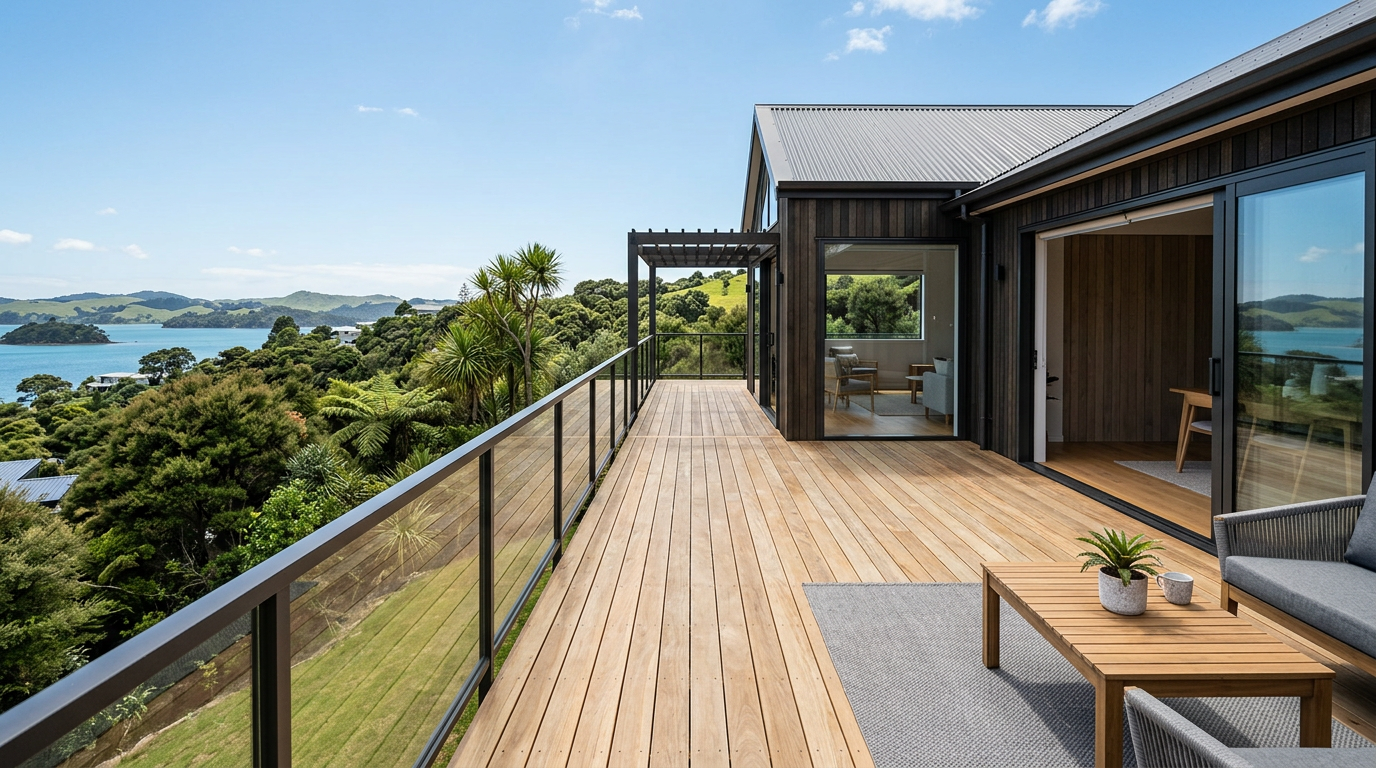
Deck rot is one of the most common — and frustrating — problems facing NZ homeowners. Our climate, from the humid north to the wet and windy south, creates ideal conditions for timber decay, and a rotting deck can quickly go from a cosmetic eyesore to a genuine structural safety hazard. Understanding why it happens and what to do about it can save you significant time, money, and stress.
What Is Deck Rot and Why Does It Matter?
Deck rot is the breakdown of timber fibres caused by fungi that thrive in damp, poorly ventilated conditions. There are two main types:
- Brown rot — breaks down the cellulose in wood, leaving it dark, crumbly, and cube-like in appearance.
- White rot — attacks both cellulose and lignin, leaving timber soft, spongy, and pale.
Both types weaken timber structurally. A deck that looks surface-worn may actually have deeply compromised joists, bearers, or posts underneath — making it unsafe to walk on, let alone entertain on. Under the NZ Building Code, structural elements like decks must meet B1 (Structure) and B2 (Durability) requirements, meaning they must remain fit for purpose over their intended lifespan.
Common Causes of Deck Rot in NZ
Age and Wear
Materials deteriorate over time. Even well-built decks have a finite lifespan, and older decks — particularly those built before treated timber standards improved — are especially vulnerable.
Weather Exposure
New Zealand's climate can be harsh. Coastal areas face salt-laden air and high humidity. The upper North Island experiences prolonged warmth and moisture that accelerates fungal growth. The South Island's freeze-thaw cycles crack timber surfaces, letting water in. High UV exposure across the country degrades surface coatings, leaving bare timber exposed to rain.
Poor Original Installation or Workmanship
Many rotting decks trace back to how they were built. Common installation faults include:
- Timber installed with insufficient clearance from soil or concrete (moisture wicks up).
- Inadequate or missing flashing where the deck meets the house, allowing water to penetrate the wall framing — a direct E2 (External Moisture) compliance issue.
- Flat or reverse-fall decking boards that pool water rather than shedding it.
- Fasteners that crack or split boards, creating entry points for moisture.
- Using untreated or under-treated timber in exposed or ground-contact situations.
Lack of Maintenance Over the Years
Regular maintenance is the best way to prevent deck rot. Coatings — stains, oils, and sealers — are the first line of defence. Once they fail and bare timber is exposed to repeated wetting and drying cycles, rot fungi can establish quickly. Blocked drainage, leaf litter sitting on boards, and debris trapped between boards all hold moisture against the timber.
Moisture-Related Issues
Moisture is the root cause of virtually all deck rot. Sources include:
- Direct rainfall pooling on flat or poorly drained surfaces.
- Rising damp from soil or concrete too close to timber members.
- Condensation under covered decks with poor airflow.
- Leaking gutters or downpipes directing water onto or under the deck.
- Irrigation systems regularly wetting deck framing.
How to Assess the Severity
Before deciding on a course of action, assess the extent of the damage:
- Probe the timber with a screwdriver or bradawl. Sound timber resists penetration; rotted timber is soft and the tool sinks in easily.
- Check the framing — lift any accessible boards and inspect joists, bearers, and posts. Surface rot on boards is one thing; structural rot in the framing is another matter entirely.
- Look for discolouration — dark staining, grey weathering, or white/orange fungal growth are warning signs.
- Check fixings — corroded fasteners accelerate rot by staining and cracking surrounding timber.
Use this rough guide to gauge severity:
| Damage Level | Signs | Likely Action |
|---|---|---|
| Minor | Surface greying, slight softness on board edges | Clean, sand, recoat |
| Moderate | Soft spots on boards, some discolouration | Replace affected boards, treat framing |
| Severe | Soft joists/bearers, structural movement, visible fungal growth | Full or partial rebuild, engineering assessment |
Timber Treatment and Material Choices
NZ has specific Hazard Class (H) ratings for treated timber, governed by standards that specify which treatment level is required for each application:
- H3.2 — above-ground exterior use (decking boards, rails).
- H4 — ground contact (posts set in soil or concrete).
- H5 — in-ground or in-water contact.
Always confirm the correct hazard class with your supplier or builder. PlaceMakers and Mitre 10 stock a range of treated timber and composite decking alternatives. Composite and hardwood decking options can offer greater durability in high-moisture environments, though they come with their own maintenance requirements.
Maintenance and Prevention
Include deck maintenance in your seasonal home maintenance checklist:
- Annually: Clean the deck surface, clear debris from between boards and around posts, inspect for soft spots and failing coatings.
- Every 2–3 years (or as the coating requires): Reapply a quality penetrating oil, stain, or sealer. Products from Resene, Dulux, and Wattyl all offer exterior timber coating systems suited to NZ conditions — follow the manufacturer's preparation and recoat intervals carefully.
- Check flashings and junctions where the deck meets the house wall — these are high-risk zones for water ingress.
- Ensure gutters and downpipes are clear and directing water away from the deck structure.
- Maintain clearance between timber and soil, mulch, or concrete.
Consent and Compliance Considerations
Deck repairs and rebuilds can trigger building consent requirements. As a general rule:
- Like-for-like board replacement on an existing deck is often a Schedule 1 exempt activity, but this depends on the scope of work and your local council's interpretation.
- Structural repairs (replacing joists, bearers, or posts) or rebuilding a deck over 1.5 m above ground almost always require a building consent.
- Decks attached to the house must comply with E2 (External Moisture) requirements to protect the wall framing.
Always confirm consent requirements with your local council before starting work. Requirements vary between territorial authorities. The MBIE Building Performance website has useful guidance on Schedule 1 exemptions.
DIY vs. Professional Repair
Replacing a few surface boards on a structurally sound deck is within the capability of a competent DIYer with the right tools and materials. However, be honest about the scope:
- If the framing is compromised, structural repairs should be carried out by — or at least assessed by — a Licensed Building Practitioner (LBP). Check the LBP register to find a licensed professional.
- Where the deck connects to the house, waterproofing and flashing details are critical and mistakes are costly to fix.
- If in doubt, get a professional assessment first. The cost of an inspection is far less than the cost of a failed repair or, worse, a structural failure.
When to Call a Professional
If the problem is widespread, recurring, or affecting the structure of your home, it is time to call a professional. A qualified tradesperson can diagnose the root cause and recommend the right solution. Specifically, call a professional when:
- The rot extends into joists, bearers, or posts.
- The deck feels springy, bouncy, or unstable underfoot.
- There are signs of water ingress into the house wall at the deck junction.
- You are unsure of the timber treatment class used in the original build.
- The deck is over 1 m above ground and structural integrity is in question.
A qualified builder or LBP can provide a written assessment, advise on consent requirements, and carry out repairs to the correct standard. You can find experienced local deck builders and carpenters on tradedirectory.co.nz.



 Licensed Building Practitioner (LBP)