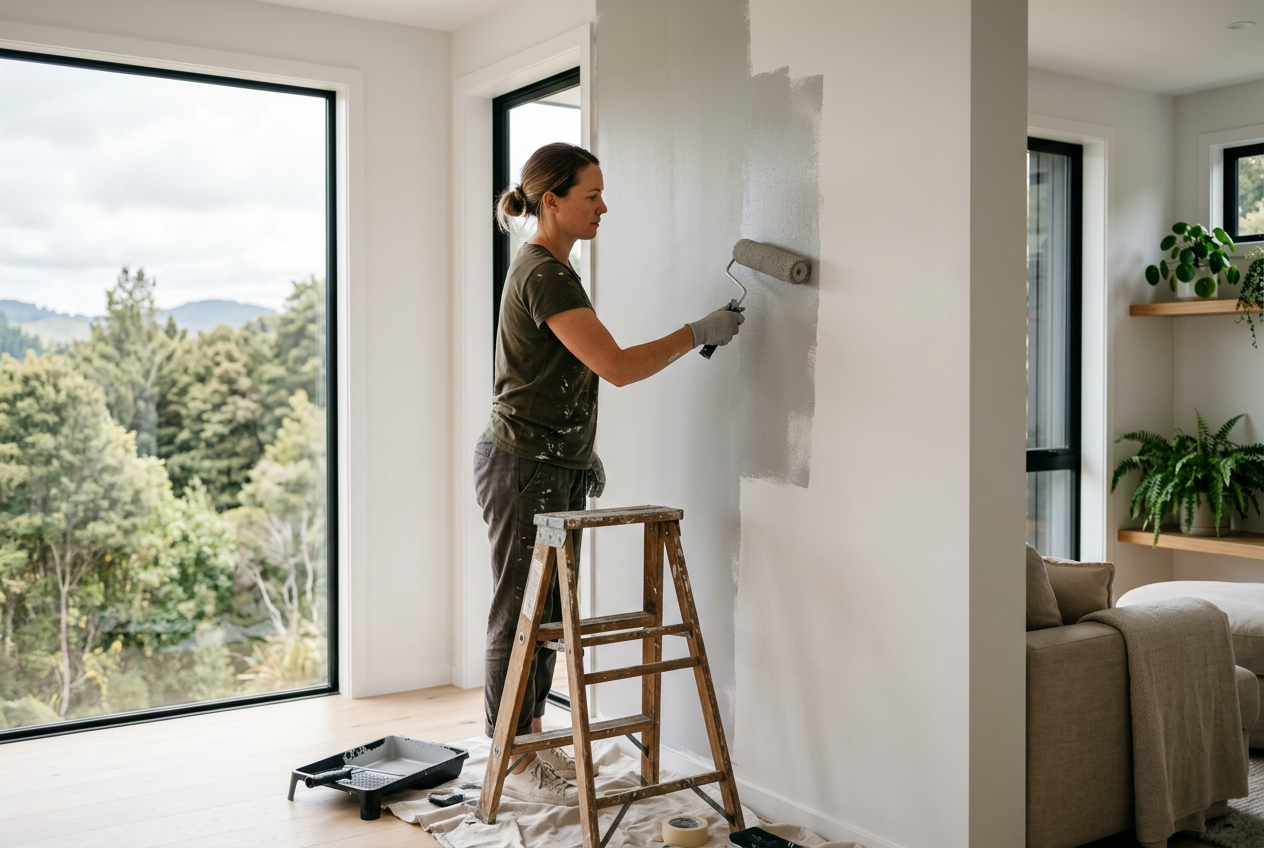
You've carefully chosen your colour, rolled it onto the wall, and then watched it dry into something that looks noticeably different — sometimes lighter, sometimes darker, occasionally with an unexpected undertone. This is one of the most common frustrations homeowners face when painting, and the good news is it's almost always explainable. Understanding why paint shifts in colour as it dries will save you from repainting unnecessarily and help you make better colour choices from the start.
Why Paint Changes Colour as It Dries
All water-based (latex/acrylic) paints contain water as a carrier. When wet, that water is still present in the film, which affects how light reflects off the surface. As the water evaporates and the paint film cures, the pigment particles pack together more tightly and the surface texture changes — and so does the colour you perceive.
- Water-based paints typically dry slightly darker than they appear when wet, because the binders and pigments concentrate as moisture leaves.
- Oil-based paints can behave differently and may yellow slightly over time, especially in low-light areas.
- Sheen level plays a big role: a flat/matte finish absorbs light and looks softer, while a gloss finish reflects light and can make the same colour appear more vivid or slightly different in tone.
This colour shift is completely normal and is accounted for in how paint manufacturers formulate their products. BRANZ notes that surface preparation and application conditions both influence the final appearance of a paint film.
Common Causes and Symptoms
The Colour Looks Much Lighter Than Expected
- The surface was too porous and absorbed the first coat unevenly.
- You applied the paint too thinly or over-thinned it with water.
- The undercoat or primer was a very different colour to the topcoat (e.g., white primer under a deep colour).
- You're only looking at one coat — most colours need two full coats to reach their true depth.
The Colour Looks Darker or More Intense Than the Chip
- Paint chips and swatches are viewed under controlled lighting; your room's lighting (warm LED, cool fluorescent, or natural light) shifts perceived colour.
- The sheen level is higher than you expected — semi-gloss and gloss finishes intensify colour.
- The colour is correct, but the surrounding colours in the room (flooring, furnishings, ceiling) are creating a contrast effect.
There's an Unexpected Undertone
- Many colours have warm or cool undertones that only become visible once the paint dries and the surrounding environment interacts with it.
- A colour that looked neutral grey in the store may read purple or green on your walls depending on your light source.
How to Diagnose the Problem Step by Step
- Wait for full cure. Water-based paints can take 2–4 hours to dry to touch, but the colour continues to develop as the film fully cures over 24–48 hours. Don't judge the final colour until it's completely dry.
- Check the number of coats. Hold a torch at a low angle to the wall — if you can see the previous colour or uneven coverage, you need another coat.
- Test in your actual lighting. View the dried colour at different times of day — morning light, midday, and evening with your artificial lights on. Colours can shift dramatically between these conditions.
- Compare to the original swatch in the room. Hold the paint chip or Resene colour card directly against the dried wall in your room's lighting, not in the store.
- Check your surface prep. If the colour looks patchy or washed out in some areas, the surface may have been uneven, damp, or insufficiently primed.
What You Can Fix Yourself
| Problem | DIY Fix |
|---|---|
| Colour too light after one coat | Apply a second (or third) full coat, allowing proper drying time between coats |
| Patchy, uneven finish | Sand lightly, apply a quality primer, then recoat |
| Wrong sheen level | Repaint with the correct sheen — flat, low-sheen, semi-gloss, or gloss |
| Unexpected undertone | Test a new colour with a large sample pot before committing |
| Colour looks different in artificial light | Try a warmer or cooler paint tone, or adjust your light bulbs |
Always use a sample pot first. Both Resene and Dulux sell small sample pots. Paint a large A3-sized patch (or use a piece of card you can move around the room) and live with it for 48 hours before buying full quantities.
Prime correctly. If you're painting a deep or vivid colour, ask your paint supplier to tint the primer close to the topcoat colour. This dramatically reduces the number of topcoats needed and gives a truer final colour. Products like Dulux 1 Step or Resene's tinted primers are designed for this.
Don't over-thin your paint. Adding too much water to acrylic paint weakens the film and dilutes pigment, leading to a washed-out result. Follow the manufacturer's guidelines — usually no more than 5–10% water for brush application.
How to Prevent It Recurring
- Always test with a large sample patch in the actual room, viewed over at least 24 hours.
- Consider the room's fixed elements — flooring, cabinetry, and soft furnishings all influence how a colour reads.
- Use a consistent sheen throughout a space for a predictable result.
- Prepare surfaces properly — fill holes, sand, and prime before painting. BRANZ guidance on surface preparation is a useful reference for best practice.
- Buy from a reputable supplier such as Resene, Dulux, or Wattyl, where staff can advise on the right primer and number of coats for your specific colour and surface.
When to Call a Professional
If you've applied multiple coats correctly and the colour still looks wrong, or if you're dealing with persistent bleed-through from stains, nicotine, or water damage, it's worth calling a qualified painter. These issues often require specialist stain-blocking primers and professional knowledge to resolve properly.
A professional painter will also be able to identify whether the problem is the paint itself, the surface condition, or a colour-matching error from the store — and advise on the most cost-effective fix. You can find qualified local painters on tradedirectory.co.nz.
Note: Painting is not restricted work under the NZ Building Code for standard interior and exterior residential surfaces, so homeowners can legally do their own painting. However, if painting is part of a larger building project (e.g., new construction or significant alterations), ensure the overall work complies with MBIE Building Performance requirements.

 BCITO Qualified

 Master Painters NZ
 Site Safe