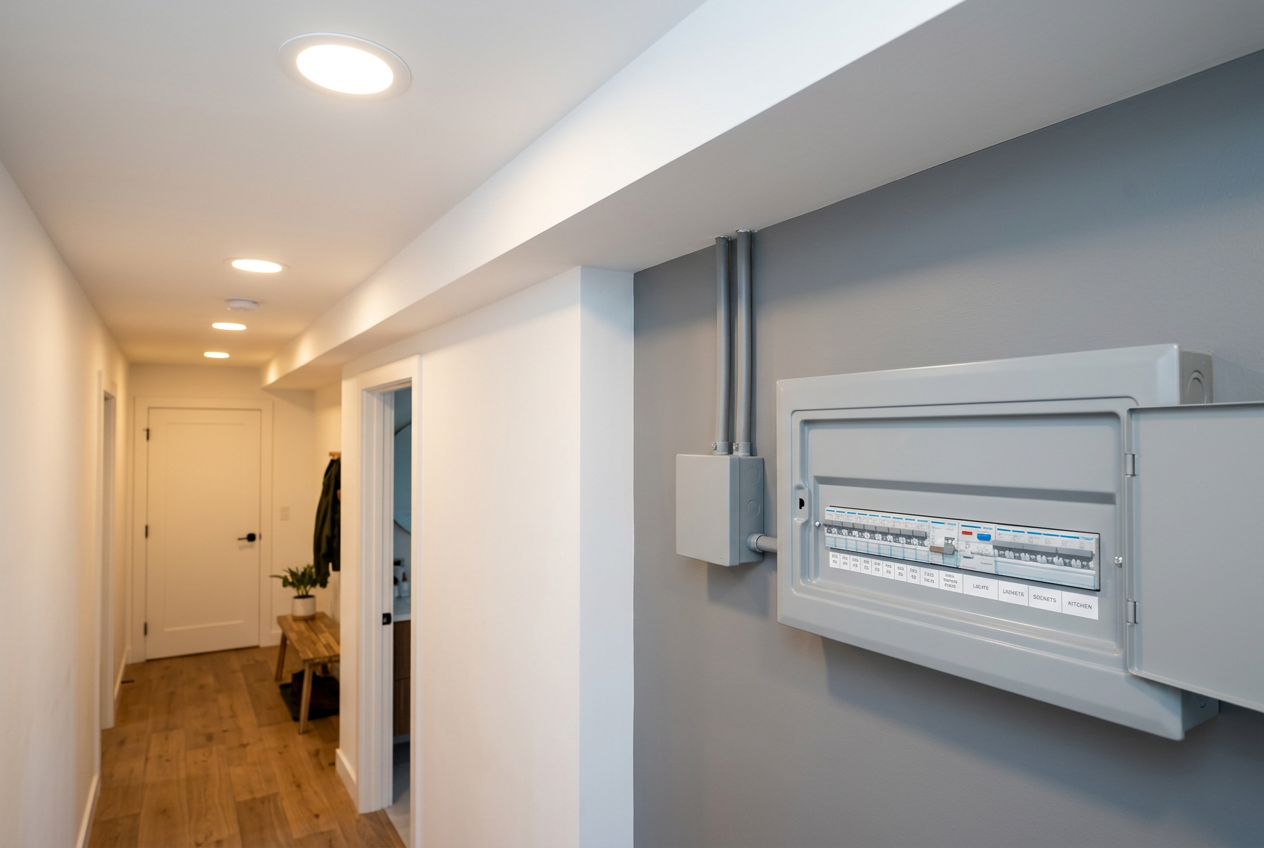
A circuit breaker that keeps tripping is one of the most common electrical complaints in New Zealand homes. It's frustrating, but it's also your switchboard doing exactly what it's designed to do — protecting your wiring and appliances from damage, and protecting you from fire or electrocution. The trick is figuring out why it keeps tripping, and knowing what you can safely investigate yourself versus what must be handled by a licensed electrician.
Why Circuit Breakers Trip: The Three Main Causes
Understanding the root cause helps you fix the right problem. There are three main reasons a breaker trips:
- Overloaded circuit – Too many appliances drawing power at once exceed the breaker's rated capacity (commonly 10A, 16A, or 20A in NZ homes).
- Short circuit – A live wire touches a neutral wire (or earth), causing a sudden surge of current. This is more serious and can indicate damaged wiring or a faulty appliance.
- Earth fault (ground fault) – Current leaks to earth through an unintended path, often through moisture or damaged insulation. In wet areas, this is typically caught by a RCD (Residual Current Device), sometimes called a safety switch.
Older NZ homes may have fuse wire instead of modern breakers — the same principles apply, but blown fuses should prompt you to upgrade to a modern switchboard.
Common Symptoms and What They Mean
| Symptom | Likely Cause |
|---|---|
| Trips immediately when you reset it | Short circuit or earth fault |
| Trips after a few minutes of use | Overloaded circuit |
| Trips only when a specific appliance is on | Faulty appliance |
| RCD trips but individual breakers are fine | Earth leakage somewhere on that circuit |
| Breaker feels warm or smells burnt | Serious fault — do not reset, call an electrician |
How to Diagnose the Problem: Step by Step
Step 1 – Identify which breaker is tripping
Go to your switchboard (usually in the garage, hallway, or laundry). Look for the breaker in the OFF or middle position. Note which circuit it controls — it should be labelled (e.g. "Kitchen," "Lights," "Oven").
Step 2 – Unplug everything on that circuit
Before resetting, unplug or switch off every appliance and light on the affected circuit. This is important — resetting a breaker with a fault still present can be dangerous.
Step 3 – Reset the breaker
Firmly push the breaker to OFF, then back to ON. If it trips immediately with nothing plugged in, stop here — there is likely a wiring fault and you need a licensed electrician.
Step 4 – Plug appliances back in one at a time
If the breaker holds with nothing connected, plug your appliances back in one at a time, waiting a minute or two between each. When the breaker trips again, the last appliance you plugged in is likely the culprit.
Step 5 – Test the suspect appliance
Try the appliance on a different circuit. If it trips that breaker too, the appliance is faulty and should be repaired or replaced. If it works fine elsewhere, you may have an overloaded circuit.
What a Homeowner Can Safely Do
As a homeowner, you are legally permitted to do the following without being a licensed electrician:
- Reset a tripped breaker (after unplugging appliances first)
- Unplug and isolate suspect appliances
- Replace a light bulb or a plug-in appliance
- Test your RCD using the test button on the device — WorkSafe NZ recommends testing RCDs every three months
⚠️ Safety note: Never bypass, tape up, or replace a breaker with a higher-rated one to "stop it tripping." This removes the protection the breaker provides and is a serious fire risk.
What Is Restricted Electrical Work in NZ
Under the Electricity Act 1992, most electrical work in NZ is restricted work that must be carried out by — or supervised by — a registered electrician. This includes:
- Replacing or upgrading a circuit breaker or switchboard
- Adding new circuits or power points
- Any wiring work inside walls, ceilings, or the switchboard
- Installing fixed appliances (ovens, heat pumps, hot water cylinders)
All restricted work must be certified with a Certificate of Compliance (CoC). You can verify a tradesperson's registration with the Electrical Workers Registration Board (EWRB).
How to Prevent Your Breaker From Tripping
- Spread the load – Avoid running multiple high-draw appliances (heaters, kettles, microwaves) on the same circuit at the same time.
- Check appliance wattage – A standard 10A circuit handles roughly 2,400W. Add up the wattage of everything plugged in.
- Don't daisy-chain power boards – Plugging one power board into another is a common cause of overloads.
- Maintain your appliances – Faulty elements in heaters, kettles, and washing machines are a frequent cause of tripping. Have them serviced or replaced.
- Keep moisture away from outlets – Especially in bathrooms and kitchens. NZ Building Code clause G9 covers electrical safety in wet areas.
- Upgrade an old switchboard – If your home still has rewireable fuses or an older switchboard without RCDs, consider upgrading. BRANZ research shows older wiring systems carry significantly higher risk.
When to Call a Professional
Call a licensed electrician promptly if:
- The breaker trips immediately on reset with nothing plugged in
- You can smell burning or see scorch marks near the switchboard or outlets
- The breaker or switchboard feels warm to the touch
- Multiple breakers are tripping at once
- Your home has no RCDs (safety switches) — these are now required under the Healthy Homes Standards for rental properties and are strongly recommended for all homes
- You have an older fuse board rather than modern circuit breakers
- The problem keeps recurring even after you've identified and removed the faulty appliance
A qualified electrician will use a insulation resistance tester and other diagnostic tools to pinpoint faults that aren't visible to the naked eye. Don't delay — a recurring trip is a warning sign, not just an inconvenience.
You can find registered local electricians on tradedirectory.co.nz — always confirm they hold a current practising licence with the EWRB before work begins.
Sources & Further Reading
- Electrical Workers Registration Board (EWRB) – Verify a licensed electrician
- WorkSafe NZ – Electrical safety in the home
- MBIE Building Performance – Electrical requirements under the NZ Building Code
- BRANZ – Research and guidance on NZ home safety
- Tenancy Services – Healthy Homes electrical requirements

 Site Safe
 Licensed Electrical Inspector







