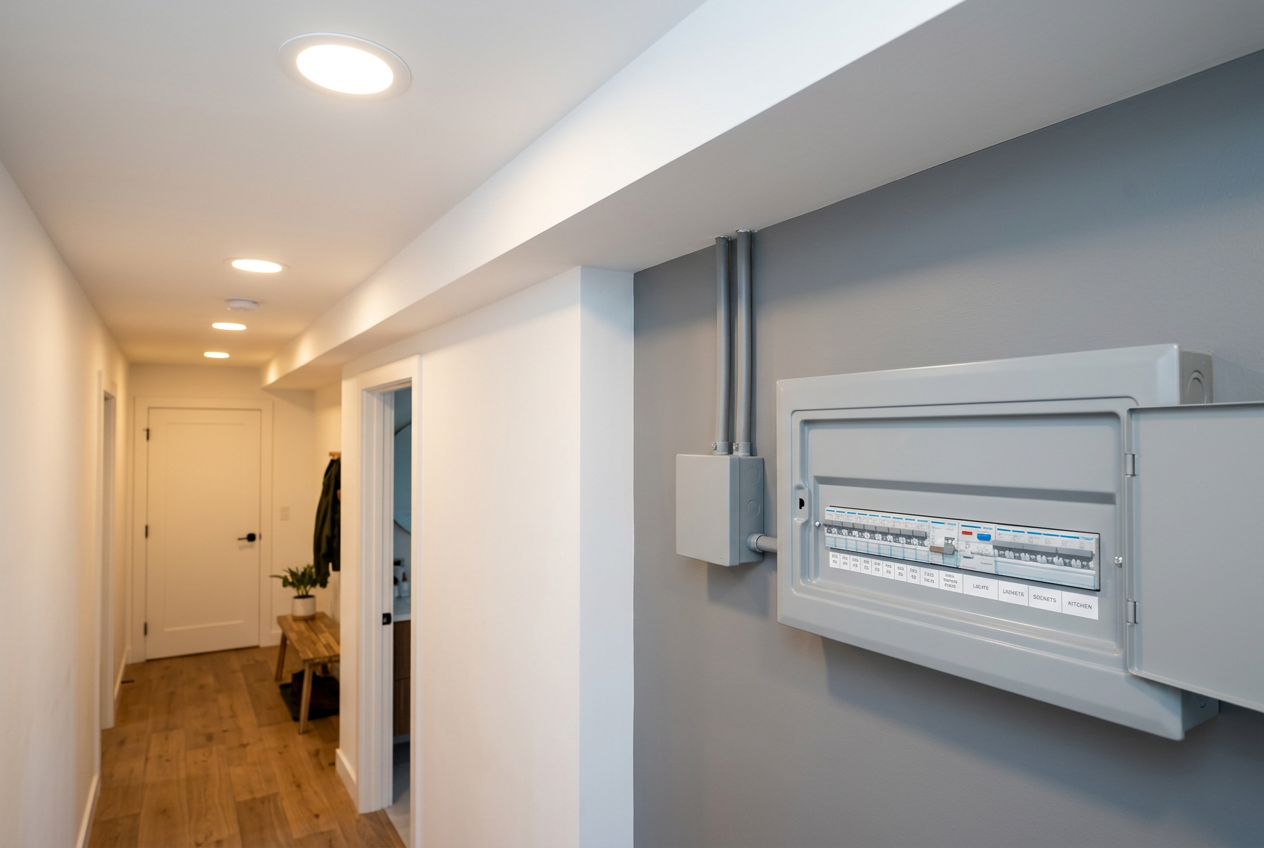
Flickering or dimming lights are one of the most common electrical complaints from NZ homeowners — and one of the most misunderstood. Sometimes the fix is as simple as tightening a bulb; other times it's a warning sign of a dangerous wiring fault that needs urgent professional attention. This guide walks you through the likely causes, how to diagnose them safely, and what to do next.
Common Causes of Flickering or Dimming Lights
Understanding why lights flicker is the first step to fixing the problem. The most frequent culprits include:
- Loose or faulty bulb — the simplest and most common cause, especially with screw-base (ES) fittings
- Incompatible dimmer switch — many older dimmers don't work properly with modern LED bulbs
- Voltage fluctuations — large appliances (heat pumps, ovens, washing machines) drawing power can cause brief dips
- Loose wiring connections — at the switch, fitting, or switchboard; a genuine safety hazard
- Overloaded circuit — too many high-draw appliances on one circuit
- Faulty light fitting or switch — worn contacts cause intermittent connections
- Neighbourhood supply issues — fluctuations from your lines company's network
- Failing switchboard or main connections — older homes with rewireable fuses or ageing switchboards
Symptoms and What They Suggest
| Symptom | Likely Cause |
|---|---|
| One light flickers, others fine | Loose bulb, faulty fitting, or loose connection at that circuit |
| Lights dim when appliance starts | Normal voltage dip, or undersized wiring/circuit |
| Multiple lights flicker at once | Loose neutral connection, switchboard issue, or supply problem |
| Flickering gets worse over time | Deteriorating wiring connection — act promptly |
| Lights flicker and breaker trips | Overloaded or faulty circuit — call an electrician |
| Flickering with a burning smell | Serious fault — switch off at the board and call an electrician immediately |
How to Diagnose the Problem Step by Step
Work through these checks in order, from safest and simplest to more complex.
Step 1: Check the Bulb
- Switch the light off and allow the bulb to cool.
- Remove and reseat the bulb firmly — for bayonet caps (BC), push and twist; for screw bases (ES), tighten gently.
- Switch back on. If it stops flickering, a loose bulb was the culprit.
- If the bulb is old or discoloured, replace it with a quality LED from Bunnings or Mitre 10.
Step 2: Check for Dimmer Compatibility
If your light is on a dimmer switch, this is a very common issue in NZ homes that have switched to LED bulbs. Most older dimmers were designed for incandescent or halogen bulbs and will cause LEDs to flicker, buzz, or not dim smoothly.
- Check the dimmer's packaging or label for an LED compatibility rating.
- Replace with a leading-edge or trailing-edge LED-compatible dimmer (available at Bunnings or Mitre 10).
- Note: Replacing a dimmer switch involves working inside a wall switch — this is restricted electrical work in New Zealand and must be done by a registered electrician. See below.
Step 3: Identify When It Happens
- Does flickering coincide with a specific appliance switching on (e.g., heat pump, oven, washing machine)? A brief dip when a large motor starts is often normal, but persistent dimming suggests the circuit may be undersized.
- Does it happen randomly, regardless of appliance use? This points to a loose connection or supply issue.
- Does it affect the whole house or just one area? Whole-house flickering suggests a switchboard or incoming supply problem — contact your lines company (e.g., Vector, Orion, PowerCo) or an electrician.
Step 4: Check Your Switchboard
Look at your switchboard (meter board) for:
- Any tripped circuit breakers (switched to the middle or off position)
- Signs of heat, scorch marks, or a burning smell
- Older rewireable fuses (ceramic fuse holders with wire) — these are a sign of an ageing system
Do not open the switchboard enclosure or touch any wiring. If you see scorch marks or smell burning, treat this as an emergency.
What a Homeowner Can Safely Fix
In New Zealand, electrical work is tightly regulated under the Electricity Act 1992. The Electrical Workers Registration Board (EWRB) licenses electricians, and most wiring work — including replacing switches, outlets, and fittings — is restricted work that only a registered electrician can legally perform.
What you can safely do yourself:
- Replace a bulb (like-for-like, same fitting type)
- Reset a tripped circuit breaker (flip it fully off, then back on)
- Check that appliances are not overloading a powerboard (unplug some and test)
- Contact your lines company if you suspect a supply issue from the street
Do not attempt to: rewire fittings, replace switches or dimmers, open junction boxes, or work inside your switchboard. These are restricted electrical tasks and doing them yourself is illegal and potentially fatal.
How to Prevent Flickering Lights Recurring
- Use quality LED bulbs from reputable brands — cheap imports can flicker even in good fittings
- Ensure dimmers are LED-compatible when upgrading lighting
- Avoid overloading circuits — spread high-draw appliances across different circuits
- Schedule a periodic electrical inspection — BRANZ recommends older NZ homes (especially pre-1980s) have their wiring checked regularly
- Upgrade an ageing switchboard — if you have rewireable fuses, talk to an electrician about upgrading to modern RCD-protected circuit breakers, which also improves safety compliance under the NZ Building Code
When to Call a Professional
Call a registered electrician promptly if:
- Flickering affects multiple circuits or the whole house
- You notice a burning smell, scorch marks, or warmth around switches or fittings
- The problem keeps recurring after you've replaced the bulb
- Your switchboard has rewireable fuses or looks dated
- A circuit breaker keeps tripping
- You want a dimmer switch replaced or a new fitting installed
For rental properties, landlords have additional obligations under the Healthy Homes Standards and must ensure electrical installations are safe and compliant.
All electrical work must be carried out by a registered electrician and, for most jobs, a Certificate of Compliance (CoC) must be issued. You can verify a tradesperson's registration at the EWRB website. To find a qualified local electrician, search tradedirectory.co.nz — all listed tradespeople are vetted professionals.
⚠️ Safety note: If you ever smell burning from a light fitting or switchboard, switch off the relevant circuit at the board immediately and call an electrician. Do not use the circuit until it has been inspected. In an emergency, call 111.

 Site Safe
 Licensed Electrical Inspector







