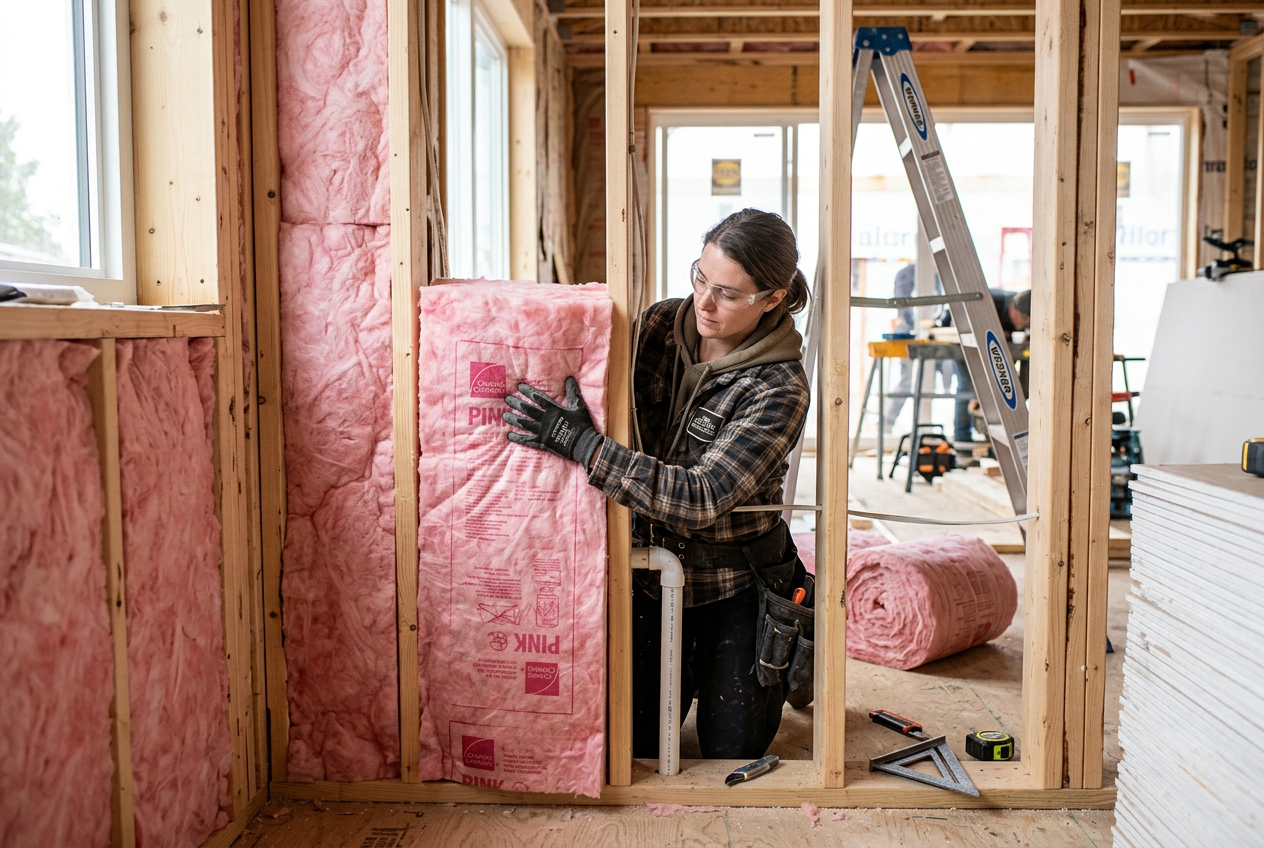
When you hire a professional insulation installer in New Zealand, you should receive two distinct types of warranty: one covering the insulation product itself and one covering the quality of the installation work. Understanding both protects your investment and gives you recourse if something goes wrong down the track.
Product Warranties: What the Manufacturer Covers
Most reputable insulation manufacturers offer product warranties that cover defects in the material itself — things like the product breaking down, losing its thermal performance rating, or failing to meet its stated R-value over time.
Warranty lengths vary by product type and brand, but as a general guide:
- Glasswool and polyester batts (common in NZ homes) often carry warranties of 25 to 50 years, or even a lifetime warranty, against material defects.
- Rigid foam boards and reflective foil insulation typically carry shorter warranties — often 10 to 25 years depending on the manufacturer.
- Blown-in or loose-fill insulation warranties vary widely, so always ask for the specific product data sheet.
Always ask your installer for the manufacturer's warranty documentation in writing before work begins, and keep a copy for your records. Well-known NZ suppliers like Bunnings and Mitre 10 stock a range of insulation products, and their product pages often list warranty details. For technical performance data, BRANZ is a useful independent resource.
Workmanship Warranties: What the Installer Covers
Separate from the product warranty, your installer should provide a workmanship warranty — a guarantee that the installation itself was carried out correctly. This covers issues like:
- Batts installed with gaps, compression, or incorrect orientation
- Underfloor insulation that sags or falls out
- Incorrect R-value product installed for the climate zone
- Vapour barriers fitted incorrectly
Workmanship warranties in the NZ insulation industry typically range from 1 to 10 years, though this varies between companies. Some larger installers offer extended guarantees as a point of difference. There is no single mandated minimum for insulation workmanship warranties in NZ, so it pays to compare what different installers offer.
Under the Consumer Guarantees Act 1993, all services must be carried out with reasonable care and skill regardless of any written warranty — so you have legal protections even if a warranty document is vague.
What to Ask Before Signing a Contract
Before work starts, ask your installer these questions and get the answers in writing:
- What is the product warranty, and who do I contact to make a claim?
- What workmanship warranty do you provide, and what does it cover?
- Are there any conditions that could void the warranty (e.g. moisture damage, alterations)?
- Will you provide a completion certificate or installation record showing the R-value achieved?
- Are you a member of any industry body or hold any relevant certifications?
A reputable installer should have no hesitation answering all of these clearly.
NZ Building Code and Healthy Homes Considerations
Insulation installed in new builds or major renovations must comply with NZ Building Code Clause H1 (Energy Efficiency), which sets minimum R-value requirements depending on your climate zone. If your installation is part of a consented build, your installer should be able to confirm compliance.
For rental properties, the Healthy Homes Standards require specific minimum insulation levels in ceiling and underfloor spaces. Landlords must ensure insulation meets these requirements, and a professional installer should be familiar with them. You can check the current requirements at Tenancy Services.
For guidance on what the Building Code requires, visit MBIE Building Performance.
Red Flags to Watch Out For
- No written warranty offered — verbal promises are hard to enforce.
- Unusually short workmanship warranty (less than 1 year) with no explanation.
- No product documentation — you should always know exactly what product was installed.
- No completion record — a professional installer should document the R-value achieved and the areas covered.
When to Call a Professional
Insulation installation is not classified as restricted building work in most cases, but it does require skill and knowledge to do correctly — particularly underfloor and in-wall installations. Poorly installed insulation can underperform significantly, and in some situations (such as around recessed lighting or near flues) incorrect installation can create a fire hazard.
For ceiling insulation near downlights, always ensure your installer follows the requirements around clearances — WorkSafe NZ has guidance on fire risks associated with insulation near heat sources.
If your project involves any electrical work (such as relocating wiring to accommodate insulation), that work must be carried out by a registered electrician under the Electrical Workers Registration Board rules.
For peace of mind, hire a qualified local insulation installer through tradedirectory.co.nz, where you can find experienced professionals in your area.