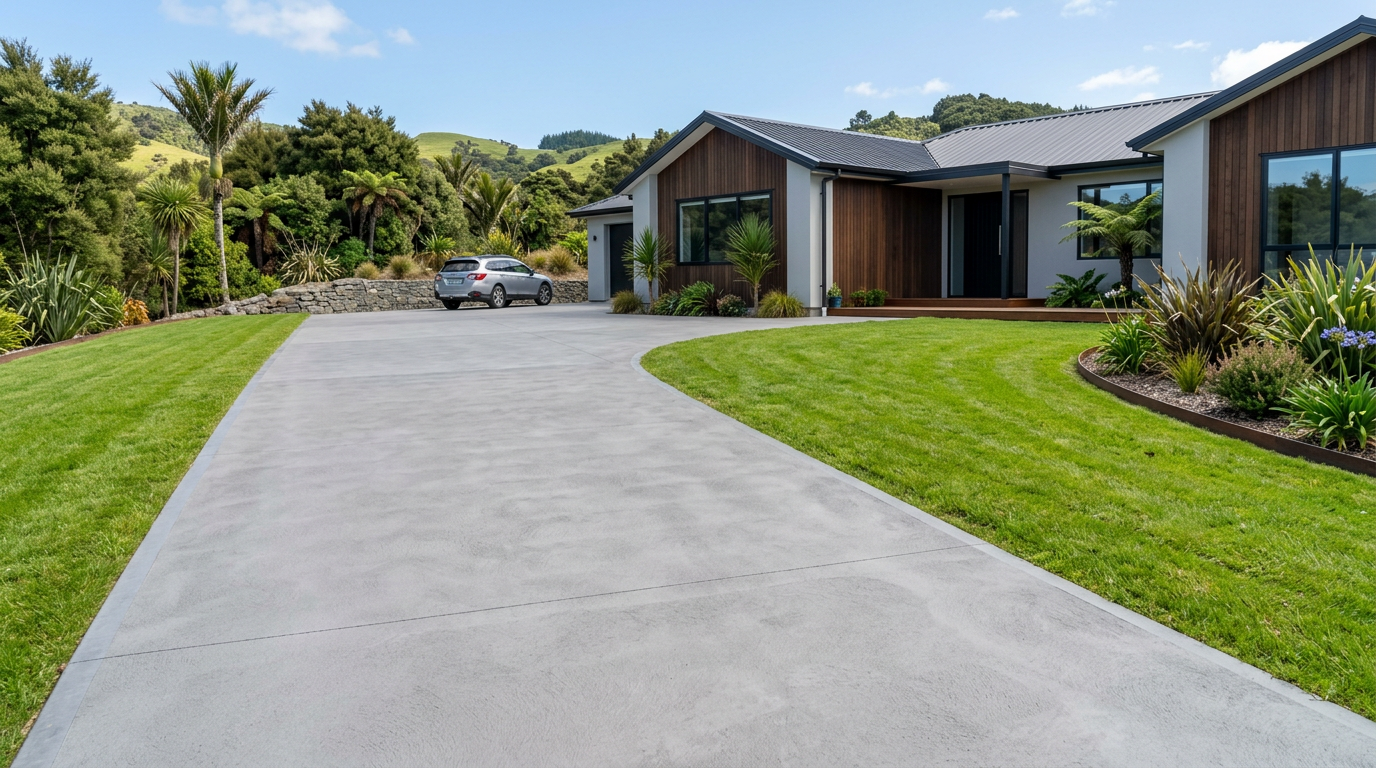
A professional driveway layer in New Zealand should provide a written warranty covering both workmanship and materials — but the length and scope will vary depending on the surface type, the contractor, and the products used. Knowing what's reasonable to ask for puts you in a much stronger position before you sign any contract.
Why Warranties Matter for Driveways
A driveway is a significant investment. Whether you're laying concrete, asphalt, or pavers, the finished surface needs to withstand heavy vehicle loads, UV exposure, freeze-thaw cycles in colder regions, and the wet conditions common across much of New Zealand. A solid warranty gives you recourse if the surface cracks, settles unevenly, or deteriorates prematurely through no fault of your own.
Under the Consumer Guarantees Act 1993 (CGA), any tradesperson supplying services to a consumer must carry out that work with reasonable care and skill, and the result must be fit for purpose. This applies regardless of what a written warranty says — so even if a contractor offers no formal warranty, you still have legal protections. You can read more about your rights at Consumer NZ.
Typical Warranty Periods by Driveway Type
As a general guide, here's what reputable NZ driveway layers commonly offer:
| Surface Type | Workmanship Warranty | Materials/Product Warranty |
|---|---|---|
| Concrete | 2–5 years | Often tied to mix supplier, 1–2 years |
| Asphalt (hotmix) | 1–3 years | 1–2 years |
| Exposed aggregate | 2–5 years | 1–2 years |
| Concrete pavers | 2–5 years (laying) | Manufacturer's warranty on pavers |
| Chip seal | 1–2 years | 1 year |
These are approximate ranges only. Always confirm in writing with your specific contractor.
What a Good Warranty Should Cover
A reputable driveway layer should provide a written warranty that clearly states:
- What is covered — e.g. cracking beyond a certain width, surface delamination, subsidence caused by poor subbase preparation
- What is excluded — e.g. damage from tree roots, vehicle oil spills, overloading beyond the design load, or natural ground movement
- The warranty period — start date (usually practical completion) and end date
- How to make a claim — contact details and process
- Remedy offered — repair, replacement, or refund
Be cautious of vague verbal promises. Always get the warranty in writing before work begins, ideally as part of a formal contract.
Subbase Preparation: The Hidden Factor
Many driveway failures in NZ come down to inadequate subbase preparation rather than the surface material itself. A good contractor will compact the subgrade, lay the correct depth of AP20 or AP40 crushed aggregate, and ensure proper drainage falls — typically a minimum 1:100 cross-fall to direct water away from buildings, in line with good practice under the NZ Building Code.
If a contractor skimps on subbase depth or compaction, even a quality concrete or asphalt surface can crack or sink within a year or two. Ask your contractor to specify subbase depth and compaction standards in writing — this also strengthens any future warranty claim.
Does a Driveway Require a Building Consent?
In many cases, residential driveways are exempt from building consent under Schedule 1 of the Building Act 2004, but this depends on factors such as proximity to boundaries, retaining walls, and whether the driveway affects stormwater drainage. Always check with your local council before work starts — requirements vary by region and site conditions.
Red Flags to Watch For
- No written contract or warranty offered
- Unusually low quotes (often a sign of thin subbase or low-quality materials)
- Pressure to pay the full amount upfront
- No fixed business address or NZ company registration
- Reluctance to provide references from past NZ jobs
Protecting Yourself Further
- Get at least three quotes and compare scope of work, not just price
- Check references — ask to see completed driveways and speak to previous clients
- Confirm the contractor is GST-registered and provides a proper invoice
- Retain a portion of payment (commonly 5–10%) until you're satisfied the work meets the agreed standard
- Keep records of all communications, contracts, and warranties in case you need to make a claim
For disputes that can't be resolved directly, the Disputes Tribunal (for claims up to $30,000) is a low-cost option available to NZ consumers.
When to Call a Professional
Driveway laying — particularly concrete and asphalt — involves specialised equipment, mix design knowledge, and subbase engineering that goes well beyond a DIY weekend project. Poor installation is very difficult and expensive to fix after the fact. For any driveway larger than a small path, or where the surface must support vehicle loads, always engage a qualified, experienced driveway layer. You can find reputable local professionals on tradedirectory.co.nz.
Note: driveway work is not classified as restricted building work under the Licensed Building Practitioners scheme, but for any associated retaining walls over a certain height, or work affecting drainage systems, you may need to involve an LBP or other licensed professional.

 Site Safe
 SiteWise

 ISO 9001 / 45001 / 14001



 SARNZ (Scaffolding Association)