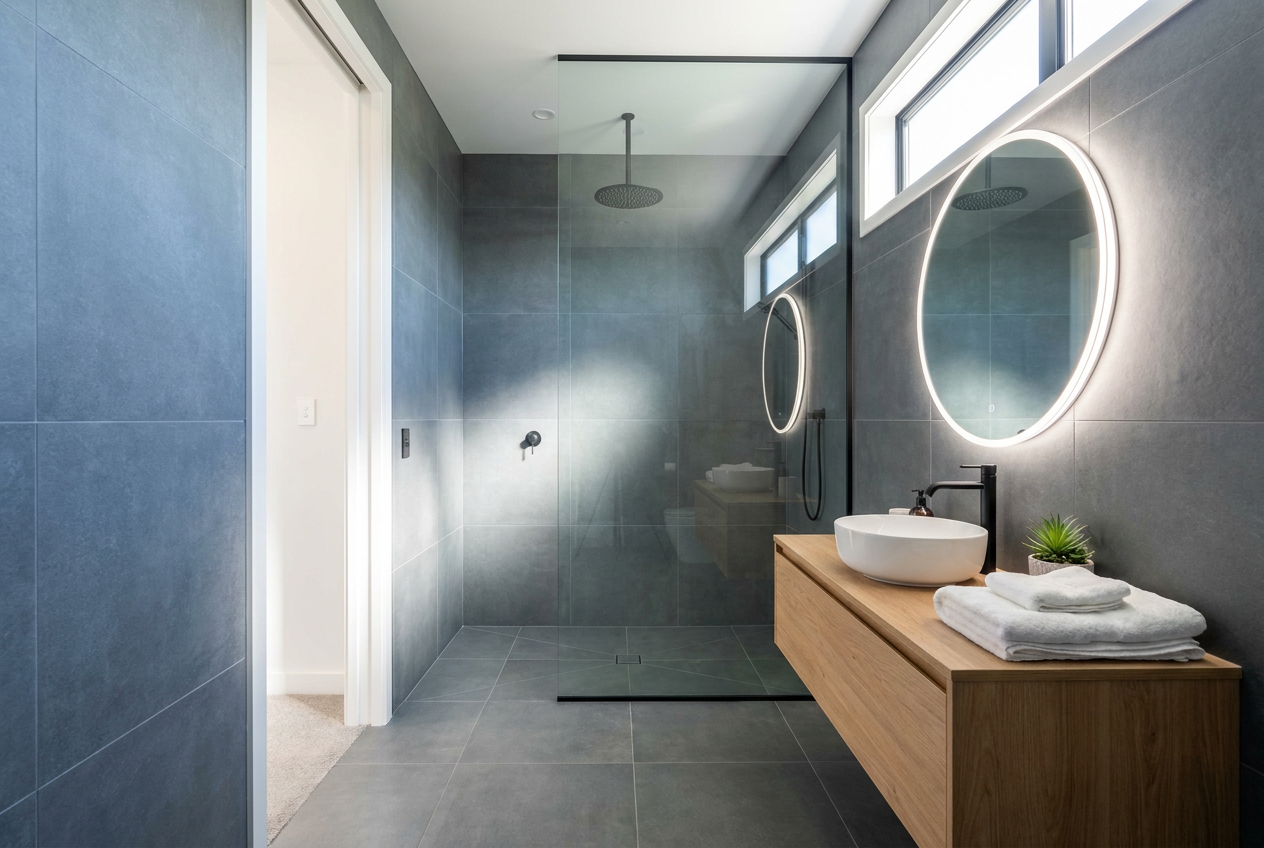
Internal corners in wet areas like showers, bathrooms, and laundries are one of the most common places where waterproofing fails. The correct tape to use is a flexible waterproofing reinforcement tape — typically a non-woven polyester or fibreglass fabric tape that is embedded into a compatible waterproofing membrane. This creates a flexible, crack-resistant junction that moves with the building without splitting or letting water through.
Why Internal Corners Need Reinforcing
Buildings move — even slightly — due to temperature changes, settling, and general use. Internal corners (where a floor meets a wall, or two walls meet) are particularly vulnerable because movement tends to concentrate at these junctions. Without reinforcement, the waterproofing membrane can crack or delaminate over time, allowing water to penetrate behind tiles and into the substrate. This can lead to serious structural damage, mould growth, and costly repairs.
Under the NZ Building Code, wet area waterproofing must comply with Clause E3 (Internal Moisture). BRANZ and industry best practice both require all internal corners to be reinforced as part of a compliant waterproofing system.
Types of Tape Used in Wet Areas
Polyester or Fibreglass Fabric Tape
This is the most widely used option. It is a non-woven, open-weave fabric that is embedded into a liquid-applied waterproofing membrane (such as a polyurethane or acrylic membrane). The membrane soaks through the tape, bonding it firmly to the substrate and creating a flexible, monolithic layer.
- Typically 50–100 mm wide
- Applied wet-in-wet with the membrane
- Suitable for floor-to-wall and wall-to-wall corners
- Compatible with most liquid membrane systems
Pre-formed Corner Tape and Angle Pieces
Some waterproofing systems include pre-formed fabric corners — these are fabric pieces pre-cut and shaped for 90-degree internal corners. They save time and ensure consistent coverage at the junction. They are embedded in the same way as flat tape.
Butyl or Self-Adhesive Tape
Some systems use a self-adhesive butyl-backed tape for corners. These are pressed into place before the membrane is applied over the top. They are common in certain proprietary systems and can be useful where the substrate is difficult to coat directly. Always check that the tape is compatible with your chosen membrane system.
What NOT to Use
Do not use standard paper jointing tape, standard fibreglass mesh tape (the type used for GIB plasterboard), or general-purpose cloth tape. These are not designed for wet area waterproofing and will not provide the flexibility or waterproofing performance required. Using the wrong tape can void your membrane manufacturer's warranty and result in a non-compliant installation.
How the Tape Is Applied
The general process for embedding fabric reinforcement tape is:
- Prepare the substrate — ensure it is clean, dry, dust-free, and primed if required by the membrane manufacturer.
- Apply a bed coat of membrane to the corner area, typically 100–150 mm up the wall and onto the floor.
- Press the tape into the wet membrane, working it into the corner and smoothing out any bubbles or wrinkles.
- Apply a second coat of membrane over the tape, fully encapsulating it.
- Continue with full membrane application over the entire wet area once the corner reinforcement has cured sufficiently.
Always follow the specific instructions from your membrane manufacturer — cure times, coat thicknesses, and primer requirements vary between products. Brands like Ardex, Mapei, and Sika all offer wet area waterproofing systems with compatible reinforcement tapes and detailed application guides.
Substrate Considerations
The tape must be compatible with your substrate. Common wet area substrates in NZ include:
| Substrate | Notes |
|---|---|
| Fibre cement sheet (e.g. James Hardie) | Prime as per membrane spec; excellent base for waterproofing |
| GIB Aqualine or wet area plasterboard | Use only in lower-risk areas; check membrane compatibility |
| Concrete block or masonry | May need a skim coat or filler before membrane |
| Existing tiles | Generally not recommended without specialist advice |
For fibre cement substrates, James Hardie provides guidance on compatible systems. For plasterboard-based wet areas, refer to GIB technical literature.
Building Consent and Compliance
Waterproofing in wet areas is not restricted work in the same way as electrical or plumbing, so a homeowner can legally carry out their own waterproofing. However, if the work is part of a larger renovation involving structural changes, plumbing alterations, or new wet area construction, a building consent may be required. Some minor work may qualify as a Schedule 1 exemption — always confirm with your local council before starting. See MBIE Building Performance for guidance on when consent is needed.
When to Call a Professional
While a competent DIYer can apply waterproofing tape and membrane, wet area waterproofing failures are expensive to fix. Consider hiring a licensed waterproofer if:
- You are waterproofing a shower, bath surround, or laundry in a new build or major renovation
- The substrate is in poor condition or you are unsure of its type
- You need a producer statement or warranty for insurance or resale purposes
- The job involves any plumbing work — this is restricted work and must be carried out by a licensed plumber registered with the Plumbers Gasfitters & Drainlayers Board
A qualified waterproofer will know the correct products, application methods, and thickness requirements to meet the NZ Building Code. You can find experienced local waterproofing tradespeople on tradedirectory.co.nz.

 Site Safe


 SiteWise

 Licensed Building Practitioner (LBP)




