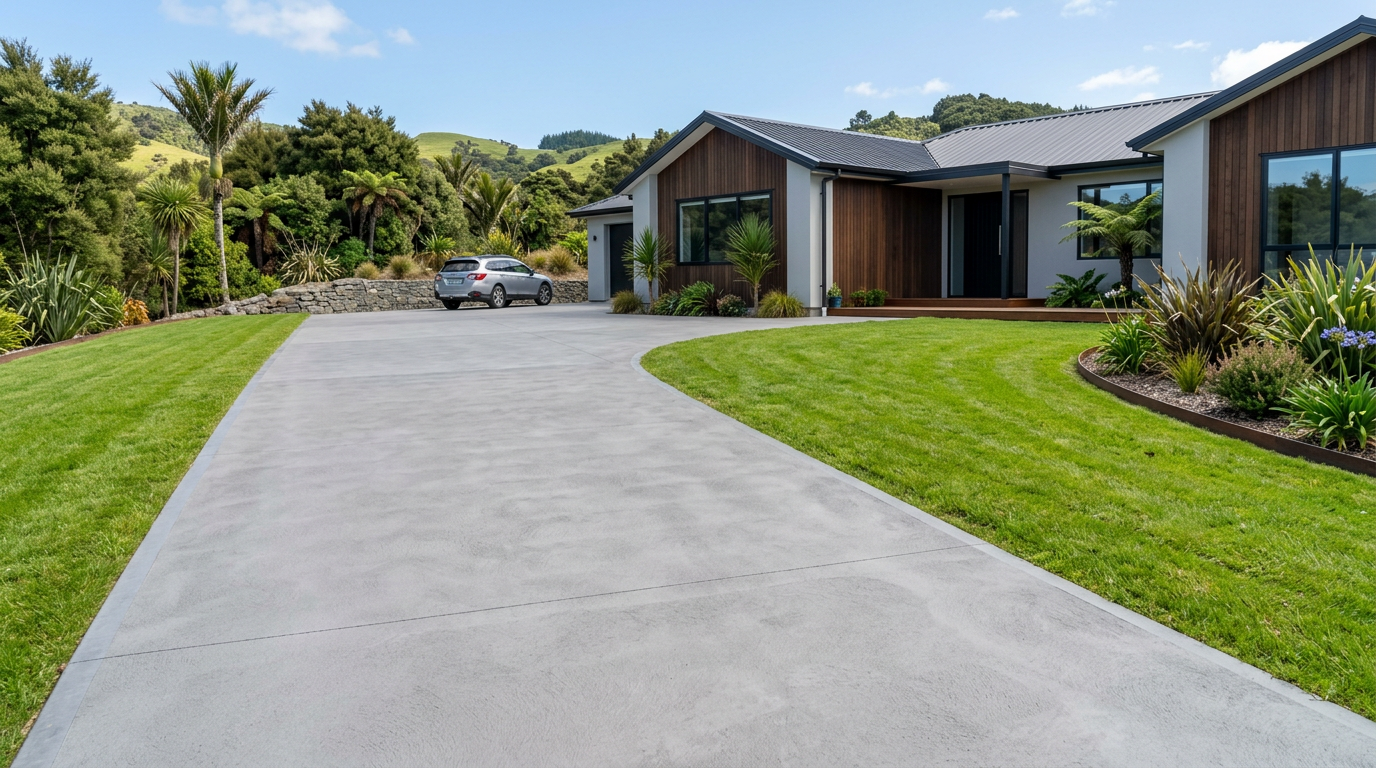
Laying a new driveway is one of the most impactful upgrades you can make to a NZ property — it improves kerb appeal, adds value, and gives you a durable, all-weather surface. In most cases, the answer to "what trade do I need?" is a qualified concreter, though depending on your site and chosen material, a few other specialists may also come into play.
The Right Trade: Concreter
A concreter is the primary trade you need for a driveway. Concreters have the training, tools, and hands-on experience to handle everything from site preparation through to the finished surface. They work with concrete — by far the most common driveway material in New Zealand — but many also work with exposed aggregate and other decorative finishes.
When you contact a concreter, they will:
- Assess the site — slope, soil type, drainage, and access
- Diagnose any underlying issues — such as poor subgrade, tree roots, or existing surface problems
- Recommend the best course of action for your specific situation
- Provide a written quote for the work before starting
Always insist on a written quote so you can compare like-for-like across multiple contractors.
Could Other Trades Be Involved?
Sometimes a driveway job involves multiple trades. Your primary concreter can advise if other specialists are needed, but here is a quick overview of when other trades typically come in:
| Trade | When They're Needed |
|---|---|
| Excavator / Earthworks contractor | Significant cut-and-fill, steep sites, or large areas needing machine excavation |
| Drainlayer | Installing new stormwater channels, sumps, or connecting to the council drainage network |
| Asphalt layer (asphalter) | If you choose an asphalt surface instead of concrete |
| Paving contractor | For brick pavers, concrete pavers, or natural stone driveways |
| Structural engineer | Retaining walls or driveways over fill or on unstable ground |
| Electrician | Installing driveway lighting or an electric gate — this is restricted electrical work that must be done by a registered electrician (see EWRB) |
Choosing Your Driveway Surface
The material you choose will influence which trade leads the job:
- Concrete — durable, low maintenance, suits NZ's UV-intense summers and wet winters. A concreter is your lead trade.
- Asphalt — faster to lay and cheaper upfront in many cases, but requires periodic resealing. An asphalter or roading contractor leads this work.
- Pavers (brick or concrete) — attractive and repairable, but more labour-intensive. A paving contractor is your lead trade.
- Chip seal / tar seal — common on rural properties. A roading or chip-seal contractor handles this.
- Gravel — the simplest option; an earthworks contractor or landscaper can often handle it.
For most suburban NZ homes, concrete remains the most popular choice for its longevity and low ongoing maintenance.
What the Job Involves: Step by Step
Understanding the process helps you have informed conversations with contractors and spot any shortcuts:
- Site assessment and design — the concreter checks levels, slope, and drainage requirements.
- Excavation and subgrade preparation — topsoil and soft material are removed; the subgrade is compacted.
- Sub-base installation — a layer of compacted AP40 (aggregate) is laid to provide a stable base and assist drainage.
- Formwork — timber or steel forms are set to the correct levels and falls.
- Reinforcement — steel mesh or rebar is placed (important for NZ's ground movement and frost in southern regions).
- Concrete pour — ready-mix concrete is ordered and poured; the mix strength matters for durability.
- Finishing — the surface is screeded, floated, and given a finish (broom, exposed aggregate, etc.).
- Curing — concrete must be kept moist and protected while it cures, typically for at least seven days.
- Sealing — a penetrating or surface sealer is often applied once cured to protect against staining and moisture.
Drainage and the NZ Building Code
Drainage is a critical consideration that is often overlooked. Under NZ Building Code Clause E1 (Surface Water), your driveway must not direct stormwater onto neighbouring properties or cause ponding. Falls must be designed to direct water away from the house and into an appropriate outlet.
If your driveway connects to a new stormwater sump or the council network, a licensed drainlayer must carry out that work — this is restricted work under the Plumbers, Gasfitters and Drainlayers Board. Your concreter can usually recommend a drainlayer they work alongside regularly.
For guidance on moisture and weathertightness requirements, BRANZ and MBIE Building Performance are excellent NZ-specific resources.
Do You Need a Building Consent?
In many cases, a standard residential driveway does not require a building consent under Schedule 1 of the Building Act — but this depends on your specific site, council, and whether any retaining walls or structures are involved. Always confirm with your local council before starting work. Rules vary between territorial authorities, and getting this wrong can cause problems when you sell.
When to Call a Professional
You should always engage a qualified concreter (or the relevant specialist trade) for driveway work because:
- Subgrade failure is the number-one cause of cracked driveways — professionals know how to prepare the base correctly for NZ soil conditions.
- Incorrect drainage falls can breach the Building Code and cause water damage to your home or a neighbour's property.
- Concrete mix design matters — the wrong mix for your climate (especially in frost-prone areas of the South Island or Canterbury) leads to premature deterioration.
- Restricted work — any electrical connections (lighting, gates) or drainlaying connections to the council network must be done by licensed tradespeople.
For any driveway project, get at least three written quotes from qualified contractors. Check that they carry public liability insurance and ask to see examples of previous work. You can find qualified local concreters and related trades on tradedirectory.co.nz.
Practical Tips for Getting Good Value
- Combine jobs where possible — if you're also doing a path or patio, doing it at the same time saves on mobilisation costs.
- Be clear on the finish — broom finish, exposed aggregate, and stamped concrete all have different costs and maintenance needs.
- Ask about concrete strength — a 25 MPa mix is a common minimum for driveways; higher strength may be recommended for heavy vehicles.
- Discuss curing and sealing upfront so you know what aftercare is included in the quote.
- Check access for the concrete truck — ready-mix trucks are heavy and need adequate access; pump hire may be needed on tight sites.



 Site Safe





