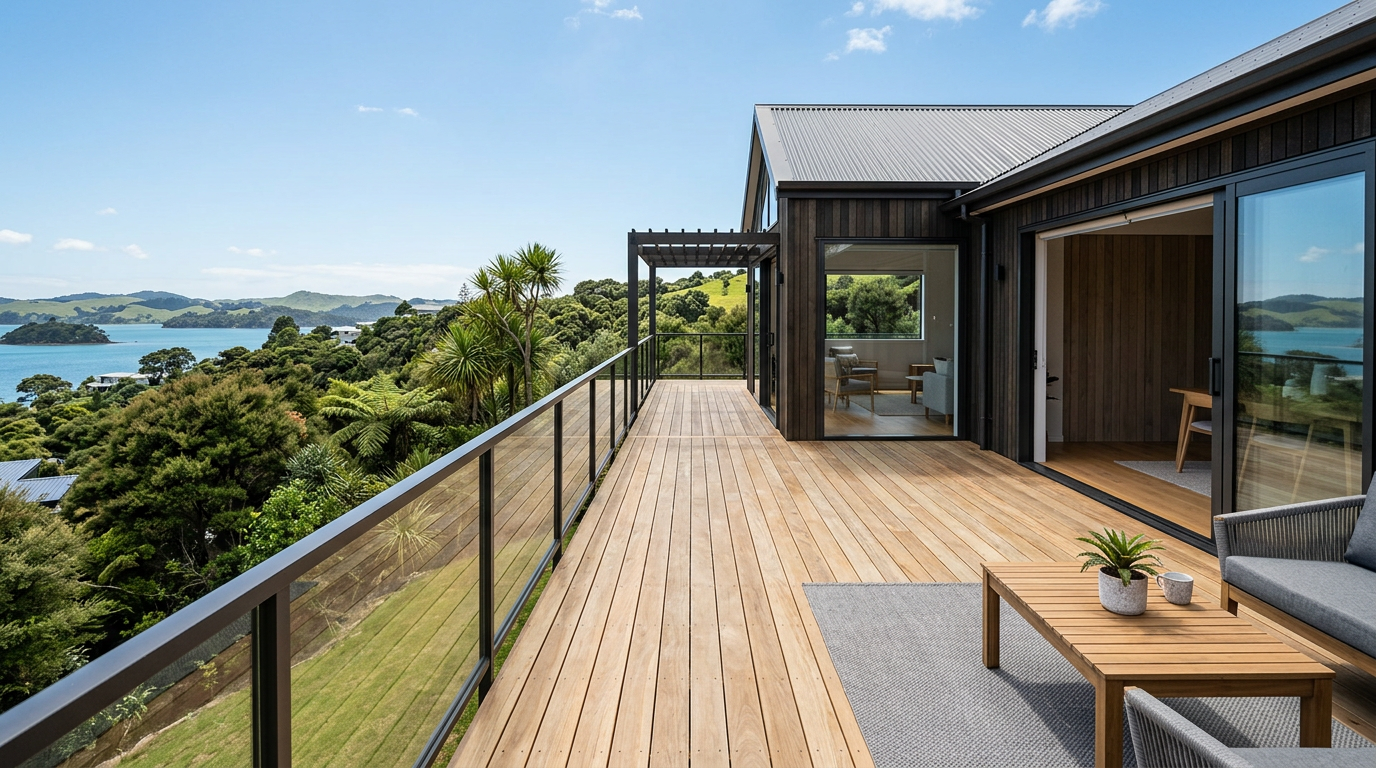
Building a deck is one of the most popular home improvement projects in New Zealand — and for good reason. A well-built deck extends your living space, suits our indoor-outdoor lifestyle, and adds real value to your property. In most cases, the primary trade you need is a qualified deck builder, but depending on your project, other specialists may also be involved.
The Primary Trade: Deck Builder
A deck builder is a tradesperson who specialises in designing and constructing outdoor decking structures. They have the training, tools, and hands-on experience to handle this type of work safely and effectively. A good deck builder will:
- Assess your site, including slope, soil type, and existing structures
- Diagnose any challenges (drainage, ground conditions, proximity to boundaries)
- Recommend the best materials and construction approach for your situation
- Provide a written quote for the work before starting
- Manage the build from foundations through to finishing
Many deck builders hold a Licensed Building Practitioner (LBP) licence, which is important for restricted building work (more on that below). You can verify an LBP's licence at Licensed Building Practitioners.
Could Other Trades Be Involved?
Sometimes a deck project involves multiple trades. Your primary deck builder can advise if other specialists are needed, but here is a general guide:
| Trade | When They're Needed |
|---|---|
| Structural engineer | Complex or elevated decks, unusual soil conditions, or when council requires engineering sign-off |
| Electrician | Outdoor lighting, power points, or spa pool connections on or near the deck |
| Plumber/gasfitter | Outdoor gas connections (e.g. for a built-in BBQ or heater) |
| Concretor | Concrete footings or a concrete pad beneath the deck |
| Painter/finishing specialist | Staining, oiling, or painting the finished deck |
For electrical work, any wiring to outdoor lights or power points is restricted electrical work that must be carried out by a registered electrician. Check registrations at the Electrical Workers Registration Board. Similarly, any gas connections must be done by a licensed gasfitter registered with the Plumbers Gasfitters & Drainlayers Board.
Building Consents and NZ Regulations
This is one of the most important parts of any deck project in New Zealand. Whether you need a building consent depends on the size and height of your deck.
Under Schedule 1 of the Building Act, some decks may be exempt from building consent — generally low-level decks that meet specific size and height limits (which may or may not need to be unattached to the house, depending on the specific exemption criteria). However, the rules are nuanced and vary by council, so always confirm with your local council before starting work.
As a general guide:
- Decks more than 1.5 metres above ground level almost always require a building consent
- Decks attached to the house that form part of the weathertight envelope may trigger consent requirements under NZ Building Code clause E2 (External Moisture)
- Structural elements must comply with NZ Building Code clause B1 (Structure) and B2 (Durability)
- Timber framing must meet NZS 3604 requirements
If your deck requires consent, the work may also constitute restricted building work (RBW), which must be carried out or supervised by a Licensed Building Practitioner. Visit MBIE Building Performance for detailed guidance on consent requirements and RBW.
Important: Always check with your local council before starting. Do not assume your deck is exempt — getting this wrong can cause serious problems when you sell your home.
Choosing the Right Deck Builder
Not all deck builders are equal. Here is what to look for when selecting one:
Qualifications and Licensing
- Check whether they hold an LBP licence (required for restricted building work)
- Ask about their experience with similar projects in your region
- Confirm they carry public liability insurance
Getting Quotes
- Always get multiple written quotes — at least two or three
- Make sure each quote covers the same scope of work so you can compare fairly
- Ask what is and isn't included (e.g. consent fees, engineering, finishing)
References and Past Work
- Ask to see photos of previous decks they have built
- Request references from past clients and follow them up
- Check online reviews where available
Materials: What Affects the Outcome
The material you choose has a big impact on durability, maintenance, and appearance. Common options in NZ include:
- Treated pine (H3.2 or H4): Cost-effective and widely available. H3.2 is suitable for above-ground exterior use, while H4 is required where timber is in ground contact or in contact with concrete. Available at Bunnings, Mitre 10, and PlaceMakers.
- Hardwoods (e.g. kwila, vitex): Durable and attractive, but require regular oiling to maintain appearance.
- Composite decking: Low maintenance and increasingly popular, though typically higher upfront cost.
In coastal or high-UV areas (common across much of New Zealand), durability and UV resistance should be key considerations. BRANZ provides research and guidance on building materials suited to NZ conditions.
For finishing and protecting your deck, quality exterior stains and oils from suppliers like Resene or Dulux can significantly extend the life of the timber.
DIY vs. Hiring a Professional
Some homeowners consider building a deck themselves. While basic carpentry skills can take you a long way, there are important limitations:
- If the deck requires building consent, restricted building work must be done by or supervised by an LBP
- Structural and foundation work carries real safety risks if done incorrectly
- An improperly built deck can be a liability issue and may affect your home insurance or resale
For straightforward, low-level, consent-exempt decks, a competent DIYer may manage the work — but always confirm the consent status with your council first, and be honest about your skill level.
When to Call a Professional
You should always engage a qualified deck builder when:
- Your deck will be elevated more than 600 mm above ground
- The deck is attached to your house
- A building consent is required
- The site has challenging conditions (steep slope, unstable ground, coastal exposure)
- Electrical, gas, or plumbing connections are involved
- You are unsure about any aspect of the design or construction
A professional deck builder will assess the situation, diagnose any challenges, and recommend the best course of action — giving you peace of mind that the job is done safely, legally, and to a high standard. Find qualified deck builders in your area right here on tradedirectory.co.nz.




 Licensed Building Practitioner (LBP)





