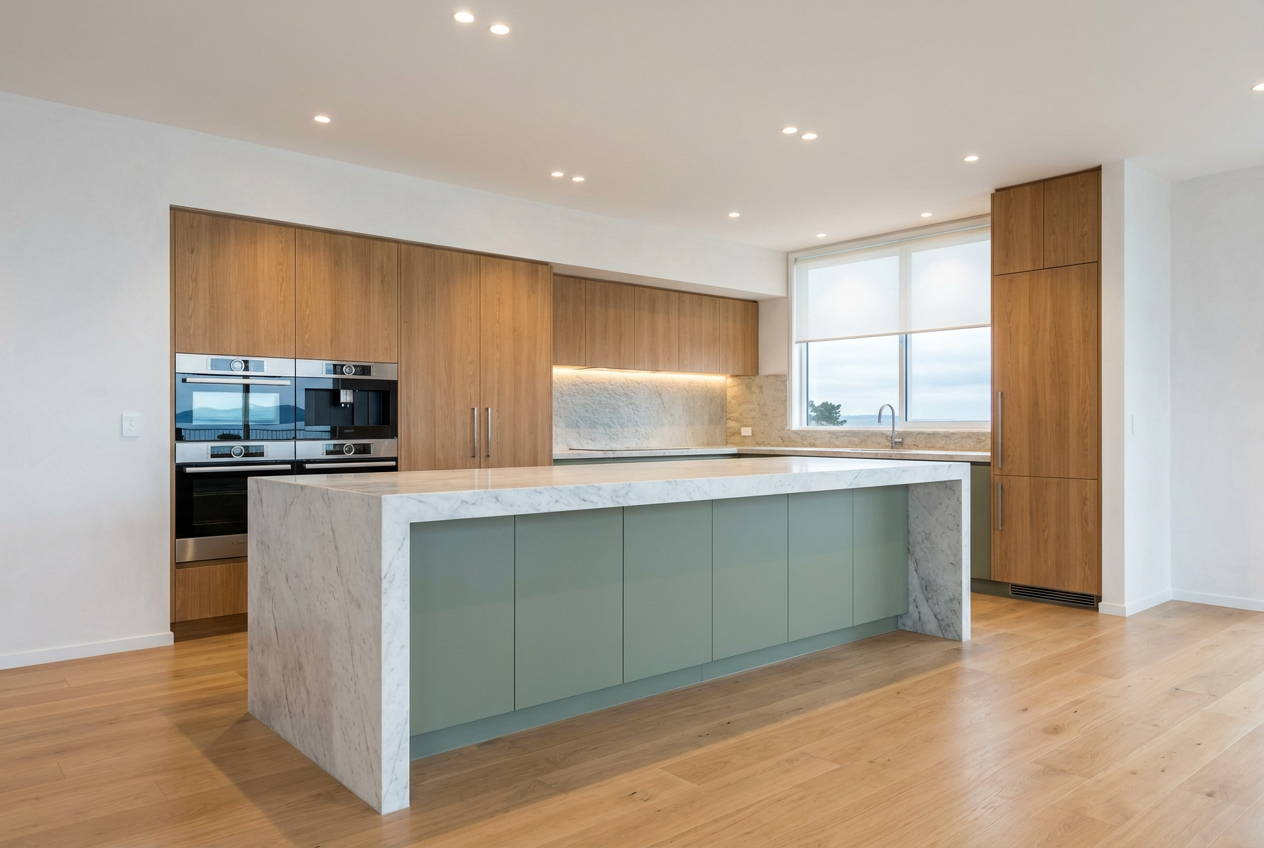
Most New Zealand cabinet makers hold a New Zealand Certificate in Furniture and Cabinetry (Level 4), which is the recognised trade qualification in this field. This qualification is typically completed through a combination of on-the-job training and formal study, and it signals that the tradesperson has the skills to design, construct, and install cabinetry and furniture to a professional standard.
The Main Qualification: NZ Certificate in Furniture and Cabinetry
The New Zealand Certificate in Furniture and Cabinetry (Level 4) is the primary trade credential for cabinet makers in New Zealand. It is awarded by the New Zealand Qualifications Authority (NZQA) and delivered through industry training organisations and polytechnics around the country.
The qualification covers:
- Timber and board material selection and properties
- Joinery and construction techniques
- Cabinet and furniture design principles
- Finishing, including painting, lacquering, and laminating
- Safe use of hand tools and machinery
- Reading and interpreting technical drawings and plans
Some providers offer strand-specific pathways, such as furniture making or cabinetry and joinery, allowing trainees to specialise in their area of interest.
How Do Cabinet Makers Train in NZ?
Apprenticeships
The most common pathway is a trade apprenticeship, typically lasting three to four years. Apprentices work under an experienced cabinet maker while completing unit standards towards their qualification. This earn-while-you-learn model is well suited to the hands-on nature of the trade.
Apprenticeship programmes are coordinated through industry training organisations, and trainees register with NZQA to have their unit standards formally recognised.
Polytechnic and Trade School Programmes
Some trainees complete full-time or part-time study at a polytechnic or private training establishment before entering the workforce. These programmes often cover the same unit standards as an apprenticeship and can shorten the time needed to complete the qualification once employment begins.
Pre-trade Courses
Pre-trade or foundation courses at Level 2 or 3 are available for school leavers or career changers who want to build basic skills before committing to a full apprenticeship. These are a good stepping stone into the industry.
Is Cabinet Making Licensed or Regulated Work in NZ?
Unlike electrical or plumbing work, cabinet making is not a licensed or restricted trade under New Zealand law. There is no legal requirement for a cabinet maker to hold a specific licence to operate. However, holding the NZ Certificate in Furniture and Cabinetry demonstrates a recognised level of competence and professionalism.
It is worth noting that some aspects of a kitchen or bathroom renovation may involve restricted building work, plumbing, or electrical connections — these must be carried out by appropriately licensed tradespeople. For example:
- Electrical connections must be done by a registered electrician (see EWRB)
- Plumbing connections must be done by a licensed plumber (see PGDB)
- Structural alterations may require a Licensed Building Practitioner (see LBP) and possibly a building consent — always check with your local council
For guidance on what work requires a building consent, MBIE Building Performance is a reliable starting point.
What to Look for When Hiring a Cabinet Maker
Because cabinet making is not a licensed trade, it pays to do a little homework before hiring. Here are some practical things to check:
- Ask about their qualification — do they hold the NZ Certificate in Furniture and Cabinetry or equivalent?
- Look at their portfolio — photos of past kitchens, wardrobes, or furniture projects give a good sense of quality
- Check references — speak to previous clients if possible
- Get a written quote — a detailed quote protects both parties and sets clear expectations
- Ask about materials — quality cabinet makers will discuss board grades, hardware brands, and finish options with you
- Confirm they carry insurance — public liability insurance is important for any tradesperson working in your home
For consumer advice on hiring tradespeople, Consumer NZ has useful guidance.
NZ Building Code Considerations
While cabinet making itself is not directly governed by the NZ Building Code, installations in kitchens and bathrooms must comply with relevant clauses — particularly around moisture management and ventilation. BRANZ publishes research and good practice guides that inform how cabinetry should be installed in wet areas to avoid moisture damage over time.
If your project involves structural changes — such as removing a wall to open up a kitchen — a building consent may be required. Always confirm with your local council before starting work.
When to Call a Professional
For any custom cabinetry, kitchen renovation, built-in wardrobes, or furniture project, it is well worth engaging a qualified cabinet maker. A skilled tradesperson will not only produce a better result but will also understand material behaviour, tolerances, and installation requirements that affect the longevity of the finished product.
You can find qualified local cabinet makers in your area through tradedirectory.co.nz.