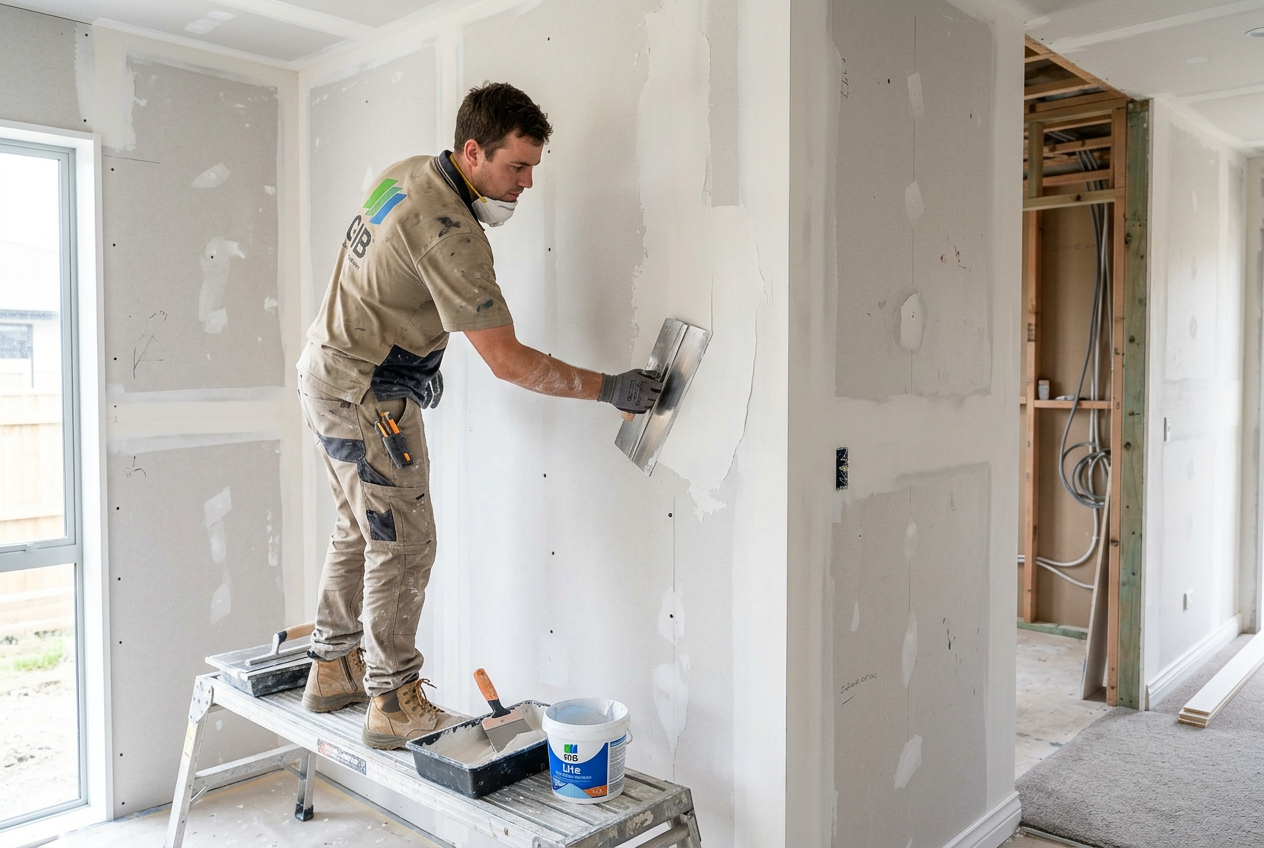
Before a plasterer can repair water-damaged walls or ceilings, the underlying leak must be fully fixed — and the area allowed to dry out completely. Skipping this step means the new plaster will almost certainly fail, and you could end up with mould, structural damage, and the same repair bill all over again. The trade you need first depends on where the water is coming from.
Why the Leak Must Be Fixed First
Water-damaged plaster is a symptom, not the problem. If a plasterer patches over damp or still-wet substrate, the moisture trapped behind the repair will cause the new plaster to bubble, crack, delaminate, or grow mould. Most professional plasterers will refuse to start work until they can confirm the area is dry — and rightly so. Moisture content in the substrate (plasterboard, timber framing, or masonry) needs to return to acceptable levels before any plastering work begins. A plasterer may use a moisture meter to check this before quoting or starting.
Which Trade Do You Need?
The right tradesperson depends on the source of the leak:
Plumber
If the water is coming from a burst pipe, leaking tap, faulty shower, overflowing bath, or a failed seal around a basin or toilet, you need a licensed plumber. In New Zealand, work on sanitary plumbing and water supply systems is restricted work under the Plumbers, Gasfitters, and Drainlayers Act 2006. This means it must be carried out by (or under the supervision of) a tradesperson registered with the Plumbers Gasfitters & Drainlayers Board. Never attempt to fix pressurised water supply pipes yourself — always call a licensed plumber.
Roofer or Builder
If the leak is coming through the roof, around flashings, skylights, or penetrations, you'll need a qualified roofer or builder. Roof leaks are a common cause of ceiling plaster damage in New Zealand, particularly in older homes or after heavy rain events. A builder or roofer will identify failed flashings, cracked tiles, damaged iron, or blocked gutters and downpipes. For significant structural repairs, check whether a building consent is required — your local council is the right place to confirm this.
Waterproofer or Tiler
If the leak is coming from a wet area such as a shower or bathroom floor, the waterproof membrane may have failed. In this case, a waterproofer or tiler needs to strip back the tiles, replace the membrane, and re-tile before any plastering can happen. Wet area waterproofing must comply with NZ Building Code clause E3 (Internal Moisture). BRANZ has good guidance on wet area construction standards.
Joiner or Builder
Leaks around windows and doors — particularly in homes with direct-fixed cladding — are a well-known issue in New Zealand. If water is tracking in around a window frame or through the wall cladding, a builder or joiner needs to address the weathertightness issue first. This may involve resealing joinery, repairing the cladding, or improving the flashing detail. Depending on the extent of the work, a building consent may be needed — always check with your council.
The Drying-Out Period
Once the leak is fixed, don't rush to call the plasterer straight away. The affected area needs time to dry out thoroughly. Depending on the extent of the water damage, this can take anywhere from a few days to several weeks. You can help speed up the process by:
- Opening windows and improving ventilation
- Using a dehumidifier
- Running a fan heater in the affected room (safely)
- Removing any wet insulation from wall or ceiling cavities
A plasterer or builder may use a moisture meter to confirm the substrate is dry enough before work begins. If plasterboard (GIB board) has been saturated, it often needs to be replaced entirely rather than dried and re-plastered — GIB provides technical guidance on when plasterboard can be retained versus replaced.
Watch Out for Mould
Water damage and mould go hand in hand in New Zealand's often damp climate. If you can see or smell mould, this needs to be treated before plastering. In rental properties, landlords have obligations under the Healthy Homes Standards to maintain weathertight homes and address moisture issues. WorkSafe NZ has guidance on managing mould safely, particularly if the affected area is large.
The Right Order of Trades
Here's a simple sequence to follow:
| Step | Trade | What They Do |
|---|---|---|
| 1 | Plumber / Roofer / Builder / Tiler | Find and fix the source of the leak |
| 2 | Builder (if needed) | Replace damaged framing, insulation, or cladding |
| 3 | All trades | Allow area to fully dry out |
| 4 | Plasterer | Repair or replace damaged plaster or GIB board |
| 5 | Painter | Prime and repaint once plaster has cured |
When to Call a Professional
Always call a licensed plumber for any work on water supply or sanitary drain pipes — this is legally restricted work in New Zealand. For roof leaks, structural repairs, or weathertightness issues, engage a qualified builder or roofer. Once the leak is sorted and the area is dry, a skilled plasterer can assess the damage and carry out the repair properly. You can find qualified local tradespeople — including plasterers, plumbers, roofers, and builders — on tradedirectory.co.nz.

 Master Painters NZ member








