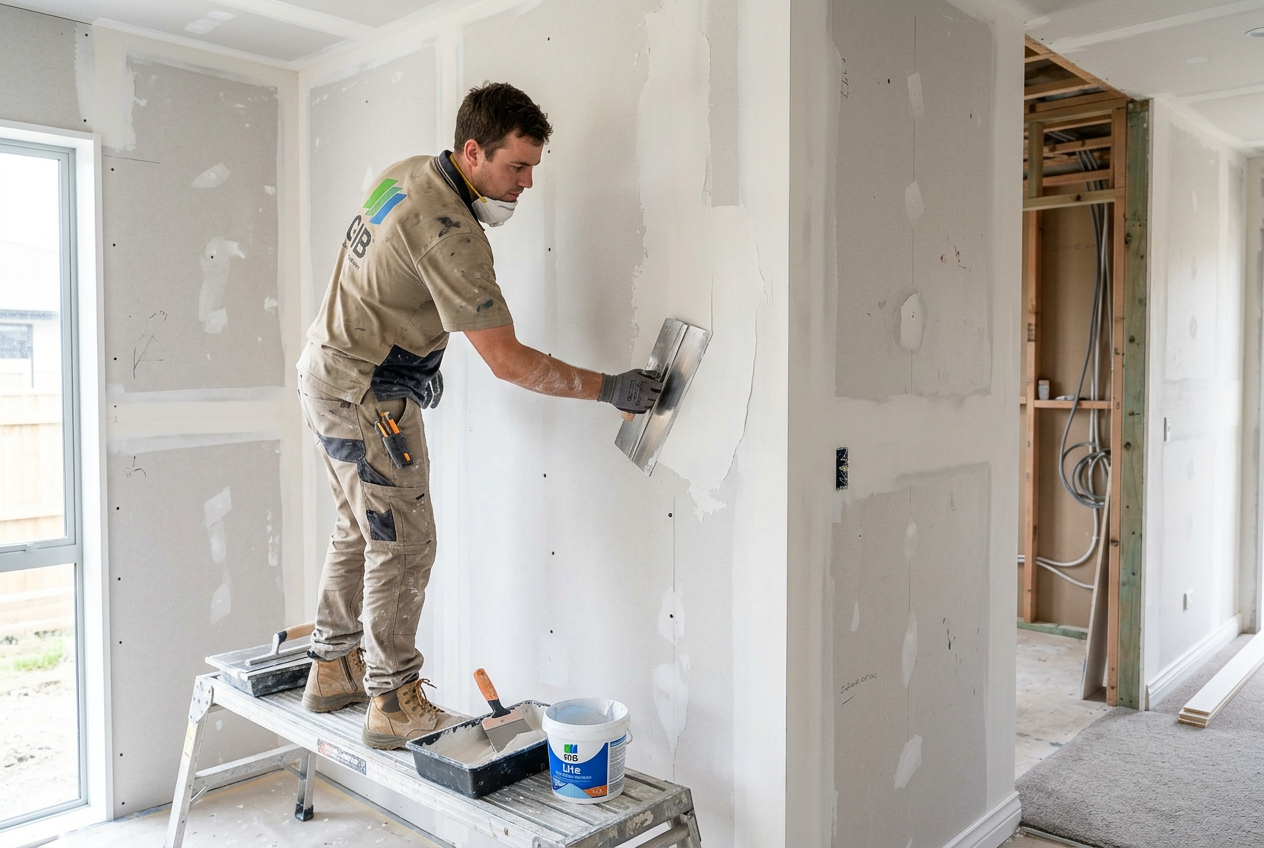
Cracked plaster is one of the most common concerns NZ homeowners face, whether you're living in a villa in Ponsonby, a brick-and-tile in Christchurch, or a newer weatherboard home in Wellington. In most cases, the answer is a qualified plasterer — but the type of crack, its location, and its underlying cause can mean other trades need to be involved too. This guide walks you through everything you need to know.
Understanding Why Plaster Cracks
Before calling anyone, it helps to understand what you're looking at. Plaster cracks in NZ homes fall into a few broad categories:
- Hairline or shrinkage cracks — Very fine cracks, often in a spider-web or map pattern. Common in older homes and usually cosmetic.
- Settlement cracks — Diagonal cracks running from corners of windows or doors. Often caused by minor ground movement or timber framing drying out.
- Structural cracks — Wide, stepped, or recurring cracks that may indicate foundation movement or structural issues. These need urgent attention.
- Moisture-related cracks — Cracks accompanied by staining, bubbling, or soft plaster. A sign of water ingress or condensation problems.
- Impact damage — Localised holes or breaks from physical damage.
The pattern, width, and location of a crack are all clues. A crack wider than about 3 mm, or one that keeps returning after repair, warrants a closer look at the underlying cause before any cosmetic fix is applied.
The Right Trade: Plasterer First
A plasterer is the primary trade you need for this job. They have the training, tools, and experience to handle this type of work safely and effectively. A plasterer will assess the situation, diagnose the cause, and recommend the best course of action. They will provide a quote for the work before starting.
In NZ, plasterers work across two main systems:
- Solid plaster — Traditional lime or cement-based plaster applied to masonry, brick, or metal lath. Common in pre-1970s homes.
- Plasterboard (GIB®) systems — Sheet-based systems with a stopping compound finish. Standard in most homes built since the 1970s. See GIB's technical resources for system details.
Make sure the plasterer you hire has experience with the specific system in your home — solid plaster and plasterboard finishing are distinct skills.
Could Other Trades Be Involved?
Sometimes a job involves multiple trades. Your primary tradesperson can advise if other specialists are needed. Here are the most common situations:
Builder or Structural Engineer
If cracks suggest foundation movement, rotten framing, or structural failure, a Licensed Building Practitioner (LBP) or structural engineer should assess the building before any plastering work begins. Plastering over a structural problem is a temporary fix at best. You can verify LBP registration at lbp.govt.nz.
Waterproofer or Roofer
Moisture-related cracking often points to a leak — from the roof, a window surround, or a wall cladding failure. NZ's Building Code clause E2 (External Moisture) sets requirements for keeping water out of the building envelope. A roofer, waterproofer, or cladding specialist may need to fix the source before the plasterer repairs the damage.
Painter
Once the plaster is repaired and fully cured, a painter will be needed to match and finish the surface. Colour-matching existing paint can be tricky — brands like Resene, Dulux, and Wattyl all offer colour-matching services through their NZ stores.
Drainlayer or Plumber
If internal moisture is the culprit — think rising damp or a leaking pipe inside the wall — a licensed plumber or drainlayer may need to be involved. Plumbing and drainlaying work is restricted work under NZ law and must be carried out by a licensed professional registered with the Plumbers, Gasfitters and Drainlayers Board.
What to Expect: The Repair Process
A typical plaster repair follows these steps:
- Assessment — The plasterer inspects the crack, checks for movement, moisture, or structural issues, and identifies the cause.
- Preparation — Loose or hollow plaster is removed. The area is cleaned and primed as required.
- Repair — The crack is filled, reinforced with fibreglass tape if needed, and built up in layers to match the surrounding surface.
- Curing — Plaster and stopping compounds need adequate drying time. Rushing this step leads to further cracking.
- Sanding and finishing — The surface is sanded smooth and prepared for painting.
- Painting — A separate trade or the same contractor finishes the surface.
Consent and Compliance
Most plaster repair work is cosmetic maintenance and does not require a building consent. However, if the repair involves structural work — such as replacing framing, altering load-bearing elements, or significant cladding work — a building consent may be required. Schedule 1 of the Building Act lists exemptions, but requirements vary. Always confirm with your local council before starting any work that goes beyond surface repair. For guidance, see MBIE Building Performance.
For research-backed guidance on NZ building performance and moisture issues, BRANZ is an excellent resource.
How to Choose and Vet a Plasterer
Here's what to look for when hiring:
| What to check | Why it matters |
|---|---|
| Experience with your plaster type | Solid plaster and GIB finishing are different skills |
| References or portfolio | Confirms quality of finish |
| Written quote | Protects both parties |
| Insurance (public liability) | Covers damage during the job |
| LBP registration (if structural) | Required for restricted building work |
- Get multiple quotes — At least two or three so you can compare scope and price.
- Ask about the cause — A good plasterer will explain why the crack occurred, not just patch it.
- Check reviews — Look for consistent feedback on quality of finish and communication.
- Avoid cash-only, no-quote operators — A reputable tradesperson will always provide a written quote.
You can find qualified plasterers in your area right here on tradedirectory.co.nz.
DIY vs Professional
Small hairline cracks in low-traffic areas can be a manageable DIY job using a pre-mixed filler and some patience. Products are available at Bunnings and Mitre 10. However, DIY is generally only suitable when:
- The crack is clearly cosmetic and not recurring
- There is no sign of moisture, movement, or structural issues
- You are comfortable with the finishing and painting process
For anything wider than a hairline, recurring cracks, or cracks with an unknown cause, call a professional. A poor repair that hides an underlying problem can be far more costly to fix later.
When to Call a Professional
Call a qualified plasterer — and potentially other trades — immediately if you notice:
- Cracks wider than 3 mm or that are growing over time
- Diagonal cracks from door or window corners
- Plaster that sounds hollow when tapped
- Staining, dampness, or mould near the crack
- Cracks that have returned after a previous repair
- Any crack following an earthquake or significant ground movement
Don't delay if moisture is involved — NZ's Healthy Homes standards apply to rental properties and the Building Code both recognise the serious health and structural risks of uncontrolled moisture in buildings.

 Master Painters NZ member








