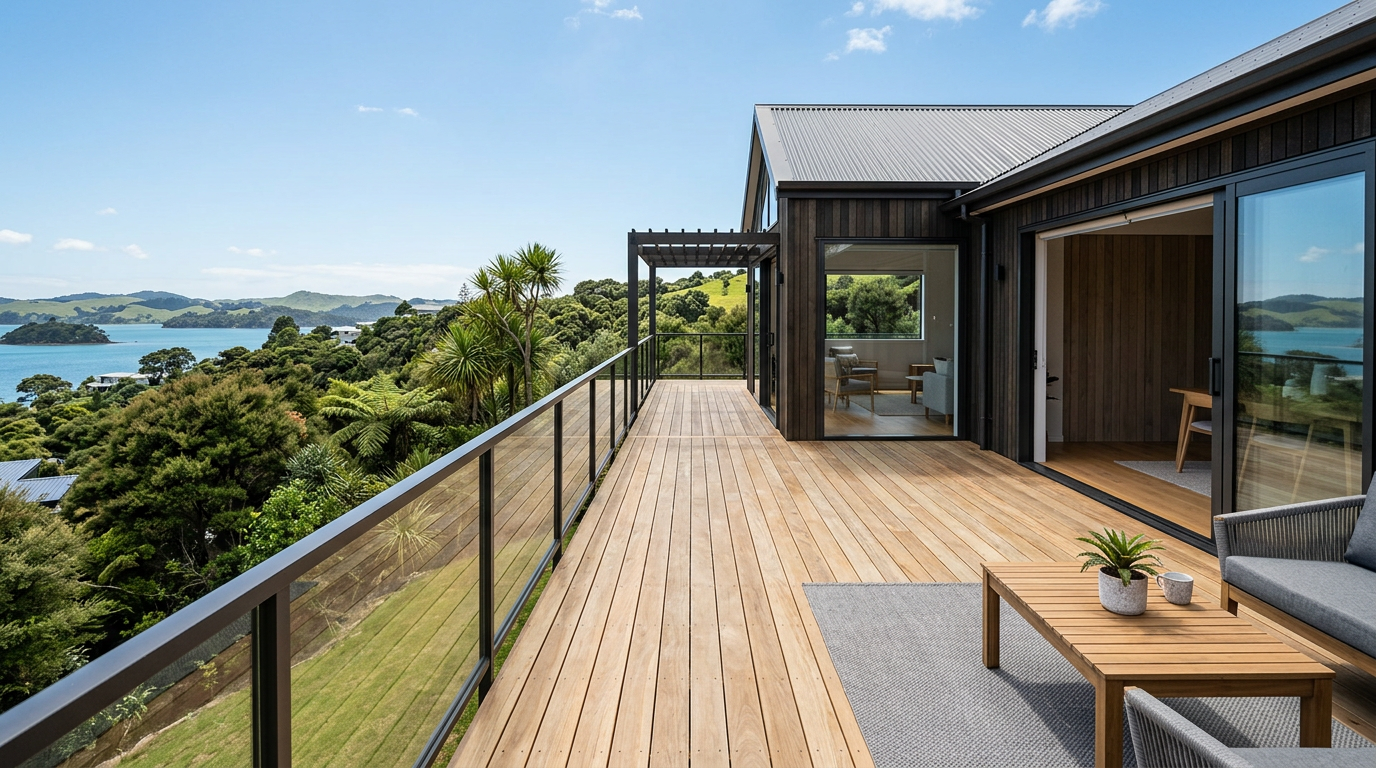
For most residential freestanding decks in New Zealand, 100x100mm H4-treated timber posts are the standard starting point — but the right size for your project depends on several factors including deck height, post spacing, and the loads the structure needs to carry. Here's what you need to know before you start.
Why Post Size Matters
Posts are the primary vertical load-bearing elements of a freestanding deck. They transfer the weight of the deck, furniture, and people down into the foundations. Undersized posts can buckle or deflect over time, creating a safety hazard. In New Zealand, residential timber-framed decks are typically designed to comply with NZS 3604:2011 (Timber-framed buildings), which sets out prescriptive sizing rules you can follow without needing an engineer — provided your deck falls within the standard's scope.
Key Factors That Determine Post Size
Several variables influence which post size is appropriate:
- Deck height above ground — The taller the post, the more prone it is to buckling under load. Posts over about 1.5m become more critical.
- Post spacing (centres) — Closer spacing means each post carries less load; wider spacing means more load per post.
- Tributary area — The floor area each post is responsible for supporting.
- Deck load — Residential decks are generally designed for a live load of 2.0 kPa (people and furniture) under NZS 3604.
- Wind zone — NZ has a range of wind zones (Low through to Very High and Extra High). Higher wind zones may require larger or braced posts.
- Timber species and grade — Commonly used species include radiata pine (SG8) and LVL (laminated veneer lumber).
Common Post Sizes for NZ Residential Decks
The table below gives a general guide based on NZS 3604 prescriptive tables. Always verify against the actual standard or with your council, as site-specific conditions apply.
| Post Height | Typical Post Size | Notes |
|---|---|---|
| Up to 1.0m | 100x100mm H4 | Standard for low decks |
| 1.0m – 1.8m | 100x100mm H4 | May need diagonal bracing |
| 1.8m – 2.4m | 120x120mm or 100x100mm LVL | Check tributary area carefully |
| Over 2.4m | Engineer's design recommended | Outside standard NZS 3604 scope |
Note: These are indicative sizes only. Your specific post size must be confirmed against the relevant NZS 3604 tables or by a qualified professional.
Timber Treatment: H4 Is Essential
All posts in ground contact or within 150mm of the ground must be H4 treated (hazard level 4) to resist rot and insect attack in NZ conditions. Posts that are clear of the ground and protected from the weather may use H3.2 in some situations, but H4 is the safest and most common choice for posts bearing on concrete pads or set into the ground. Always check the treatment level stamped on the timber before purchasing — look for it at suppliers like Bunnings, Mitre 10, or PlaceMakers.
Post Spacing and Beam Sizing Work Together
Post size doesn't work in isolation — it's closely linked to beam and joist sizing. Wider post spacing means longer beam spans, which in turn requires larger beams. A common layout for a freestanding deck is posts at 1.8m to 2.4m centres, supporting a doubled 190x45mm or 190x90mm bearer. Your post size, beam size, and joist size all need to be coordinated using the NZS 3604 span tables.
Do You Need a Building Consent?
In New Zealand, many decks require a building consent. Under Schedule 1 of the Building Act 2004, some low decks (generally those no more than 1.5m above ground and not attached to a building) may be exempt — but the rules are nuanced and vary by council. Always check with your local council before starting work. You can find general guidance at MBIE Building Performance.
If your deck requires consent, the council will want to see that your post sizes comply with NZS 3604 or are supported by an engineer's design.
Bracing and Lateral Stability
A freestanding deck also needs to resist lateral (sideways) forces from wind and people moving around. This is typically achieved through diagonal knee bracing between posts and beams, or through the use of moment connections. NZS 3604 provides guidance on when and how bracing is required. In higher wind zones, this becomes especially important.
When to Call a Professional
While a competent DIYer can build a straightforward low-level deck, there are situations where you should engage a qualified professional:
- Your deck is over 1.5m above ground — this is higher-risk work and may require an Licensed Building Practitioner (LBP) to carry out or supervise the structural work. Check the LBP register.
- The deck is on a sloping or unstable site.
- You're in a high or very high wind zone.
- Your post heights or spacings fall outside NZS 3604 prescriptive limits, requiring an engineer's specific design.
- You're unsure about foundation design or soil conditions.
A qualified deck builder can size your posts correctly, ensure the structure is safe and code-compliant, and manage the consent process. You can find experienced local deck builders on tradedirectory.co.nz.
Safety note: Working at height carries real risk. Use appropriate scaffolding or work platforms, and never work alone when lifting heavy beams or posts.




 Licensed Building Practitioner (LBP)