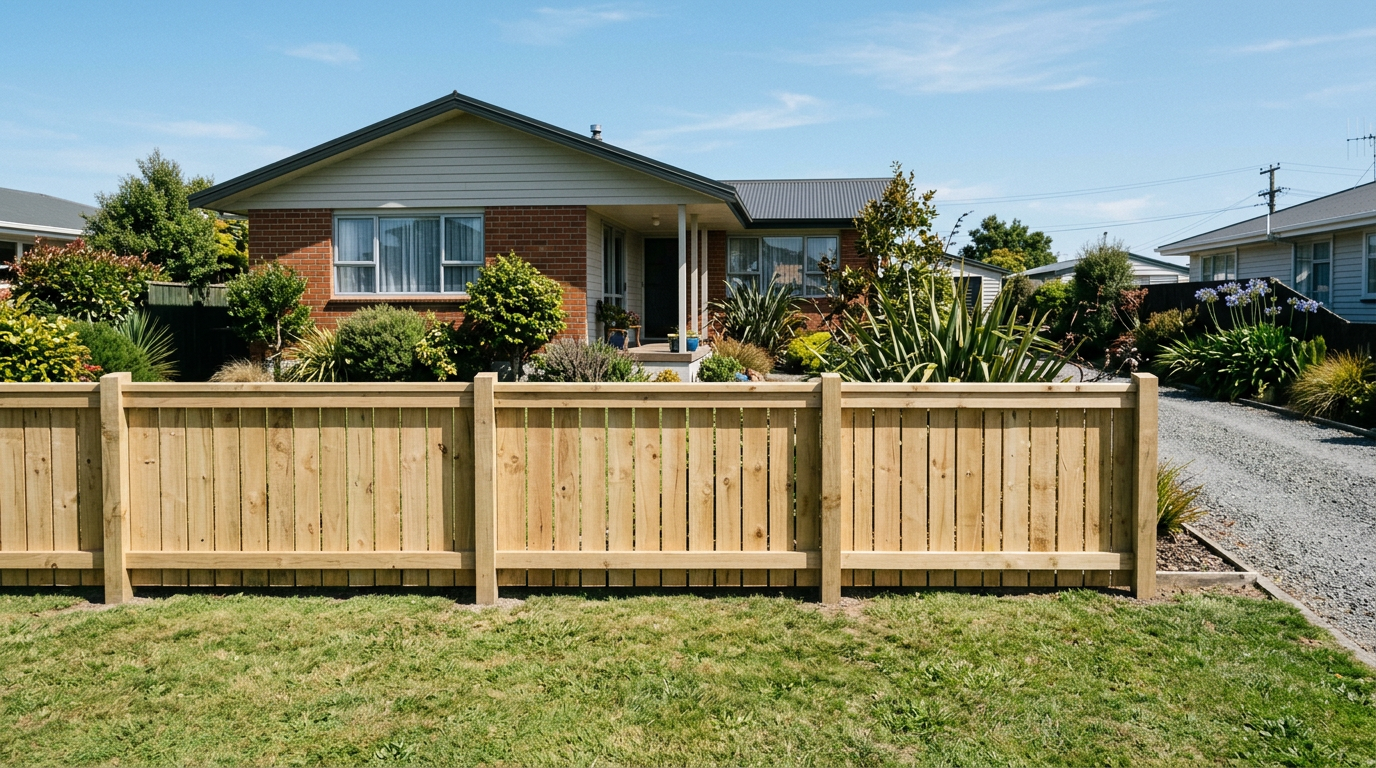
Getting your section ready before a fencer arrives is one of the best things you can do to keep the job on time and on budget. A well-prepared site means your tradesperson can get straight to work rather than spending billable hours clearing obstacles or waiting on information. Here's a practical guide for NZ homeowners.
Locate Your Boundary Pegs
This is the single most important step. Boundary pegs (also called survey pegs) mark the legal boundaries of your property, and fences must be built in the right place — especially on shared boundaries with neighbours. Pegs are usually small wooden stakes or iron pins, sometimes with a coloured cap, buried at or just below ground level at each corner of your section.
If you can't find them, check your LIM report or certificate of title (available through Land Information New Zealand), or contact a licensed cadastral surveyor to re-peg the boundary before work starts. Never assume a fence line, hedge, or existing structure marks the true boundary — it often doesn't.
Talk to Your Neighbours Early
If the fence is on a shared boundary, your neighbour has rights under the Fencing Act 1978. In most cases, adjoining owners share the cost of a sufficient fence on a common boundary. You're required to give your neighbour written notice (a fencing notice) before starting work, outlining the proposed fence type, location, and estimated cost. Skipping this step can cause legal headaches later. Sort this out well before your fencer's start date.
Check Whether You Need a Building Consent
Most residential fences don't need a building consent, but there are exceptions. Under Schedule 1 of the Building Act 2004, fences up to 2.5 metres high are generally exempt — however, fences near boundaries, retaining walls combined with fences, or fences around swimming pools may have different rules. Pool fencing in particular must comply with the Building Code clause F9 and the Fencing of Swimming Pools Act 1987.
Always confirm with your local council before work begins. You can find general guidance at MBIE Building Performance.
Clear the Fence Line
Once you know where the fence will go, clear the line so your fencer can work efficiently:
- Remove vegetation — cut back shrubs, hedges, and overhanging branches along the fence line. Pull out any old fence posts or wire.
- Shift garden beds and irrigation — move any raised beds, drip lines, or sprinkler heads that sit within about a metre of the boundary.
- Relocate stored items — move firewood stacks, garden equipment, compost bins, and anything else that blocks access.
- Mark underground services — this is critical. Before any post holes are dug, you need to know where buried cables, pipes, and gas lines run. Contact Dial Before You Dig (0800 248 344 or beforeudig.co.nz) to get service plans for your property. Hitting a buried power cable or gas line is extremely dangerous.
Ensure Vehicle and Equipment Access
Many fencers use a post-hole borer mounted on a tractor or ute. Check that your driveway gate, side access, and the fence line itself are wide enough for machinery to get through. If access is tight, let your fencer know in advance so they can plan accordingly — hand-digging post holes takes considerably longer and may affect your quote.
Confirm the Fence Specification
Before the fencer arrives, make sure you've agreed in writing on:
| Detail | Why It Matters |
|---|---|
| Fence style and materials | Affects cost, consent requirements, and neighbour agreement |
| Post spacing and depth | Varies by soil type, wind zone, and fence height |
| Gate positions and sizes | Gates need to be planned from the start |
| Who supplies materials | Some fencers supply everything; others prefer you to |
| Disposal of old fencing | Confirm who removes and disposes of old materials |
NZ has several wind zones (as defined in NZS 3604), and fences in high-wind areas like Wellington or coastal Northland may need deeper posts or additional bracing. A good fencer will factor this in, but it's worth discussing.
Check the Ground Conditions
Let your fencer know about any known issues with the ground:
- Rocky ground — may require rock-breaking equipment or alternative fixing methods
- Soft or boggy soil — posts may need to be set deeper or in concrete
- Sloping sections — stepped or raked fence panels need to be planned in advance
- Tree roots — large roots near the fence line can make post-hole boring very difficult
Notify Your Neighbours of the Start Date
Even if you've already served a fencing notice, it's courteous to let neighbours know when work will begin. Fencing can be noisy (post-hole borers, nail guns, grinders), and a heads-up avoids unnecessary friction.
When to Call a Professional
Fencing is generally not restricted building work under the Building Act, so homeowners can legally do their own fencing. However, pool fencing is a safety-critical exception — it must comply with strict legal requirements, and it's strongly recommended to use an experienced fencer and have the work inspected by your council. For any fence requiring a building consent, the consent process must be followed correctly.
For a smooth, professional result — especially on sloping sections, long boundary runs, or pool enclosures — it's well worth hiring a qualified local fencer. You can find experienced fencing contractors across New Zealand on tradedirectory.co.nz.





