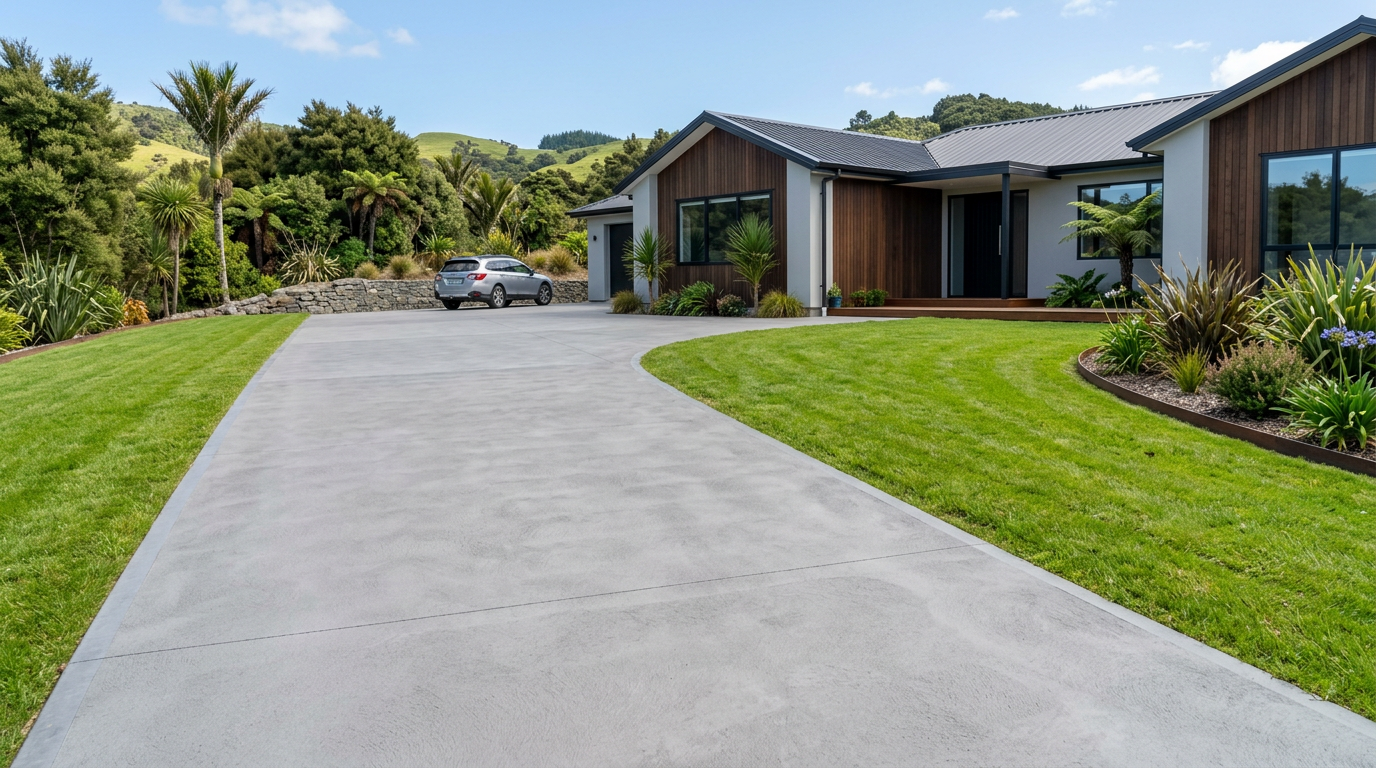
A written driveway contract is one of the most important documents you'll sign before any groundwork begins. It protects you as a homeowner, sets clear expectations for the contractor, and gives both parties something to refer back to if a dispute arises. Whether you're getting a new concrete driveway, asphalt seal coat, or exposed aggregate finish, the contract should spell out exactly what's being done, for how much, and by when.
Why a Written Contract Matters
Verbal agreements are notoriously difficult to enforce. In New Zealand, the Consumer Guarantees Act 1993 and the Fair Trading Act 1986 give you some baseline protections, but a detailed written contract makes those rights far easier to exercise. It also helps avoid the most common disputes: scope creep, unexpected costs, and disagreements over finish quality.
For larger projects, it's worth knowing that some driveway work — particularly if it involves changes to stormwater drainage or a new vehicle crossing onto a public road — may require a building consent or at minimum approval from your local council. Always check with your council before work starts, as requirements vary by region.
Key Elements Every Driveway Contract Should Include
1. Full Details of Both Parties
The contract should clearly name the homeowner and the contractor, including the contractor's full legal business name, physical address, phone number, and GST number. If the contractor is a company, the company registration number is useful too.
2. Detailed Scope of Work
This is the heart of the contract. It should describe:
- The type of surface (concrete, asphalt, chip seal, pavers, exposed aggregate, etc.)
- Dimensions — length, width, and total area in square metres
- Depth of base course and finished surface (e.g. 150 mm compacted AP40 base, 100 mm concrete slab)
- Subbase preparation — excavation depth, removal of existing material, compaction method
- Edging, kerbing, or drainage channels included or excluded
- Reinforcing — mesh, rebar, or fibre reinforcement for concrete
- Finish type — broom finish, exposed aggregate, stamped, sealed, etc.
- Any vehicle crossing or kerb-cut work and who obtains council approval
The more specific this section is, the less room there is for disagreement later.
3. Materials and Products
The contract should specify the grade and source of materials where possible. For concrete, this means the specified MPa strength (commonly 25 MPa or 30 MPa for driveways). For asphalt, the mix type and thickness. If specific products are being used — such as a sealer from Resene or a concrete admixture — name them. This prevents a contractor substituting cheaper alternatives without your knowledge.
4. Price and Payment Schedule
The contract must state:
- The total price (GST inclusive)
- A clear payment schedule — for example, a deposit on signing, a progress payment mid-job, and the balance on completion
- What triggers each payment milestone
- Accepted payment methods
Be cautious of contractors asking for more than 10–20% upfront as a deposit, or demanding full payment before the job is finished. Consumer NZ advises never paying in full until you're satisfied with the completed work.
5. Start Date and Completion Timeline
The contract should include an expected start date and a realistic completion timeframe. Weather clauses are reasonable — concrete and asphalt work is weather-dependent in New Zealand — but the contract should explain what happens if delays occur and how you'll be kept informed.
6. Variations Process
If the scope changes once work has started (for example, unexpected soft ground requiring extra fill), the contract should explain how variations are handled. Any changes to price or scope should be agreed in writing before additional work proceeds.
7. Site Preparation and Access
Clarify who is responsible for:
- Removing existing surfaces or vegetation
- Protecting garden beds, fences, and structures near the work area
- Providing site access and where materials will be stored
- Disposing of spoil and waste material
8. Warranties and Defects Period
A reputable contractor should offer a workmanship warranty — typically 12 months is common, though this varies. The contract should state what the warranty covers (e.g. cracking beyond a certain width, surface delamination) and what it excludes (e.g. damage from tree roots or vehicle overloading). Note that your rights under the Consumer Guarantees Act exist independently of any written warranty.
9. Health, Safety, and Site Security
The contractor is responsible for managing their worksite safely under the Health and Safety at Work Act 2015. The contract should note who is responsible for site fencing, signage, and keeping children and pets away from wet concrete or freshly laid asphalt. WorkSafe NZ has guidance on contractor obligations.
10. Dispute Resolution
A good contract includes a simple process for resolving disagreements — for example, written notice of a complaint, a timeframe for the contractor to respond, and escalation steps if the issue isn't resolved. For smaller disputes, the Disputes Tribunal (check the current claims limit with the Ministry of Justice, as thresholds can change) is a practical option in New Zealand.
Consents and Compliance
If your driveway project involves a new vehicle crossing onto a public road, you'll almost certainly need local council approval — this is separate from a building consent. Some drainage work connected to the stormwater system may also require consent under the NZ Building Code (specifically Clause E1 covering surface water). Always confirm with your council what approvals are needed before signing a contract, and make sure the contract specifies who is responsible for obtaining them.
For guidance on building consents and Schedule 1 exemptions, MBIE Building Performance is the authoritative source.
When to Call a Professional
If your driveway project involves any stormwater drainage connections, these may constitute restricted building work or plumbing work requiring a licensed tradesperson. Similarly, if any electrical conduit (for gate motors or lighting) is being laid under the driveway, that work must be carried out by a registered electrician — check the Electrical Workers Registration Board to verify credentials.
For the driveway itself, while laying a driveway is not licensed work in the same way as electrical or plumbing, hiring an experienced, reputable contractor makes a significant difference to the quality and longevity of the result. You can find qualified local driveway layers on tradedirectory.co.nz.

 Site Safe
 SiteWise

 ISO 9001 / 45001 / 14001



 SARNZ (Scaffolding Association)