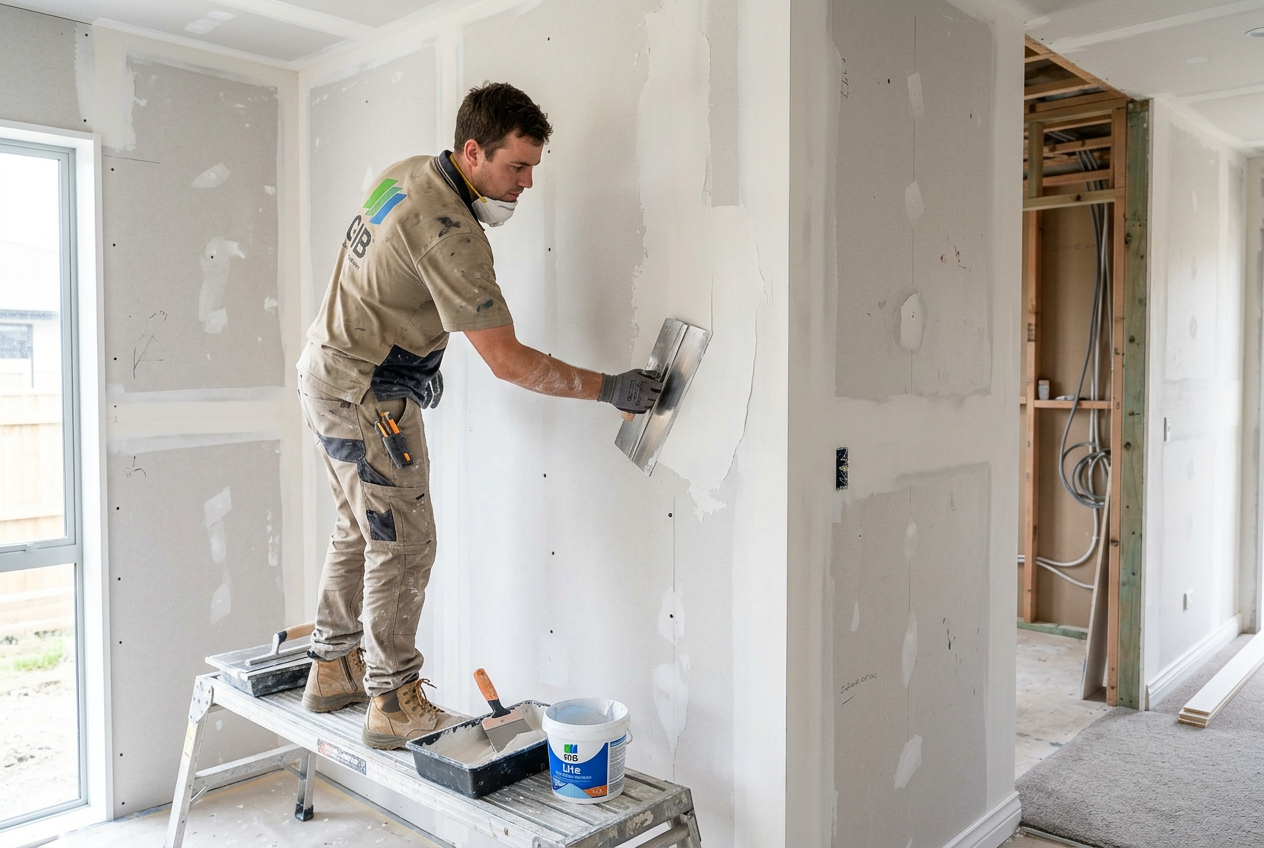
Getting a plastering quote can feel overwhelming if you're not sure what to look for. Asking the right questions upfront helps you compare quotes fairly, avoid nasty surprises, and make sure the job is done to a proper standard. Here's what every NZ homeowner should ask before signing anything.
Are You Experienced With This Type of Plastering?
Plastering covers a wide range of work — from solid plaster (cement or acrylic render on masonry or fibre cement sheet) to interior stopping and finishing on GIB plasterboard, and texture coating on weatherboard or sheet cladding. Make sure the plasterer you're quoting has hands-on experience with your specific job type. A tradesperson who specialises in interior stopping may not have the same expertise in exterior solid plastering, and vice versa.
Ask to see photos of similar completed work, or request references from past clients.
Is a Building Consent Required for This Work?
Some plastering work — particularly re-cladding or significant exterior plaster repairs — may require a building consent under the NZ Building Code. Other work may qualify as a Schedule 1 exemption, meaning consent isn't needed. However, this depends on the scope of work, your local council, and the cladding system involved.
Always confirm with your local council before work begins. Your plasterer should be familiar with consent requirements and be able to advise you, but the final call rests with the council. You can find general guidance at MBIE Building Performance.
Are You a Licensed Building Practitioner (LBP)?
If your plastering work is restricted building work — which includes certain exterior cladding systems on homes — it must be carried out or supervised by a Licensed Building Practitioner (LBP). Ask the plasterer for their LBP licence number and check it on the LBP register. This protects you legally and ensures the work is covered by a Record of Work, which you'll need for your building consent documentation.
Not all plastering is restricted building work, but it's worth asking the question regardless.
What's Included (and Not Included) in the Quote?
A good plastering quote should clearly spell out:
- Preparation work — removing old coatings, fixing cracks, priming surfaces
- Number of coats — most quality plaster systems require a base coat, intermediate coat, and finish coat
- Materials — brand and type of plaster or render being used
- Scaffolding or access equipment — who supplies it and who pays
- Rubbish removal and clean-up
- Painting — plastering and painting are usually separate trades; confirm whether a primer or sealer coat is included
If any of these items are missing from the quote, ask about them directly. Vague quotes make it easy for costs to blow out later.
What Products and Systems Will You Use?
The quality of materials matters enormously in plastering. Ask which plaster, render, or texture coating system will be used, and whether it's compatible with your substrate. Well-known NZ suppliers include Sika, Ardex, and Mapei for renders and adhesives. For exterior coatings, ask whether the system meets NZ Building Code clause E2 (External Moisture) requirements.
If the job involves painting after plastering, reputable paint brands like Resene, Dulux, or Wattyl have specific primers and topcoats designed to work over fresh plaster — worth asking your plasterer about.
What's the Timeline and How Will the Site Be Managed?
Plastering is weather-dependent and requires drying time between coats — this can stretch a job over several days or even weeks. Ask:
- What's the expected start date and completion date?
- How many days will the crew be on site?
- Will the site be left secure and weathertight each day?
- What happens if there are weather delays?
This is especially important for exterior work during NZ's wetter months.
Do You Carry Public Liability Insurance?
Always ask for proof of public liability insurance. If a plasterer damages your property or someone is injured on site, you want to know they're covered. A reputable tradesperson will have no hesitation providing this information.
What Warranty Do You Offer?
Ask what warranty the plasterer provides on their workmanship, and separately, what warranty the product manufacturer offers on materials. Get both in writing. Workmanship warranties vary — a reasonable expectation for quality plastering is at least two years on labour, though this can differ between contractors.
Comparing Quotes: A Quick Checklist
| Item to Check | What to Look For |
|---|---|
| LBP licence | Verify on the LBP register |
| Consent advice | Plasterer should flag if consent is needed |
| Itemised quote | Labour, materials, prep, and access listed separately |
| Product specification | Named brands and system details included |
| Insurance | Public liability confirmed in writing |
| Timeline | Clear start/finish dates with weather allowance |
| Warranty | Workmanship and product warranties stated |
When to Call a Professional
Virtually all plastering work — interior or exterior — benefits from a qualified tradesperson. While minor crack filling or small patch repairs are within reach of a capable DIYer, anything involving exterior cladding, large surface areas, or work connected to a building consent should be handled by an experienced plasterer, and potentially an LBP. Poor plastering can lead to moisture ingress, which is one of the most costly problems a NZ home can face. Find qualified local plasterers on tradedirectory.co.nz.
For health and safety on site — particularly when working at height — refer to WorkSafe NZ guidelines.

 Master Painters NZ member








