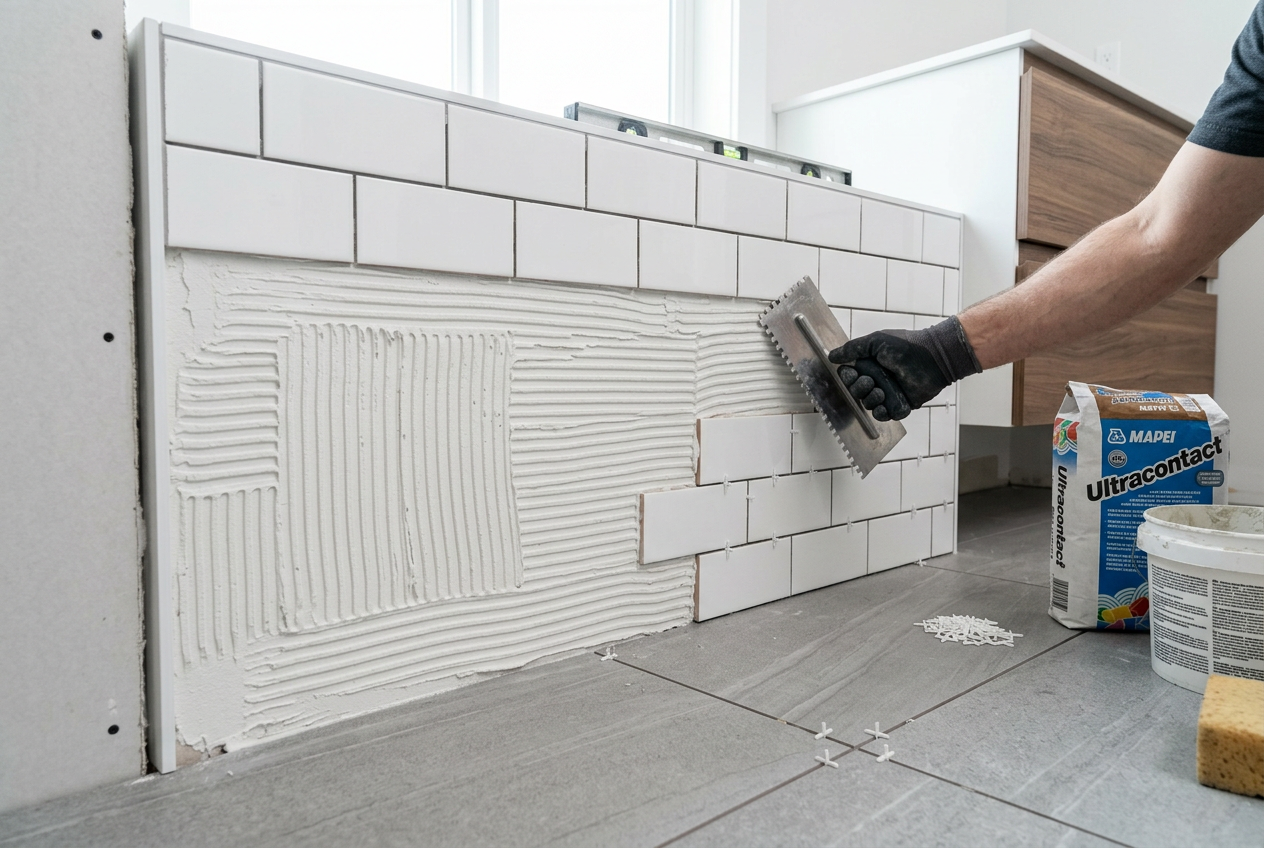
Unlike electrical or plumbing work, tiling is not legally restricted work in New Zealand — meaning there is no single mandatory licence required to call yourself a tiler. However, that doesn't mean qualifications don't matter. A properly trained tiler brings technical knowledge that directly affects how long your tiles last, whether your waterproofing holds up, and whether your project meets the NZ Building Code.
The Core Trade Qualification: New Zealand Certificate in Tiling
The benchmark qualification for professional tilers in New Zealand is the New Zealand Certificate in Tiling (Level 4), awarded through the New Zealand Qualifications Authority (NZQA) framework. This qualification covers:
- Surface preparation and substrate assessment
- Adhesive and grout selection for different environments
- Waterproofing membranes and wet-area compliance
- Setting out, cutting, and fixing tiles to industry standards
- Working to the relevant NZ Building Code clauses (particularly E3 Internal Moisture and E2 External Moisture)
Trainees typically complete this qualification through a combination of on-the-job training and block courses with a provider such as BCITO (the Building and Construction Industry Training Organisation). Ask any tiler you're considering whether they hold — or are working towards — this certificate.
Licensed Building Practitioner (LBP) Status
For certain tiling work, particularly wet-area waterproofing in bathrooms, showers, and laundries, the work may form part of restricted building work (RBW) under the Building Act 2004. If a building consent is required for your project, the waterproofing and associated tiling may need to be carried out or supervised by a Licensed Building Practitioner (LBP).
LBPs are licensed by the Ministry of Business, Innovation and Employment (MBIE) and must demonstrate ongoing competence. You can verify a tradesperson's LBP status at Licensed Building Practitioners. Always check with your local council whether your project requires a building consent — even some bathroom renovations can trigger consent requirements depending on scope.
MBIE Building Performance provides clear guidance on when consents are needed and what restricted building work covers.
Why Waterproofing Knowledge Is Critical
One of the most important skills a tiler must have is a thorough understanding of wet-area waterproofing. Failures here can lead to serious structural damage, mould, and costly remediation. The NZ Building Code clause E3 (Internal Moisture) sets out performance requirements for wet areas, and tilers should be familiar with compliant membrane systems.
Reputable waterproofing product manufacturers such as Ardex, Mapei, and Sika publish detailed technical data sheets and application guides — a knowledgeable tiler will be familiar with these systems and apply them strictly to manufacturer specifications.
What to Ask a Tiler Before Hiring
When getting quotes, don't be shy about asking the following:
- Do you hold the New Zealand Certificate in Tiling (Level 4) or are you BCITO-trained?
- Are you an LBP, and if so, in which licence class?
- Can you provide references or photos of recent wet-area work?
- What waterproofing system do you use, and is it compliant with E3?
- Are you familiar with the relevant tile fixing standards and NZ Building Code requirements?
- Do you carry public liability insurance?
A confident, qualified tiler will answer these questions readily. If someone is vague or dismissive, consider that a red flag.
Industry Experience and Ongoing Learning
Beyond formal qualifications, look for tilers who:
- Have several years of hands-on experience across a range of tile types (porcelain, ceramic, natural stone, large-format tiles)
- Stay up to date with products and techniques — tile formats and adhesive technology evolve regularly
- Are familiar with BRANZ guidance, which provides research-backed best practice for the NZ construction industry
- Understand New Zealand's varied climate conditions, from humid Northland to cold, frost-prone southern regions, which affect product selection and substrate movement
Tiling vs. Restricted Trade Work: An Important Distinction
While tiling itself is not restricted, projects often involve work that is restricted:
| Task | Restricted? | Who Must Do It |
|---|---|---|
| Laying floor or wall tiles | No | Any competent person |
| Wet-area waterproofing (consented work) | Possibly | LBP (check with council) |
| Plumbing connections (e.g. shower drain) | Yes | Licensed plumber (PGDB) |
| Electrical work (e.g. heated tile floors) | Yes | Registered electrician (EWRB) |
Always confirm with your local council what requires consent and what work must be done by a licensed tradesperson.
When to Call a Professional
You should always engage a qualified, experienced tiler when:
- Tiling a bathroom, shower, or laundry where waterproofing is essential
- Working with large-format, natural stone, or specialist tiles that require precise adhesive and substrate preparation
- Your project requires a building consent
- You're tiling over underfloor heating, which requires specific adhesive systems and expansion joint planning
- The substrate is complex or suspect (e.g. over existing tiles, on a timber floor, or on a new concrete slab that may still be curing)
For peace of mind, find a qualified local tiler through tradedirectory.co.nz, where you can compare tradespeople in your area.

 Site Safe
 SiteWise


 BCITO Qualified





