See the latest posts from tradesmen around the country
DIY AnswersPlasterer

What Primer Should You Use on Bare Plasterboard Before Applying Stopping Compound?

Use a dedicated plasterboard sealer or PVA-based primer on bare GIB before stopping. This prevents uneven absorption and ensures a smooth, lasting finish.

What Primer Should You Use on Bare Plasterboard Before Applying Stopping Compound?

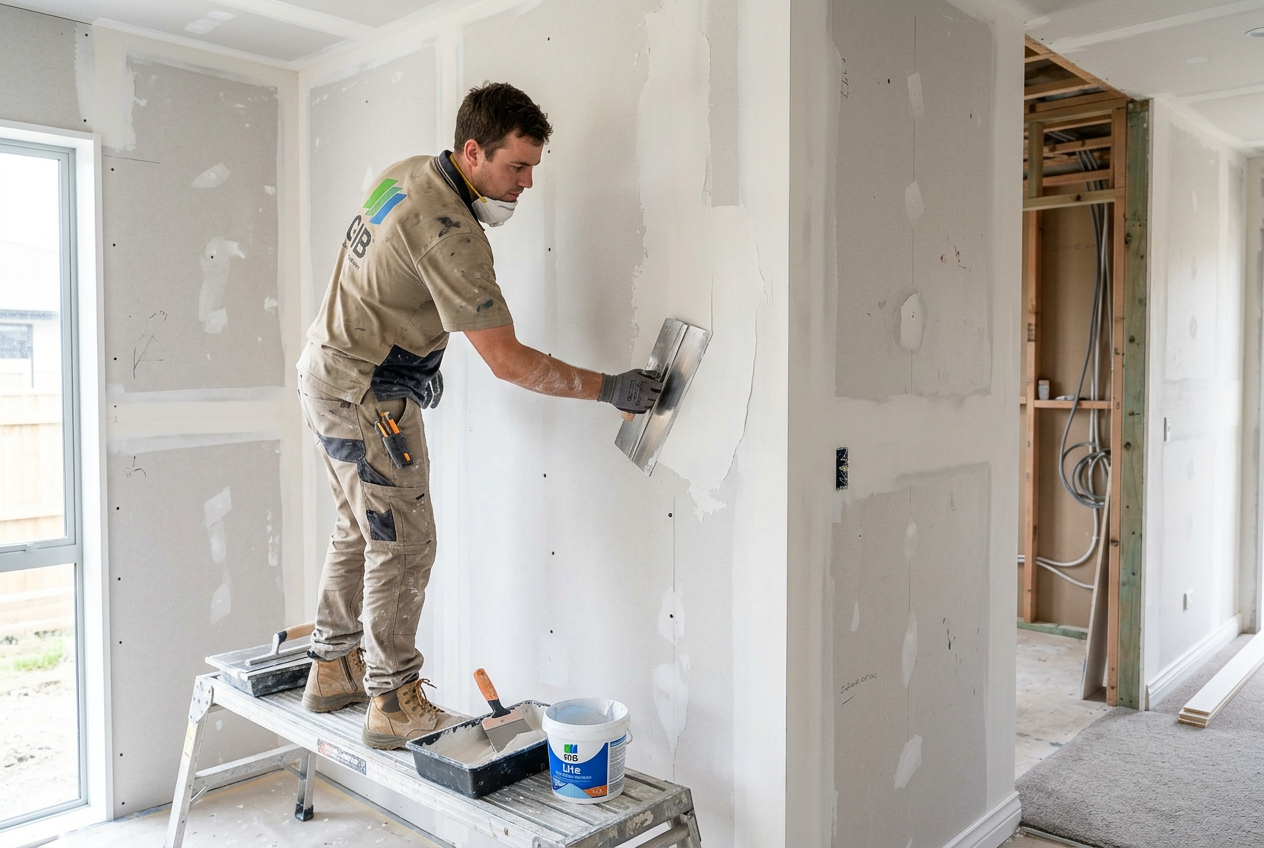
On bare plasterboard, you should use a plasterboard sealer (sometimes called a PVA primer or plasterboard primer) before applying stopping compound. Skipping this step is one of the most common DIY plastering mistakes — without it, the paper face and gypsum core of the board soak up moisture from your stopping compound unevenly, causing it to dry too fast, shrink, crack, or bond poorly. A proper primer gives you a consistent, sealed surface that lets the compound work as it's designed to.

Why Priming Bare Plasterboard Matters

Plasterboard (commonly known in NZ by the brand name GIB) has a porous paper face that acts like blotting paper. When you apply stopping compound directly to an unprimed board, the water in the compound is rapidly drawn into the substrate. This causes:

  • Rapid, uneven drying that leads to shrinkage cracks
  • Poor adhesion between the compound and the board surface
  • Raised joint tape or bubbling if tape is being embedded
  • A patchy, difficult-to-sand finish

A sealer coat locks down the surface porosity so the compound cures at the right rate and bonds firmly.

Which Products to Use

PVA-Based Plasterboard Sealers

The most widely used option in NZ is a diluted PVA sealer specifically formulated for plasterboard. These are water-based, fast-drying, and affordable. Look for products labelled as plasterboard primer, gypsum board sealer, or similar at your local trade or hardware store.

Well-known options available in NZ include:

  • Resene Quick Dry — a popular water-based primer/sealer that works well on plasterboard. Check the Resene website for the current recommended product for your application.
  • Dulux Aquanamel Undercoat or Dulux's dedicated plasterboard primers — visit Dulux NZ to confirm the right product for stopping prep.
  • Wattyl also offers interior primers suitable for plasterboard — see Wattyl NZ for their current range.

Always check the product's technical data sheet (TDS) to confirm it is suitable for use under stopping compound. Some topcoat primers are not designed for this purpose.

Neat PVA Glue (Diluted) — Use with Caution

Some tradespeople use a diluted solution of standard PVA adhesive (such as Bondcrete or similar) as a budget sealer. While this can work, it is not always consistent and is generally not recommended when a purpose-made plasterboard sealer is available. Stick to a product designed for the job.

What About Stopping Compound Manufacturers' Recommendations?

If you are using a specific stopping system — for example, products from Ardex or Mapei — check whether they specify a compatible primer from their own range. Using a mismatched primer and compound can affect adhesion and warranty.

How to Apply the Primer

  1. Ensure the plasterboard is fixed correctly — all screws should be just below the surface, not breaking the paper face. Refer to GIB's installation guides for fixing requirements.
  2. Dust off the surface — remove any loose gypsum dust or debris.
  3. Apply the sealer by roller or brush — a short-nap roller gives even coverage on flat sheets. Work the sealer into recessed joints and corners with a brush.
  4. Allow to dry fully — most PVA sealers dry within 30–60 minutes under normal NZ conditions, but check the product label.
  5. Apply your first coat of stopping compound once the sealer is completely dry to the touch.

NZ Building Code Considerations

Internal wall and ceiling linings, including plasterboard finishing, are covered under NZ Building Code Clause G11 (Natural Light) and more broadly by good trade practice outlined in standards like NZS 2589 (check the current title and status of this standard with Standards New Zealand, as details may have changed). BRANZ publishes guidance on interior lining systems that is worth consulting if you want to understand best-practice finishing levels (Levels 1–5).

For most interior stopping work, no building consent is required, but if you are working as part of a larger project involving structural or weathertightness elements, check with your local council.

Common Mistakes to Avoid

MistakeWhy It's a Problem
Skipping primer entirelyCompound dries unevenly, cracks, or bonds poorly
Using an oil-based primerCan bleed through or react with water-based compound
Applying compound while primer is still wetTraps moisture, causes adhesion failure
Over-diluting PVAReduces sealing effectiveness
Using wall paint as a primerPaint film can prevent compound from keying in properly

When to Call a Professional

Stopping and plastering to a high standard — particularly achieving a Level 4 or Level 5 finish suitable for semi-gloss or gloss paints — takes considerable skill and practice. If you are working on a large area, a feature wall, or a new build where the finish will be highly visible, it is worth engaging a qualified plasterer.

A licensed plasterer will know exactly which primer and compound system to use for your specific board type and finish level, and will get the job done faster with fewer callbacks. You can find experienced local plasterers on tradedirectory.co.nz.

Plastering is not restricted building work under the NZ Building Act, so homeowners can legally do it themselves — but quality matters, especially if painting with sheen paints that highlight imperfections.


Frequently Asked Questions

Can I apply stopping compound directly to bare plasterboard without priming?+

It is not recommended. Bare plasterboard is highly porous and will absorb moisture from the compound too quickly, causing uneven drying, shrinkage cracks, and poor adhesion. Always apply a plasterboard sealer or PVA primer first and allow it to dry completely.

Can I use regular wall paint as a primer before stopping?+

No. Wall paint creates a film that stopping compound cannot key into properly, which can lead to adhesion failure. Use a purpose-made plasterboard sealer or PVA-based primer instead.

How many coats of stopping compound will I need after priming?+

Most finishing systems require at least two to three coats of stopping compound — a base coat to embed tape and fill joints, followed by one or two finishing coats. Each coat must be fully dry before the next is applied. The number of coats depends on the finish level required.

Do I need to prime again after sanding the stopping compound, before painting?+

Yes. Sanding can cut through the compound and expose raw plasterboard in spots, creating uneven porosity. Apply a sealer coat over the fully sanded and stopped surface before painting to ensure an even paint finish.

Is stopping plasterboard considered restricted building work in New Zealand?+

No, interior plastering and stopping is not restricted building work under the NZ Building Act, so homeowners can legally carry it out themselves. However, for large or high-visibility areas, hiring a qualified plasterer is strongly recommended to achieve a professional result.

Need a Plasterer?

Find qualified plasterers near you in our directory.

Find a Plasterer →

Plasterers Near You

5 Stars Painting & Plastering Ltd logo

Plasterer

5.0(4)

Auckland, Auckland

5 Stars Painting & Plastering Ltd is a plastering and painting business based in Auckland. They offer services for both commercial and residential projects, including offices, hotels, and homes. The company emphasises reliability, organisation, and quality assurance.

  • Master Painters NZ member

Alpha plastering logo

Plasterer

Christchurch, Canterbury

Textureclad logo

Plasterer

Whangarei, Northland

Uncategorized | 1 comment | 15 March, 2026 | 0 Welcome to WordPress. This is your first post. Edit or delete it, then start writing! Read more 11 Impossible Tech Interview Questions You Don t Want To Be Asked By admin | Photo | 0 comment | 15 August, 2015 | 0 You may purchase phone plans with more than enough data to cover things like casual web surfing and streaming the occasional song. But you may not...

Dowd Concrete & Plaster Ltd logo

Plasterer

Queenstown, Otago

Great Interiors logo

Plasterer

Christchurch, Canterbury

Great Interiors Ltd is a plastering specialist based in Christchurch, Canterbury. They provide internal plastering services including walls, ceilings, coving, artex removal, and repairs for both private and commercial clients throughout Canterbury and surrounding areas.

JA Plasterers Ltd logo

Plasterer

4.2(5)

Auckland, Auckland

JA Plasterers Ltd is a plastering company based in Auckland, New Zealand. They operate throughout the greater Auckland region and beyond, employing skilled professionals to deliver quality workmanship on projects of all sizes.

Paint & Decorating Stores Near You

Stock up for this job — paint & decorating suppliers and stores, with address, phone and email.

autocolourbank logo

autocolourbank

Otahuhu, Auckland, Auckland

Paint & Decorating

Professional-grade paints, custom colour matching and respray supplies trusted by panel beaters. NZ-wide delivery available. Free delivery on orders over $500.

Natural Paint Co logo

Natural Paint Co

Richmond, Christchurch, Canterbury

Paint & Decorating

We've created paint and wood oils that are not only good for you, but good for our planet too. Keep your home and family healthy with Ultra Low VOC paint.

Dooney and Daughters Trading Co ltd logo

Dooney and Daughters Trading Co ltd

Remuera, Auckland, Auckland

Paint & Decorating

Stockists of The Artisan Company Chalk Paint, ReDesign Transfers, Mint Decoupage & Efex Mouldings, specialists in hand painted furniture. Join a workshop or visit our in-store paint bar!

Everbrite Coatings logo

Everbrite Coatings

Cockle Bay, Auckland, Auckland

Paint & Decorating

Tough durable DIY Protective Everbrite Coatings to restore faded windows and doors - Protect all metals from UV, tarnish, corrosion, rust.

International Paint logo

International Paint

Avondale, Auckland, Auckland

Paint & Decorating

We’ve been pioneering a world of possibilities to bring surfaces to life for well over 200 years. As experts in making coatings, there’s a good chance you’re only ever a few meters away from one of our products. Our world class portfolio of brands – including Dulux, International, Sikkens and Interpon – is trusted by customers around the globe. We’re active in more than 150 countries and have set our sights on becoming the global industry leader. It’s what you’d expect from the most...

Brakes Paint & Decor Kaitaia logo

Brakes Paint & Decor Kaitaia

Kaitaia, Northland

Paint & Decorating

Brakes Paint & Decor Kaitaia — paint and decorating store in Kaitaia. Listed on Dulux's official store locator as a Dulux stockist (retail & trade). Address: 224 Commerce Street, Kaitaia, Northland 0410.

Browse all paint & decorating suppliers →
Last updated: Last reviewed:

The information on this page is provided as a general guide only. Kiwi Trade Directory makes no representations or warranties regarding the accuracy, completeness, or suitability of this information for your specific situation. Costs, timeframes, and recommendations vary significantly depending on your location, property, and individual circumstances. Always obtain multiple quotes from qualified tradespeople and seek independent professional advice before undertaking any home improvement or building work. Kiwi Trade Directory accepts no liability for any loss or damage arising from reliance on the information provided on this site.


