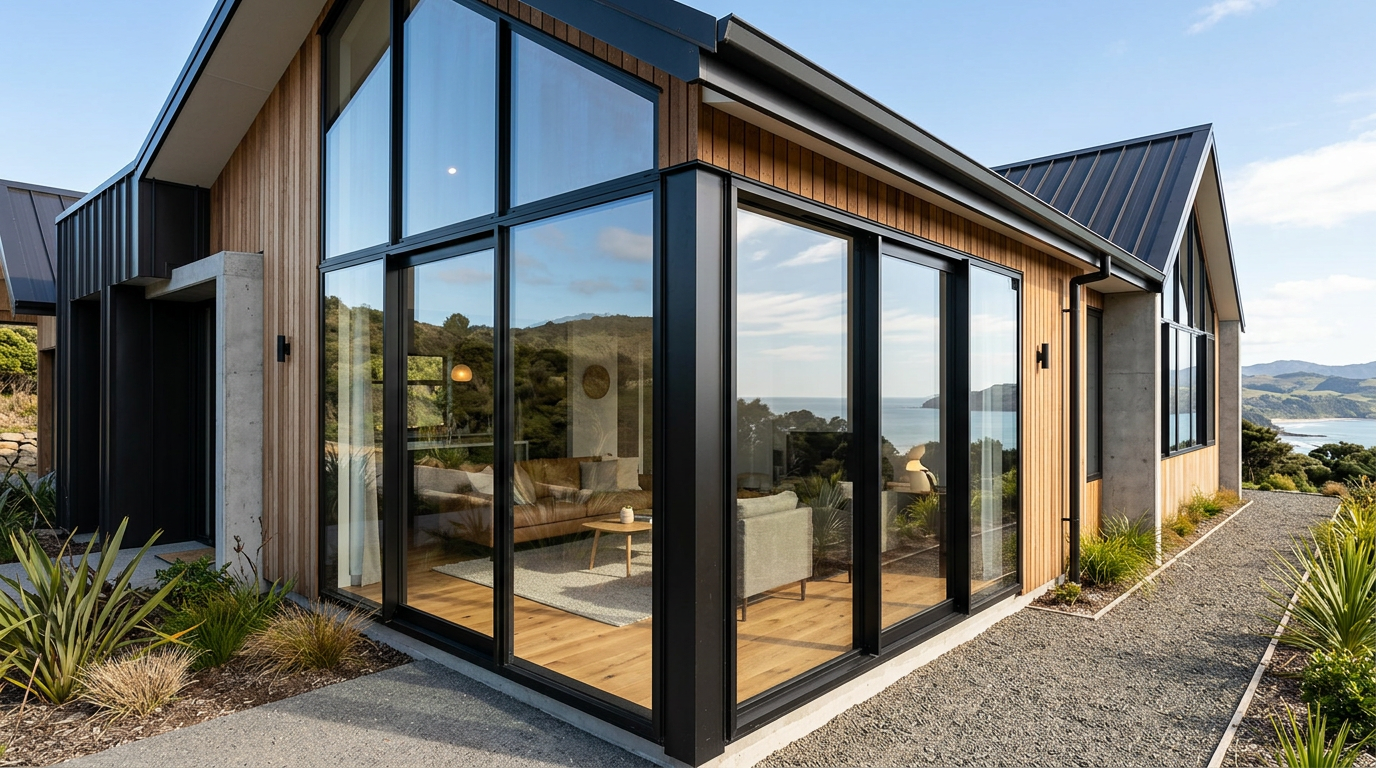
Glazing near doors and stairs in New Zealand is governed primarily by NZ Building Code Clause F4 (Safety from Falling, Collision and Impact), which sets out where safety glazing is required to protect people from injury. Getting this right isn't just about compliance — it's about keeping your family safe from serious lacerations or falls caused by broken glass.
Why Glazing Location Matters
Glass near high-traffic areas like doors, stairwells, and low-level windows poses a real risk. A person walking into a glass panel or falling against it can suffer severe injuries if the glass shatters into sharp shards. The NZ Building Code addresses this by requiring safety glazing — glass that, when it breaks, does so in a way that minimises injury risk.
The MBIE Building Performance website is the authoritative source for all Building Code clauses and acceptable solutions, and it's worth bookmarking if you're planning any glazing work.
NZ Building Code Clause F4 — The Key Clause
Clause F4 is the primary clause covering glazing safety. It requires that glazing in certain critical locations must be made from safety glass — either toughened (tempered) glass, laminated glass, or another material that meets the performance requirements.
Under F4 and its acceptable solution F4/AS1, safety glazing is generally required in:
- Glazed doors — including fully glazed doors, sidelights, and panels within 500 mm of a door edge that extend to within 1500 mm of the floor
- Low-level glazing — any glazing with its lower edge within 1000 mm of the floor in areas where people are likely to walk or move
- Glazing adjacent to stairs and ramps — panels beside stairways where a person could fall against the glass
- Shower and bathroom enclosures — covered separately under Clause G3
- Balustrades containing glass — where glass forms part of a barrier system
The acceptable solution references NZS 4223: Glazing in Buildings, which sets out the technical requirements for glass type, thickness, and installation. Your glazier should be familiar with this standard.
Clause F2 — Hazardous Building Materials
Clause F2 also applies in some glazing contexts. It requires that building materials — including glass — do not present a health or safety hazard. While F4 is the more directly relevant clause for impact safety, F2 underpins the broader obligation to use appropriate, non-hazardous materials in construction.
Clause H1 — Energy Efficiency
If you're installing new glazing or replacing existing windows near doors or stairs, Clause H1 (Energy Efficiency) may also come into play. H1 sets minimum thermal performance requirements for windows and glazing, and the requirements vary by NZ climate zone. Double glazing is now standard in most new builds. Check Energywise for guidance on energy-efficient glazing options.
What Counts as Safety Glass?
| Glass Type | How It Breaks | Common Uses |
|---|---|---|
| Toughened (tempered) | Small, relatively harmless pebbles | Doors, shower screens, low-level panels |
| Laminated | Holds together in a sheet | Overhead glazing, balustrades, high-risk areas |
| Wired glass | Holds together but edges are sharp — less common now | Some heritage or fire-rated applications |
| Heat-strengthened | Stronger than annealed, but not fully toughened | Specific structural applications |
Ordinary annealed glass (standard float glass) is generally not acceptable in the critical locations listed under F4, as it breaks into large, dangerous shards.
Do You Need a Building Consent?
Many glazing replacements — like-for-like replacement of a broken pane with the same type and size — may be exempt from building consent under Schedule 1 of the Building Act 2004. However, if you're changing the size of an opening, installing new glazed doors, or altering a balustrade, a consent may be required. Always check with your local council before starting work, as exemptions have conditions and your council has the final say.
The MBIE Building Performance site has a helpful guide to Schedule 1 exemptions.
When to Call a Professional
Glazing near doors and stairs is not a straightforward DIY job. While a homeowner can replace a simple pane of glass in some circumstances, work involving:
- Safety-critical locations (doors, stairs, balustrades)
- Structural glazing or frameless systems
- Any work requiring building consent
- Toughened or laminated glass cutting and installation
…should be carried out by a qualified glazier. Toughened glass cannot be cut on site — it must be ordered to size — and incorrect installation can void warranties and create liability issues if someone is injured.
A skilled glazier will know exactly which glass specification meets F4/AS1 requirements for your situation, and can provide the documentation you may need for council sign-off. You can find qualified local glaziers on tradedirectory.co.nz.
Safety note: Never attempt to remove or handle large broken glass panels without appropriate cut-resistant gloves and eye protection. Broken toughened glass, while safer than annealed, still has sharp edges.



 Window & Glass Association