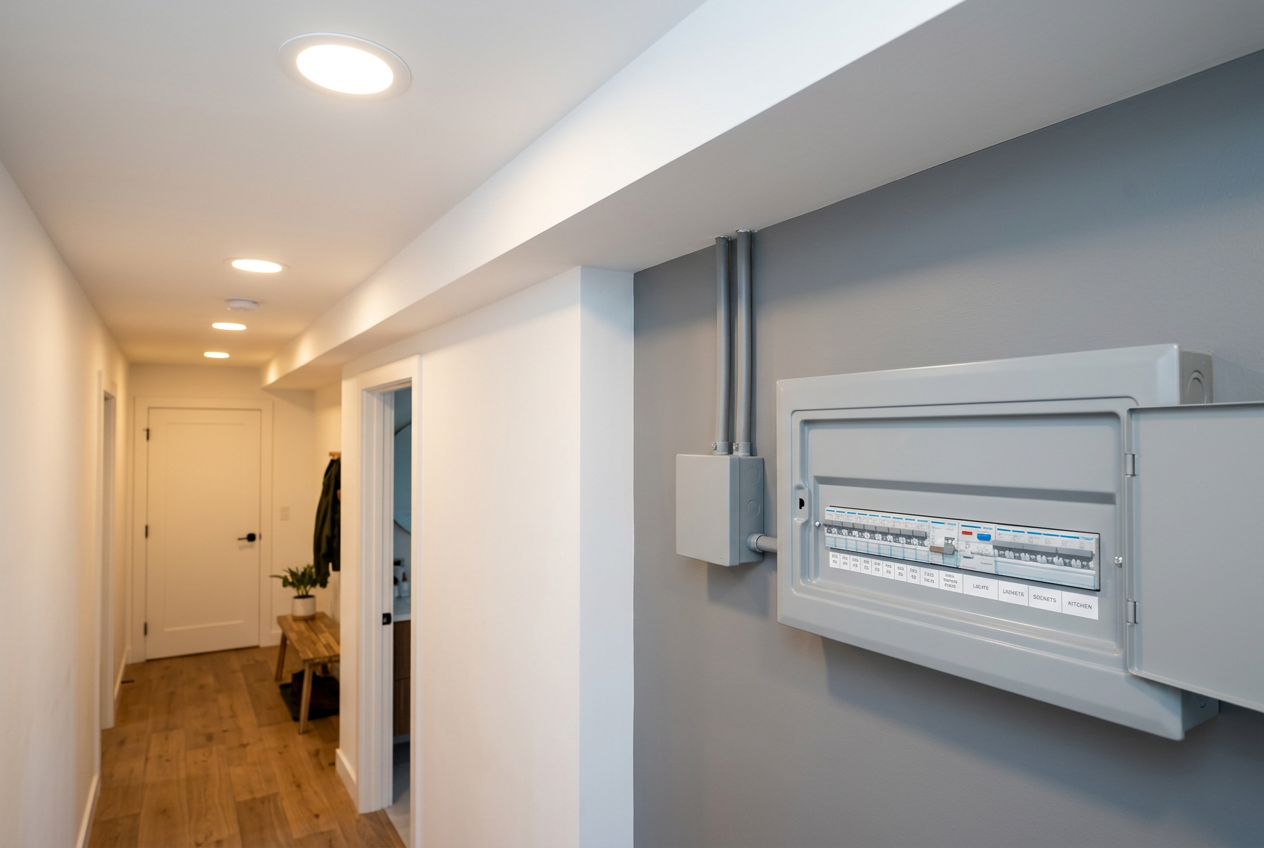
Electrical work completed in New Zealand is covered by several overlapping legal protections — most importantly the Consumer Guarantees Act 1993 (CGA) and the Contract and Commercial Law Act 2017. While there is no single fixed warranty period stamped on every electrical job, the law gives you meaningful rights that can extend well beyond a simple 12-month guarantee, depending on the nature of the work and the products installed.
Your Rights Under the Consumer Guarantees Act
The Consumer Guarantees Act 1993 is the cornerstone of your protection as a homeowner. When you hire a licensed electrician to carry out work, the CGA requires that the services are:
- Completed with reasonable care and skill
- Fit for the particular purpose you described
- Completed within a reasonable time (if no timeframe was agreed)
- Priced reasonably (if no price was set in advance)
Critically, the CGA does not set a fixed warranty period in months or years. Instead, your right to a remedy lasts for as long as is reasonable given the nature of the work. For a major rewire or switchboard upgrade, that could mean several years. For a simple power point installation, it may be shorter. If a fault arises that stems from poor workmanship, you are entitled to have it remedied at no cost.
The 12-Month Defects Period — Where Does It Come From?
You may have heard of a "12-month defects liability period." This figure often appears in written contracts between homeowners and tradespeople, and it is a common industry standard — but it is a contractual term, not a standalone legal minimum. It means the tradesperson agrees to return and fix defects that appear within 12 months of completion at no charge.
Importantly, having a 12-month contractual defects period does not remove your CGA rights. If a fault caused by poor workmanship shows up at 18 months, you may still have a valid claim under the CGA, depending on the circumstances.
Product Warranties on Materials and Fittings
Separate from workmanship, the products your electrician installs — switchboards, circuit breakers, light fittings, cables — carry their own manufacturer warranties. These vary by brand and product type, but many electrical components carry warranties of one to five years, and some (like certain switchboard components) may be longer. Always ask your electrician for product documentation and keep receipts.
If a product fails within its warranty period due to a manufacturing defect, your claim is against the manufacturer or supplier, though your electrician should assist you in making that claim.
Electrical Safety Certificates and Compliance
In New Zealand, all restricted electrical work must be carried out by a registered electrician and must be accompanied by an Electrical Safety Certificate (ESC). This is a legal requirement under the Electricity (Safety) Regulations 2010. The ESC confirms the work complies with the New Zealand Wiring Rules (AS/NZS 3000) and is safe.
The Electrical Workers Registration Board (EWRB) oversees the licensing of electricians in NZ. Only registered electrical workers can carry out restricted work — this includes wiring, connecting to the mains, and working on fixed installations. Homeowners are legally prohibited from doing this work themselves.
If your electrician cannot or will not provide an ESC, that is a serious red flag. The ESC itself is not a warranty document, but it is evidence that the work was done to the required standard — which supports any future warranty or CGA claim.
What Counts as Restricted Electrical Work?
Under NZ law, restricted electrical work includes:
- Installing, altering, or repairing any fixed wiring
- Connecting appliances to fixed wiring
- Working on switchboards or distribution boards
- Any work on the electrical installation of a building
Homeowners may replace like-for-like fittings such as light bulbs, plug-in appliances, and certain plug-top fuses — but anything involving fixed wiring must be done by a licensed professional. Always check with the EWRB if you are unsure what is permitted.
When to Call a Professional
Always use a registered electrician for any fixed electrical work in your home. If you believe work has been done poorly or a fault has developed:
- Contact the electrician first — give them a reasonable opportunity to remedy the issue.
- If they refuse or are unresponsive, lodge a complaint with the EWRB, who can investigate licensed practitioners.
- For unresolved consumer disputes, the Disputes Tribunal or the courts are options.
- Consumer NZ has useful guidance on exercising your CGA rights.
For building consent matters related to electrical work, check with your local council and refer to MBIE Building Performance for guidance on what work requires consent.
You can find qualified, registered electricians in your area through tradedirectory.co.nz.
Safety note: Never attempt restricted electrical work yourself. Faulty wiring is a leading cause of house fires and electrocution in New Zealand. If you smell burning, see scorch marks near outlets, or experience repeated tripping of breakers, call a registered electrician immediately.
Sources & Further Reading
- Electrical Workers Registration Board (EWRB) — licensing, complaints, and restricted work
- MBIE Building Performance — NZ Building Code and consent requirements
- Consumer NZ — Consumer Guarantees Act guidance
- WorkSafe NZ — electrical safety regulations
- Standards NZ — AS/NZS 3000 Wiring Rules

 Site Safe
 Licensed Electrical Inspector







