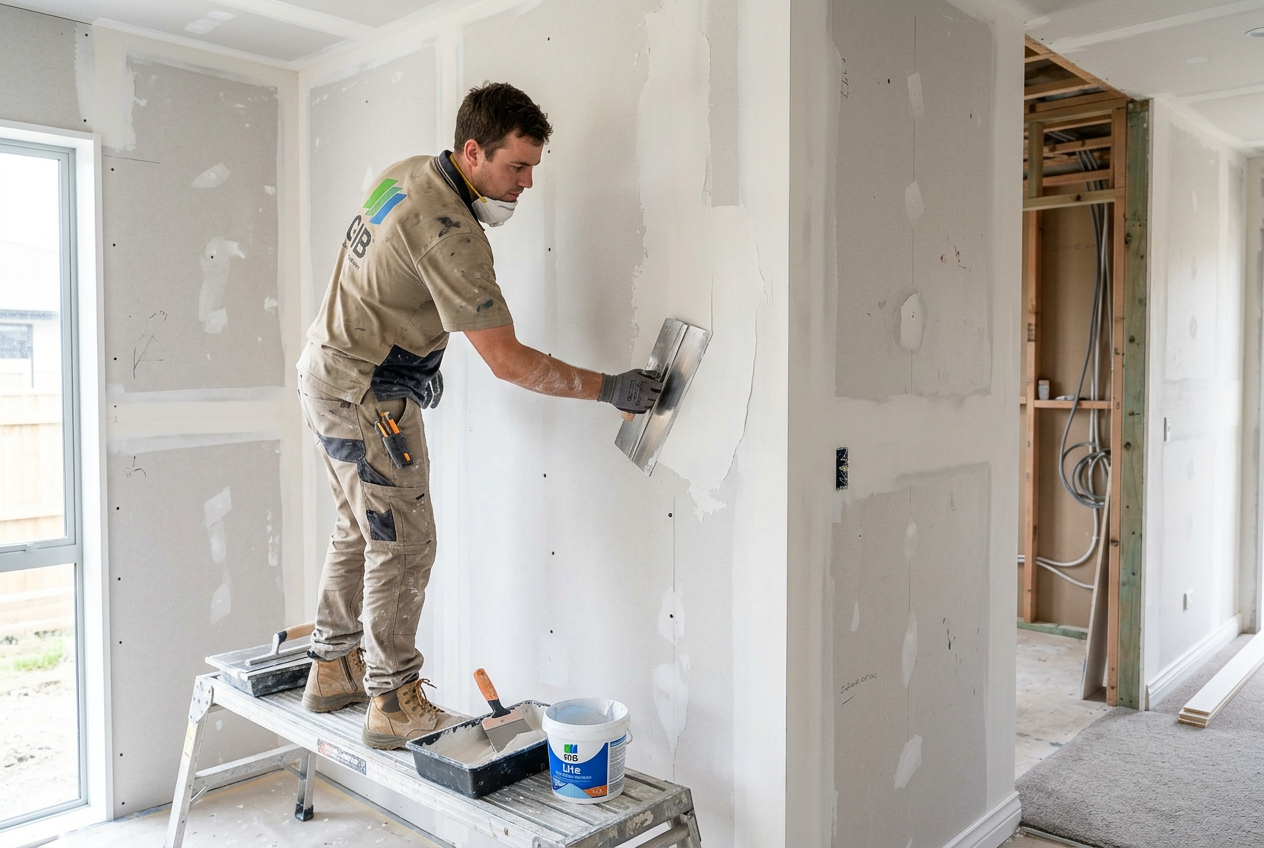
For most plastering work in New Zealand, the standard defects liability period is 12 months from practical completion. However, your rights as a homeowner don't necessarily end there — consumer guarantees legislation and the NZ Building Code can provide additional protection depending on the nature of the defect and the type of work carried out.
What Is a Defects Liability Period?
A defects liability period (DLP) is a contractual timeframe after a job is completed during which the tradesperson or contractor is obliged to return and fix any defects that arise from their workmanship or materials — at no extra cost to you. It is a standard feature of most construction and trade contracts in New Zealand.
During this period, if cracking, delamination, blistering, or other plastering failures appear that are attributable to poor workmanship or substandard materials, you can formally notify the plasterer and request remediation.
The Standard 12-Month Period
While there is no single law that fixes the DLP for plastering at exactly 12 months, 12 months is the widely accepted industry standard in New Zealand for trade and construction contracts. Many standard-form contracts — including those based on the New Zealand Institute of Architects (NZIA) or New Zealand Standards frameworks — use a 12-month DLP as a default.
If you have a written contract with your plasterer, check it carefully. The DLP should be clearly stated. If no period is specified, 12 months is generally implied by industry practice, but this can vary, so it's worth clarifying in writing before work begins.
Your Rights Beyond the DLP
Even after the defects liability period expires, you may still have recourse under New Zealand law:
- Consumer Guarantees Act 1993 (CGA): Services must be carried out with reasonable care and skill, and the result must be fit for purpose. If plastering fails due to poor workmanship, the CGA may give you rights to have it remedied even outside the contractual DLP — particularly if the failure is significant.
- Building Act 2004: For work that required a building consent, the territorial authority (your local council) can issue a notice to fix if the work doesn't comply with the NZ Building Code. This is separate from your contractual DLP.
- 10-Year Longstop Period: Under the Limitation Act 2010, claims for defective building work generally must be brought within 10 years of the date the act or omission occurred. This is a legal backstop, not a warranty, but it means serious latent defects discovered years later may still be actionable.
BRANZ provides useful technical guidance on plastering systems and acceptable performance standards, which can help establish whether a defect is due to workmanship or another cause.
What Counts as a Defect in Plastering?
Not every crack or mark is a defect covered under the DLP. Common legitimate defects include:
- Delamination — plaster separating from the substrate
- Excessive or structural cracking — beyond normal hairline shrinkage
- Blistering or bubbling — often caused by moisture or incorrect mixing
- Uneven or poorly finished surfaces — not meeting the agreed specification
- Failure of stopping or texture coats — peeling or flaking
Minor hairline cracking from normal building movement or seasonal timber shrinkage is generally not considered a workmanship defect. BRANZ publishes guidance on acceptable crack widths and plastering performance that can help you assess whether a defect is legitimate.
How to Notify Your Plasterer of a Defect
- Document the defect — take clear photos with dates.
- Notify in writing — email or letter is best, so there's a record.
- Reference your contract — cite the DLP clause and describe the defect clearly.
- Allow reasonable access — give the plasterer a fair opportunity to inspect and remedy the issue.
- Escalate if needed — if the plasterer doesn't respond, you can contact Consumer NZ or the Disputes Tribunal for claims up to $30,000.
Does Plastering Require a Licensed Building Practitioner?
Some plastering work is restricted building work (RBW) under the Building Act 2004 — specifically, plastering that forms part of the weathertight envelope of a building (such as exterior plaster cladding systems). This work must be carried out or supervised by a Licensed Building Practitioner (LBP). Using an LBP provides an additional layer of accountability, as their licence can be reviewed if workmanship is found to be substandard.
For interior plastering (stopping, skimming, texture coats), licensing is not legally required, but hiring an experienced, reputable tradesperson is always advisable.
When to Call a Professional
If you notice plastering defects — especially on exterior cladding systems — don't delay. Moisture ingress through failed plaster can cause serious structural damage and is a significant issue in New Zealand's variable climate. Contact a qualified plasterer promptly, and if the original contractor is unresponsive, seek an independent assessment. You can find qualified local plasterers on tradedirectory.co.nz.
For disputes involving consented work, contact your local council or MBIE Building Performance for guidance on your options.

 Master Painters NZ member








