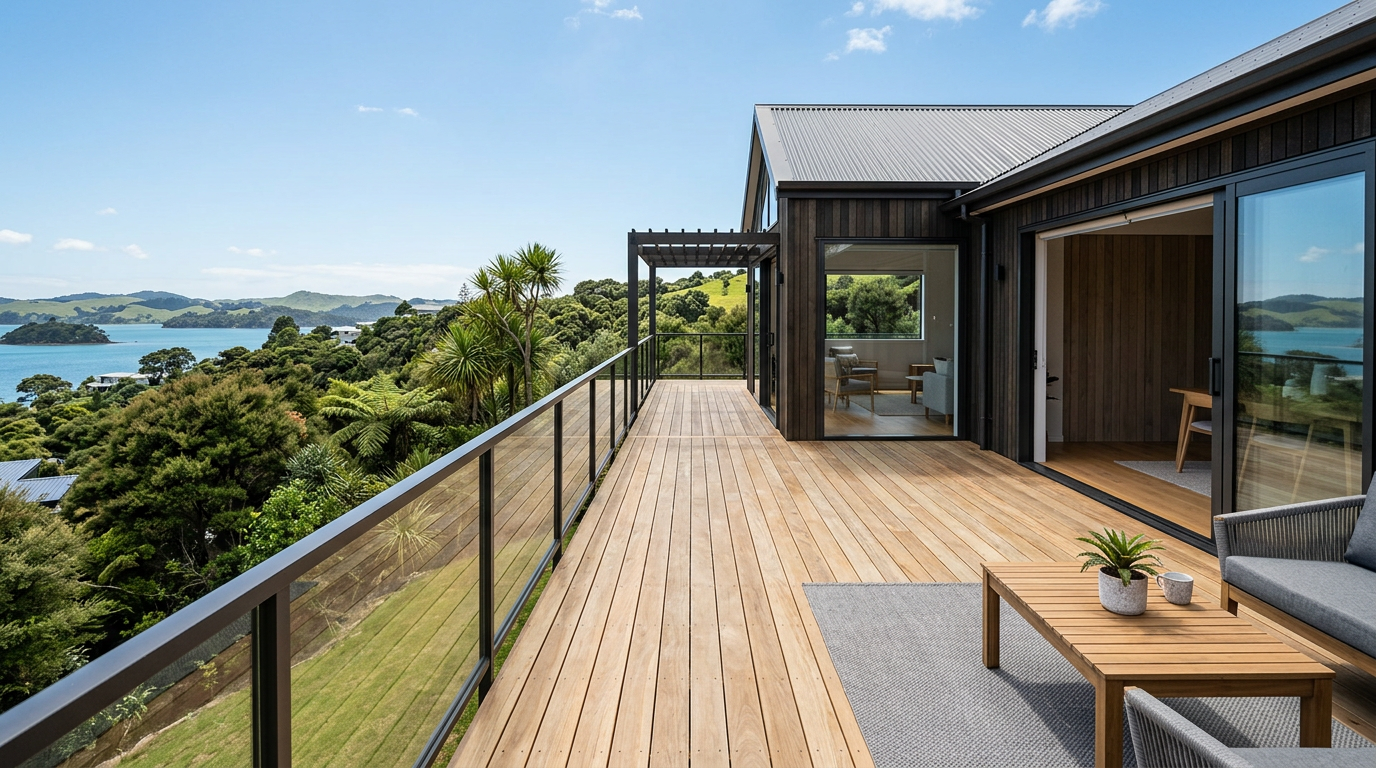
Working on an elevated deck frame by yourself is one of the riskier DIY tasks a homeowner can take on. Falls from height are a leading cause of serious injury in New Zealand, and working alone removes the safety net of having someone nearby if something goes wrong. That said, with careful planning, the right equipment, and a clear understanding of your limits, many parts of a deck frame project can be done safely solo.
Understand the Risks Before You Start
Any work above 1.5 metres is considered working at height and carries significant fall risk. On an elevated deck frame — where you may be balancing on joists, reaching overhead, or working near open edges — the hazard is compounded by the fact that there's no one to call for help if you're injured. WorkSafe NZ provides clear guidance on managing fall risks, and it's worth reading before you pick up a tool.
Key risks to assess:
- Falls from height — off the frame, through gaps, or from a ladder
- Dropped tools or materials landing on you or others below
- Structural instability — an incomplete frame can shift or collapse
- Overexertion injuries — lifting heavy timber alone without mechanical assistance
Plan the Job Thoroughly Before Climbing
Good planning is your first line of defence. Before you start:
- Draw up your sequence of work so you're not improvising at height
- Pre-cut timber at ground level wherever possible — a drop saw on the ground is far safer than a circular saw balanced on a joist
- Stage your materials so you're not making repeated trips up and down a ladder carrying heavy loads
- Tell someone your plan — let a neighbour or family member know you're working at height and when you expect to finish. Check in with them at agreed intervals
- Keep your phone on you at all times, ideally in a belt pouch
Use the Right Fall Protection Equipment
For work above 1.5 metres, fall protection isn't optional — it's essential. Options for a solo DIYer include:
- Scaffolding — the gold standard. Hiring a basic scaffold tower from a local hire company gives you a stable, level working platform with guardrails. This is strongly recommended for any elevated deck frame work
- Harness and lanyard — if you're working from the frame itself, a full-body harness attached to a secure anchor point can prevent a fall from becoming a fatal one. Make sure the anchor point is rated for the load
- Sturdy ladders — use only ladders rated to the appropriate load, set at the correct angle (approximately 75°), and secured at the top. Never lean a ladder against an unsecured joist
Avoid working from makeshift platforms like stacked pallets or milk crates. These are unstable and a common cause of falls.
Work Smarter, Not Harder — Solo Techniques
Working alone means you need to think creatively about how to handle long, heavy timbers without a second pair of hands.
- Use temporary props and jig supports — a simple timber prop or adjustable post support can hold a bearer or joist in position while you fasten it
- Clamps are your best friend — a good set of F-clamps or speed clamps can hold timber in place while you drill and bolt
- Work in manageable sections — don't try to install a full 6-metre bearer alone. Break the job into shorter runs where possible
- Use a nail gun with care — a framing nailer speeds up fastening and reduces the need to hold timber and swing a hammer simultaneously, but always follow safe operating procedures
- Avoid working in poor conditions — wet timber is slippery, and wind can make handling sheet material or long lengths dangerous. Choose calm, dry days
Know the Building Consent Rules
In New Zealand, most elevated decks require a building consent before work begins. Under the NZ Building Code, decks more than 1.5 metres above ground level generally require consent, and even lower decks may need one depending on your council's rules. Schedule 1 of the Building Act lists exemptions, but these are limited — always confirm with your local council before starting.
If your deck requires consent, the approved plans will specify framing sizes, fixing details, and handrail heights. Working to those plans is not just a legal requirement — it's a safety one. BRANZ publishes useful guidance on deck construction standards that aligns with NZS 3604 timber framing requirements.
Structural and Material Considerations
Use treated timber rated for the exposure category of your site (H3.2 minimum for above-ground framing in most situations, H4 or H5 for in-ground posts). Refer to PlaceMakers or Mitre 10 for treated timber options, and always check the treatment level is appropriate for your application.
Fasteners matter too — use stainless steel or hot-dipped galvanised fixings appropriate for treated timber. Standard zinc-plated screws will corrode rapidly in contact with treated pine.
When to Call a Professional
There are situations where solo DIY on an elevated deck frame is simply not the right call:
- Heights above 3 metres — the risk of a serious or fatal fall increases dramatically
- Complex or large structures — multi-level decks, cantilevered frames, or decks attached to the house requiring structural connections
- Any electrical work — if your deck involves outdoor lighting or power points, this is restricted electrical work and must be carried out by a registered electrician. Check the Electrical Workers Registration Board to find a licensed professional
- If you're unsure about consent or structural design — engage a Licensed Building Practitioner (LBP) who can carry out or supervise restricted building work
A qualified deck builder can also work far more efficiently and safely than a solo homeowner, often saving time and reducing overall risk. You can find experienced local deck builders on tradedirectory.co.nz.




 Licensed Building Practitioner (LBP)





