See the latest posts from tradesmen around the country
DIY AnswersFencer

How to Nail or Screw Palings to Fence Rails the Right Way

Learn the correct fasteners, spacing, and technique for fixing timber palings to fence rails so your fence stays straight, strong, and looking great.

How to Nail or Screw Palings to Fence Rails the Right Way

Fixing palings to fence rails sounds straightforward, but using the wrong fasteners or technique leads to palings splitting, popping off, or warping within a season or two. Get it right from the start and your fence will stay solid and tidy for many years.

Choose the Right Fasteners

The single biggest mistake DIYers make is using the wrong type of nail or screw. Timber fencing is exposed to rain, sun, and humidity year-round — especially in coastal or high-rainfall regions — so corrosion-resistant fasteners are essential.

  • Hot-dipped galvanised (HDG) nails or screws are the standard choice for most NZ timber fencing. Look for the HDG marking.
  • Stainless steel fasteners are worth the extra cost near the coast or in areas with salt air, where standard galvanising can still corrode over time.
  • Avoid bright (uncoated) steel nails or zinc electroplated screws outdoors — they will rust and stain the timber within months.
  • For treated timber (H3.2 or H4 rated, which is standard for ground-contact or exposed fencing), always check the treatment manufacturer's recommendation, as some treatments are more aggressive on metal. HDG or stainless steel is generally specified.

Check the BRANZ Good Practice Guide for timber framing and cladding fastener guidance, which applies equally to fencing.

Nails vs Screws — Which Is Better?

NailsScrews
SpeedFaster to installSlower by hand; faster with a driver
Holding powerGood shear strengthSuperior withdrawal (pull-out) strength
Splitting riskHigher if not pre-drilledLower, especially with self-drilling tips
AdjustabilityHard to remove cleanlyEasy to back out and reposition
CostLowerSlightly higher

For most residential paling fences, 75 mm HDG flat-head nails (hand or gun-driven) are the traditional choice and work well. 50–65 mm HDG or stainless decking/fencing screws are increasingly popular because they grip better and make it easy to straighten a paling if needed. If you're using a nail gun, make sure the nails loaded are HDG or stainless — not bright steel.

Correct Nail and Screw Placement

  • Fix each paling with two fasteners per rail — one near the top edge and one near the bottom edge of the paling, roughly 15–20 mm in from the paling's edge. This prevents the paling from twisting or cupping.
  • Don't nail or screw through the centre of the paling width — this restricts the timber's natural movement and can cause splitting as the wood expands and contracts.
  • Keep fasteners at least 25 mm from the end of a paling to avoid splitting the grain.
  • If you're hand-nailing hardwood palings (e.g. macrocarpa or kwila), pre-drill a pilot hole slightly smaller than the nail shank to prevent splitting.
  • Drive nails or screws flush with the surface — don't countersink deeply, as this creates a pocket that holds moisture.

Spacing Palings Correctly

Paling spacing affects both the look and the longevity of your fence:

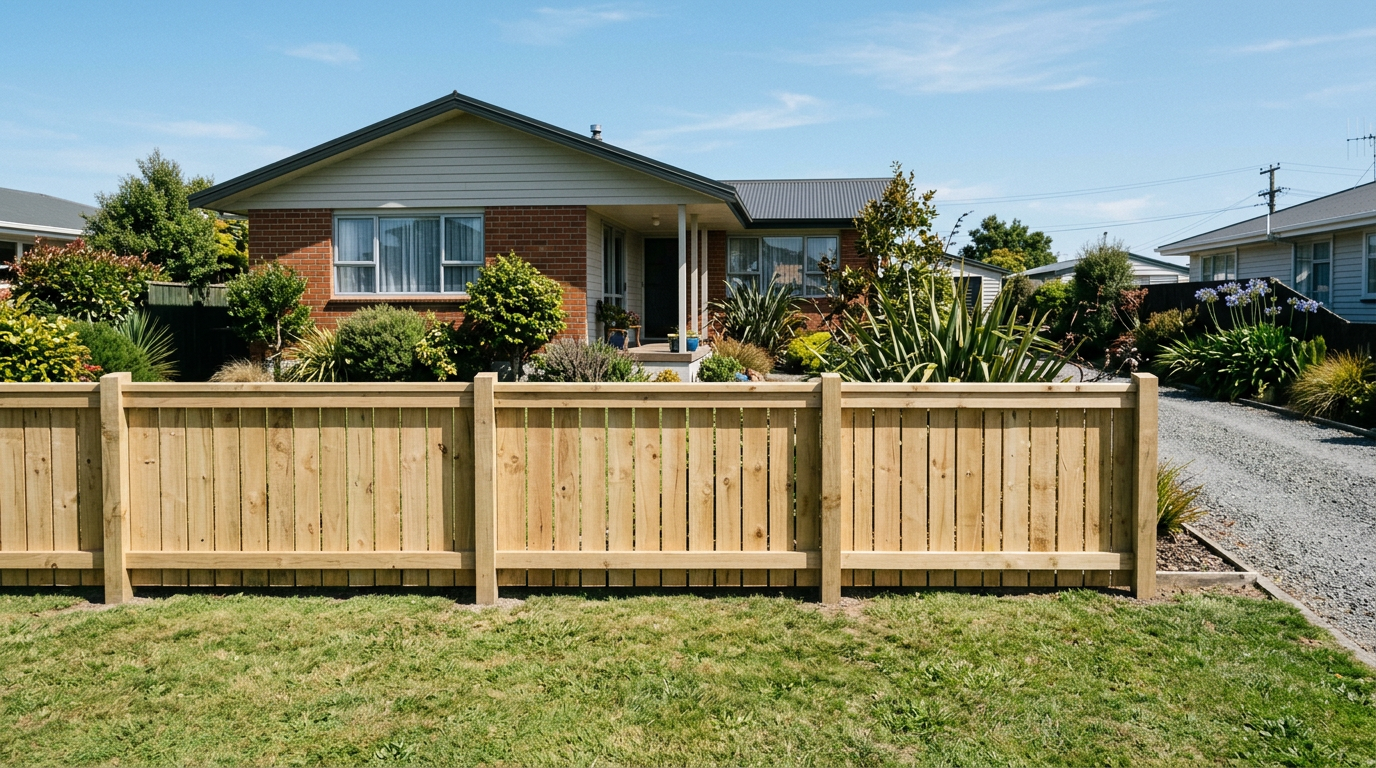
  • Lapped (overlapping) palings: Typically 100 mm wide palings are lapped by 10–15 mm. This gives good privacy and sheds water well.
  • Spaced (open) palings: Leave a consistent gap — a spare paling offcut makes a handy spacer. Allow for the fact that green or freshly treated timber will shrink as it dries; a 5–10 mm gap on green timber may close up significantly.
  • Use a string line or chalk line along the top of the rails to keep paling heights consistent before you start fixing.
  • Check every few palings with a spirit level to make sure you haven't drifted.

Rail Positioning and Paling Overhang

  • Standard paling fences use two or three rails depending on fence height. A 1.2 m fence typically uses two rails; 1.8 m fences generally need three rails for rigidity.
  • Position the top rail close enough to the top of the palings that the paling ends are supported — a top overhang of 25–50 mm above the top rail is typical and helps shed water away from the rail.
  • The bottom of the palings should ideally sit at least 50 mm above ground level to reduce moisture uptake and rot, even with treated timber.

Timber Treatment and Finishing

All timber used in fencing that is exposed to the weather should be treated to at least H3.2 (above-ground exposed). Check the MBIE Building Performance website for current treatment requirements applicable to your situation. Posts in the ground require H4 or H5 treatment. Check the MBIE Building Performance website for guidance on acceptable solutions under the Building Code.

Once fixed, seal or paint the fence promptly — bare timber left uncoated will grey and check (crack) quickly in the NZ sun. Resene, Dulux, and Wattyl all offer exterior timber stains and paints suited to fencing. Follow the manufacturer's preparation and application instructions for best results.

You'll find a good range of treated timber palings, rails, fasteners, and finishing products at Bunnings, Mitre 10, and PlaceMakers.

When to Call a Professional

Fencing is generally not restricted building work under the NZ Building Code, and most homeowners can tackle paling replacement or a straightforward fence build themselves. However, consider calling a qualified fencer if:

  • Your fence is over 2 metres high — at this height, a building consent may be required depending on your council and site conditions. Always check with your local council before starting.
  • The fence is on or near a boundary dispute — a licensed surveyor may need to confirm the boundary line first.
  • You're working near overhead power lines — contact your lines company and check WorkSafe NZ safe-distance requirements before doing any work in the vicinity.
  • The job is large, the ground is difficult, or you simply want it done to a professional standard.

You can find experienced, local fencing contractors on tradedirectory.co.nz.

Frequently Asked Questions

Can I use a nail gun to fix palings, or do I need to hand-nail them?+

A nail gun is fine and speeds the job up considerably. Just make sure the nails you load are hot-dipped galvanised or stainless steel — most nail guns are loaded with bright steel nails by default, which will rust outdoors. Check the nail gun manufacturer's guidance for compatible HDG nail strips.

How many nails or screws do I need per paling?+

Use two fasteners per rail — one near the top edge and one near the bottom edge of the paling at each rail. So for a fence with three rails, that's six fasteners per paling. This prevents twisting and cupping.

Do I need a building consent to build a timber paling fence in NZ?+

Most residential boundary fences under 2 metres high are exempt from building consent under Schedule 1 of the Building Act, but this depends on your specific site, council, and fence location. Always confirm with your local council before starting, as rules can vary.

My palings keep splitting when I nail them — what am I doing wrong?+

Splitting usually happens when nails are placed too close to the end or edge of the paling, or when the timber is dry and hard. Try pre-drilling a pilot hole slightly smaller than the nail shank, keep nails at least 25 mm from the paling ends, and position them 15–20 mm in from the side edges. Switching to screws with self-drilling tips can also reduce splitting.

Should I leave a gap between palings or butt them tight together?+

It depends on the style of fence. For spaced palings, leave a consistent gap using an offcut as a spacer. If using green or freshly treated timber, allow for shrinkage — a small gap now may close as the timber dries. For lapped palings, a 10–15 mm overlap is typical. Avoid butting palings tightly together with no gap, as this traps moisture and accelerates rot.

Need a Fencer?

Find qualified fencers near you in our directory.

Find a Fencer →

Fencers Near You

North Harbour Fencing Ltd logo

Fencer

5.0(1)

Silverdale, Auckland

North Harbour Fencing Contractors specialising in commercial and industrial fencing, automatic gates, timber fencing, safety and security fencing. us today.

Phoenix Fence & Gate logo

Fencer

4.1(10)

Auckland, Auckland

Phoenix Fence & Gate in Auckland specialises in designing and installing aluminium and steel fences, gates, balustrades, and handrails. They offer custom fabrication, automatic gate systems, and maintenance services with a 10-year warranty.

CGF logo

Fencer

Dunedin, Otago

The Big Meow logo

Fencer

Tauranga, Bay of Plenty

Quality Cat Only Boarding Cattery Tap to Call Us Accommodation Information Rates The Big Meow Opening Hours Terms and Conditions Online Booking Premium WordPress Themes with Single Click Installation Premium WordPress Themes with Single Click Installation, Just a Click and your website is ready for use.Premium WordPress Themes. Read More Welcome to The Big Meow. If you wish to make a booking please either book through the Online Booking page in the ...

Fencerite Industries Ltd logo

Fencer

4.5(2)

Auckland, Auckland

Fencerite Industries Ltd is a fencing specialist based in Auckland, providing commercial, industrial, and residential fencing and gate solutions across Auckland, Waiheke, Northland, and Waikato. They offer a range of products including security fencing, sports court fencing, pool fencing, and automated gates.

Future Fencing Ltd logo

Fencer

Clive, Hawke's Bay

Future Fencing Ltd, based in Clive, Hawke's Bay, has over 13 years of experience installing commercial and residential fences and gates. They offer a wide range of options, including automatic, manual, swing, and solar gates, tailored to property needs.

Landscaping & Garden Supplies Stores Near You

Stock up for this job — landscaping & garden supplies suppliers and stores, with address, phone and email.

Aarons Contracting logo

Aarons Contracting

Parnell, Auckland, Auckland

Landscaping & Garden Supplies
Aqualight Ltd logo

Aqualight Ltd

Takapuna, Auckland, Auckland

Landscaping & Garden Supplies

Auckland's irrigation experts. Innovative, intelligent irrigation design & installation for quality residential or commercial landscapes

Bay Landscapes & Garden Centre logo

Bay Landscapes & Garden Centre

Nelson

Landscaping & Garden Supplies

Bay Landscapes – Nelson/Tasman garden centre with a wide range of fruit trees, native plants & expert advice.

BAY Topsoil Ltd logo

BAY Topsoil Ltd

Papamoa Beach, Papamoa, Bay of Plenty

Landscaping & Garden Supplies

Buy premium topsoil, compost, and bark with Tauranga landscape supplies. Shop screened topsoil near me & get quality topsoil today. Order your Tauranga topsoil!

Big Plant Depot logo

Big Plant Depot

Nelson

Landscaping & Garden Supplies
The Yard Central Ltd logo

The Yard Central Ltd

Wanaka, Otago

Landscaping & Garden Supplies

We are a proud and highly experienced landscapers, stone masons, garden designers, and builders based in Wanaka. We strive to create the best outdoor living and entertaining space for your home, inspired and informed by the wonderful nature around us.

Browse all landscaping & garden supplies suppliers →
Last updated: Last reviewed:

The information on this page is provided as a general guide only. Kiwi Trade Directory makes no representations or warranties regarding the accuracy, completeness, or suitability of this information for your specific situation. Costs, timeframes, and recommendations vary significantly depending on your location, property, and individual circumstances. Always obtain multiple quotes from qualified tradespeople and seek independent professional advice before undertaking any home improvement or building work. Kiwi Trade Directory accepts no liability for any loss or damage arising from reliance on the information provided on this site.

