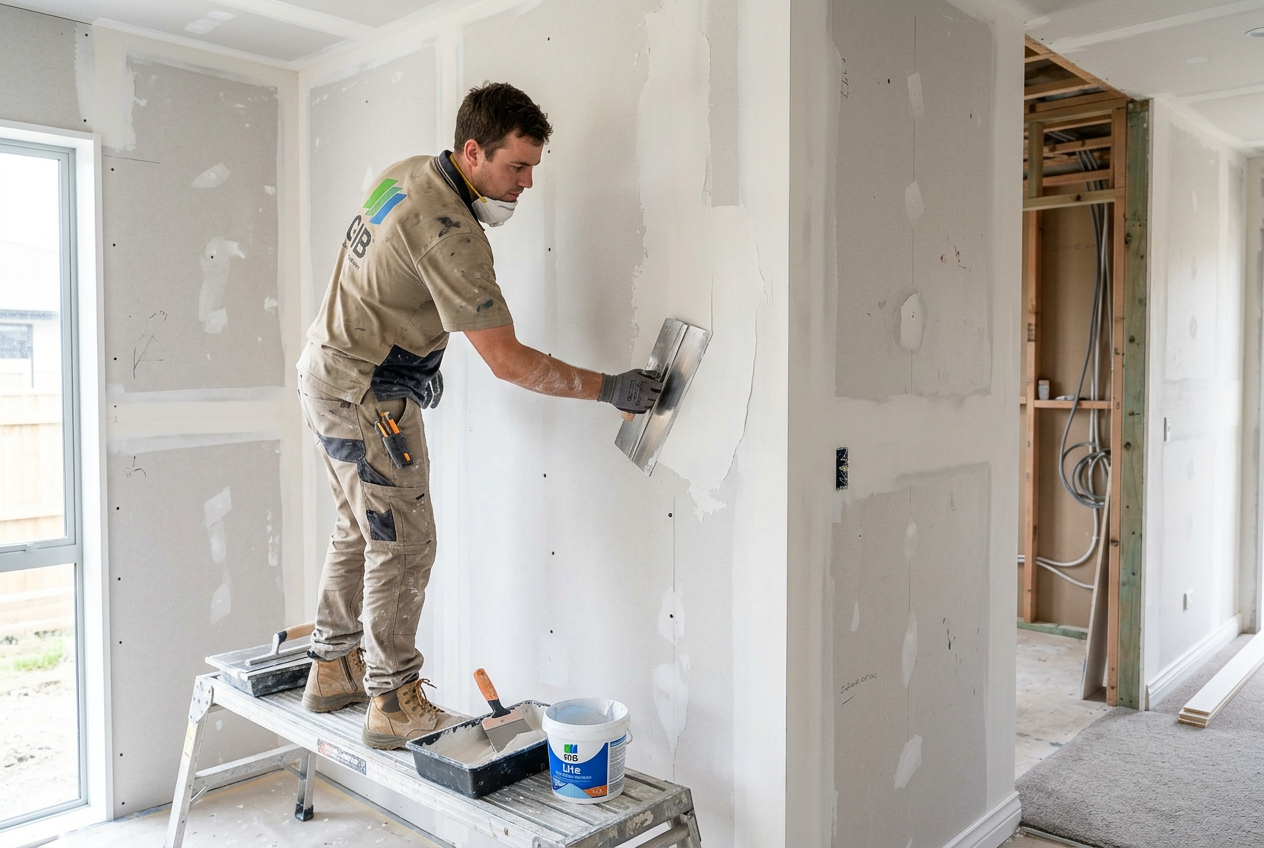
Mixing GIB Tradeset correctly is one of the most important steps in achieving a smooth, crack-free plasterboard finish. Get the ratio or technique wrong and you risk lumps, premature setting, or a first coat that shrinks and cracks. Here's how to do it properly.
What Is GIB Tradeset?
GIB Tradeset is a fast-setting, cement-based setting compound (not an air-drying compound) made specifically for filling and embedding tape on GIB plasterboard systems. Because it sets by chemical reaction rather than drying, it has a fixed working time — typically around 45–60 minutes depending on the grade you choose (Tradeset 45, 60, or 90, referring to approximate setting time in minutes). Once it starts to go off, you cannot re-temper it with more water, so mixing only what you can use in time is essential.
Tools You'll Need
- A clean plastic bucket (residue from old set compound will dramatically shorten your working time)
- Clean, cold water
- A mixing paddle attached to a drill (a slow-speed drill, around 400–600 rpm, is ideal)
- A margin trowel or broad knife for scraping down
- Measuring jug (optional but helpful for consistency)
The Right Water-to-Powder Ratio
Always add powder to water, not the other way around. A general starting guide is roughly 1 part water to 2 parts powder by volume, but the exact ratio can vary slightly depending on the grade and your working conditions. Refer to the current mixing instructions on your specific bag of Tradeset, as GIB may update their recommendations.
| Tradeset Grade | Approx. Working Time | Best Used For |
|---|---|---|
| Tradeset 45 | ~45 minutes | Small patches, quick turnaround |
| Tradeset 60 | ~60 minutes | Standard first coat embedding |
| Tradeset 90 | ~90 minutes | Larger areas, warmer conditions |
In warmer weather or a heated room, setting time shortens noticeably — mix smaller batches and work quickly.
Step-by-Step Mixing Method
1. Start with clean, cold water
Pour your water into the bucket first. Cold water slows the chemical reaction slightly, giving you a little more working time. Avoid warm or hot water — it will cause the compound to set far too quickly.
2. Add the powder gradually
Sprinkle the Tradeset powder into the water steadily, allowing it to slake (absorb water) for about 30–60 seconds before you start mixing. Don't dump the whole lot in at once.
3. Mix thoroughly with a drill and paddle
Using your drill and mixing paddle, blend the compound until it is completely smooth with no lumps or dry pockets. Scrape the sides and bottom of the bucket with your trowel to catch any unmixed powder. The finished mix should have a consistency similar to thick peanut butter — it should hold its shape on a trowel without slumping, but spread easily without dragging.
4. Let it slake, then remix
Once mixed, let the compound rest for 2–3 minutes, then give it one final mix. This slaking period helps any remaining dry particles fully hydrate and gives you a smoother, more workable mix.
5. Do not add more water after mixing
If the mix feels too stiff, it's tempting to add water and stir again. A very small amount of water can be worked in immediately after the initial mix, but once the compound has begun to set, adding water will weaken the final product and cause it to crack. It's better to mix a fresh batch.
Common Mistakes to Avoid
- Dirty bucket or tools — old set compound residue acts as an accelerant and will cause your new mix to go off prematurely. Always wash tools thoroughly between batches.
- Mixing too much at once — only mix what you can apply within two-thirds of the stated working time to give yourself a safe buffer.
- Using warm water — this shortens working time significantly.
- Under-mixing — lumps in the compound will drag under your knife and leave marks in the first coat.
- Re-tempering — never add water to a batch that has started to stiffen.
Applying the First Coat
For a standard first coat (embedding coat), apply Tradeset over your tape and into butt joints and corners using a 150–200 mm broad knife. Feather the edges out and remove excess compound. The first coat doesn't need to be perfectly smooth — its job is to embed the tape and fill the joint. Allow it to fully set and harden (it will feel firm and cool to the touch) before applying subsequent coats with an air-drying compound.
For full system guidance, refer to the GIB site and download the GIB Fixing and Finishing Guide, which covers the complete multi-coat process in detail.
When to Call a Professional
If you're working on a large plastering job, a new build, or a renovation that involves structural plasterboard walls or ceilings, it's worth getting a qualified plasterer involved. Poorly finished plasterboard can be difficult and costly to correct once painted. You can find experienced local plasterers on tradedirectory.co.nz. For work that may require a building consent — such as significant alterations — check with your local council and visit MBIE Building Performance for guidance on what requires consent.

 Master Painters NZ member








