See the latest posts from tradesmen around the country
Knowledge BasePlasterer

What Is the Difference Between Stopping, Skimming and Rendering in NZ?

Stopping, skimming and rendering are three distinct plastering techniques used in NZ homes. Here's what each one means and when you'd use it.

What Is the Difference Between Stopping, Skimming and Rendering in NZ?

Stopping, skimming and rendering are all plastering techniques, but they serve very different purposes and are applied to different surfaces. Understanding the difference helps you describe the job accurately when getting quotes — and ensures you hire the right tradesperson for the work.

Stopping: Finishing Plasterboard Joints and Holes

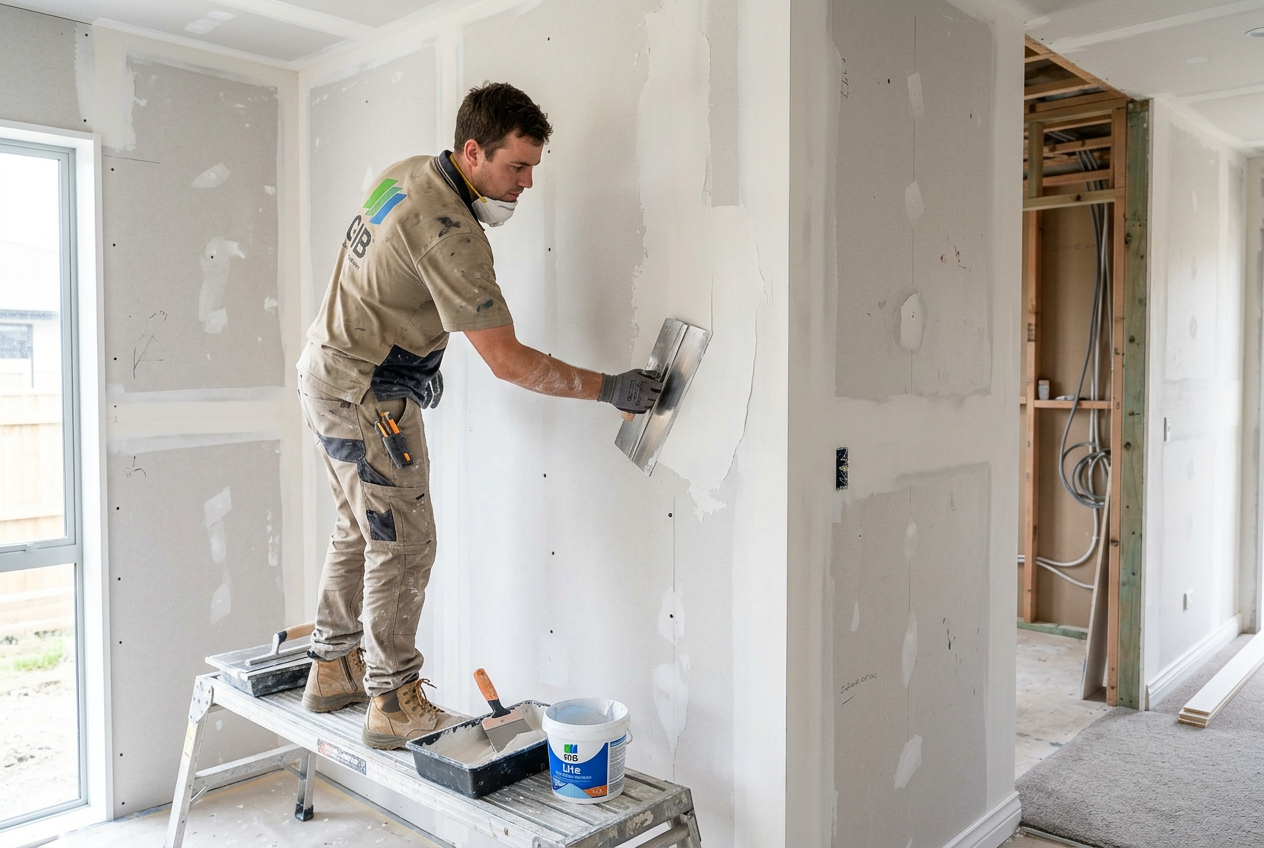
Stopping (sometimes called jointing) is the process of filling and smoothing the joints, screw holes, and imperfections in plasterboard (GIB board) walls and ceilings before painting. It's the most common plastering task in NZ new builds and renovations, since the vast majority of interior walls are lined with GIB plasterboard.

The process typically involves:

  • Embedding paper or fibreglass tape over board joints
  • Applying stopping compound (also called joint compound or filler) in multiple coats
  • Sanding back between coats to achieve a flat, seamless surface
  • Finishing to a Level 3, 4 or 5 finish depending on the paint sheen and lighting conditions

GIB publishes detailed guidance on stopping levels and recommended compounds for their board systems — it's worth checking if you're specifying finish quality for a project.

Stopping is generally considered non-restricted work, meaning a competent homeowner can patch small holes or touch up minor damage. However, achieving a truly flat, paint-ready finish across large areas takes skill and practice, and poor stopping is very obvious once paint goes on — especially with low-sheen or gloss paints.

Skimming: A Thin Plaster Coat Over an Existing Surface

Skimming refers to applying a very thin finishing coat of plaster — typically 2–4 mm — over an existing surface to create a smooth, even base for painting. It's often used to:

  • Refresh old, rough or damaged plaster walls
  • Smooth over textured surfaces (like orange peel or stipple ceilings)
  • Cover repaired areas where the texture no longer matches
  • Provide a high-quality finish over plasterboard that has already been stopped

Skimming uses a fine-finish plaster or a proprietary finishing compound, applied with a steel trowel and feathered out to a very thin, consistent layer. It requires a high level of skill to avoid trowel marks, ridges or uneven thickness — this is where experienced plasterers really earn their keep.

In NZ, skimming is commonly used when renovating older homes with fibrous plaster or hard plaster walls, which may have cracked or deteriorated over time. It can also be applied over plasterboard to achieve a superior Level 5 finish for high-gloss paints or feature walls.

Rendering: External (and Sometimes Internal) Cement or Plaster Coatings

Rendering is the application of a cement-, lime- or acrylic-based coating to exterior walls — or occasionally internal masonry walls. It's a much thicker application than skimming, typically 10–20 mm, and is used to:

  • Weatherproof and protect exterior masonry, brick or block walls
  • Provide a decorative finish on fibre cement or polystyrene cladding systems
  • Cover and seal exterior substrates before painting or texture coating
  • Achieve a specific architectural look (e.g. smooth, textured or patterned finishes)

In NZ, rendering is closely tied to the NZ Building Code — particularly Clause E2 (External Moisture). Exterior render systems must be correctly detailed to prevent water ingress, and many proprietary systems (such as those using James Hardie fibre cement substrates) require the render to be applied strictly to the manufacturer's specifications to maintain warranty and Code compliance.

Render mixes vary widely:

TypeCommon UseKey Characteristic
Cement renderMasonry, block, brickHard, durable, traditional
Acrylic renderLightweight cladding systemsFlexible, crack-resistant
Lime renderHeritage/older homesBreathable, softer finish
Polymer-modifiedHigh-performance exteriorImproved adhesion and flexibility

Products from Sika and Ardex are commonly used by NZ plasterers for render and finishing systems.

Key Differences at a Glance

  • Stopping = filling joints and holes in plasterboard — interior, thin, paint prep
  • Skimming = thin finishing coat over an existing surface — interior (usually), smoothing and levelling
  • Rendering = thick protective/decorative coat — exterior (mainly), weatherproofing and finish

Do You Need a Building Consent?

Most interior stopping and skimming work does not require a building consent. However, if you're re-cladding or significantly altering an exterior wall system, a building consent is very likely required. Always check with your local council before starting exterior work — MBIE Building Performance has useful guidance on what triggers consent requirements and Schedule 1 exemptions.

When to Call a Professional

While patching a small hole in GIB is a reasonable DIY job, most plastering work benefits enormously from professional skill:

  • Large stopping or skimming jobs — uneven or ridged surfaces are very hard to fix once painted
  • Any exterior rendering — incorrect application can lead to water damage, Code non-compliance and costly remediation
  • Heritage or hard plaster walls — matching existing texture and composition requires specialist knowledge
  • New builds or major renovations — a Licensed Building Practitioner (LBP) may be required to carry out or supervise certain restricted building work

A qualified plasterer will assess your substrate, recommend the right system, and deliver a finish that holds up over time. You can find experienced local plasterers on tradedirectory.co.nz.


Frequently Asked Questions

Can I do my own stopping and skimming in NZ?+

Patching small holes or cracks in plasterboard is generally fine as a DIY task. However, achieving a smooth, paint-ready finish over large areas takes considerable skill. Poor stopping is very visible once paint is applied, especially with low-sheen or gloss finishes, so for anything beyond minor repairs it's worth hiring a professional plasterer.

Does exterior rendering require a building consent in NZ?+

It depends on the scope of work. Re-cladding or significantly altering an exterior wall system will usually require a building consent. Applying render as part of routine maintenance may not, but you should always check with your local council before starting. MBIE Building Performance (building.govt.nz) has guidance on what triggers consent requirements.

What is a Level 5 plasterboard finish and when do I need it?+

A Level 5 finish is the highest standard of stopping and skimming, where a thin skim coat is applied over the entire surface after standard stopping. It's recommended when using high-gloss paints, in areas with strong raking light, or for feature walls where any surface imperfection would be obvious. GIB publishes guidance on finish levels on their website.

How thick is render compared to a skim coat?+

Render is typically applied at 10–20 mm thick (sometimes in multiple coats) and is used mainly on exterior walls. A skim coat is much thinner — usually just 2–4 mm — and is used on interior surfaces to create a smooth finish. The materials used are also different, with render generally being cement- or acrylic-based and skim coats using fine finishing plaster or compound.

What's the difference between a plasterer and a painter when it comes to stopping?+

In NZ, both plasterers and painters may carry out stopping work, and there is some overlap. Plasterers typically handle the full stopping and skimming process on new builds and major renovations, while painters often do minor stopping and filling as part of a repaint. For large or complex jobs, a dedicated plasterer will generally produce a higher-quality result.

Need a Plasterer?

Find qualified plasterers near you in our directory.

Find a Plasterer →

Plasterers Near You

5 Stars Painting & Plastering Ltd logo

Plasterer

5.0(4)

Auckland, Auckland

5 Stars Painting & Plastering Ltd is a plastering and painting business based in Auckland. They offer services for both commercial and residential projects, including offices, hotels, and homes. The company emphasises reliability, organisation, and quality assurance.

  • Master Painters NZ member

Alpha plastering logo

Plasterer

Christchurch, Canterbury

Textureclad logo

Plasterer

Whangarei, Northland

Uncategorized | 1 comment | 15 March, 2026 | 0 Welcome to WordPress. This is your first post. Edit or delete it, then start writing! Read more 11 Impossible Tech Interview Questions You Don t Want To Be Asked By admin | Photo | 0 comment | 15 August, 2015 | 0 You may purchase phone plans with more than enough data to cover things like casual web surfing and streaming the occasional song. But you may not...

Dowd Concrete & Plaster Ltd logo

Plasterer

Queenstown, Otago

Great Interiors logo

Plasterer

Christchurch, Canterbury

Great Interiors Ltd is a plastering specialist based in Christchurch, Canterbury. They provide internal plastering services including walls, ceilings, coving, artex removal, and repairs for both private and commercial clients throughout Canterbury and surrounding areas.

JA Plasterers Ltd logo

Plasterer

4.2(5)

Auckland, Auckland

JA Plasterers Ltd is a plastering company based in Auckland, New Zealand. They operate throughout the greater Auckland region and beyond, employing skilled professionals to deliver quality workmanship on projects of all sizes.

Paint & Decorating Stores Near You

Stock up for this job — paint & decorating suppliers and stores, with address, phone and email.

autocolourbank logo

autocolourbank

Otahuhu, Auckland, Auckland

Paint & Decorating

Professional-grade paints, custom colour matching and respray supplies trusted by panel beaters. NZ-wide delivery available. Free delivery on orders over $500.

Natural Paint Co logo

Natural Paint Co

Richmond, Christchurch, Canterbury

Paint & Decorating

We've created paint and wood oils that are not only good for you, but good for our planet too. Keep your home and family healthy with Ultra Low VOC paint.

Dooney and Daughters Trading Co ltd logo

Dooney and Daughters Trading Co ltd

Remuera, Auckland, Auckland

Paint & Decorating

Stockists of The Artisan Company Chalk Paint, ReDesign Transfers, Mint Decoupage & Efex Mouldings, specialists in hand painted furniture. Join a workshop or visit our in-store paint bar!

Everbrite Coatings logo

Everbrite Coatings

Cockle Bay, Auckland, Auckland

Paint & Decorating

Tough durable DIY Protective Everbrite Coatings to restore faded windows and doors - Protect all metals from UV, tarnish, corrosion, rust.

International Paint logo

International Paint

Avondale, Auckland, Auckland

Paint & Decorating

We’ve been pioneering a world of possibilities to bring surfaces to life for well over 200 years. As experts in making coatings, there’s a good chance you’re only ever a few meters away from one of our products. Our world class portfolio of brands – including Dulux, International, Sikkens and Interpon – is trusted by customers around the globe. We’re active in more than 150 countries and have set our sights on becoming the global industry leader. It’s what you’d expect from the most...

Brakes Paint & Decor Kaitaia logo

Brakes Paint & Decor Kaitaia

Kaitaia, Northland

Paint & Decorating

Brakes Paint & Decor Kaitaia — paint and decorating store in Kaitaia. Listed on Dulux's official store locator as a Dulux stockist (retail & trade). Address: 224 Commerce Street, Kaitaia, Northland 0410.

Browse all paint & decorating suppliers →
Last updated: Last reviewed:

The information on this page is provided as a general guide only. Kiwi Trade Directory makes no representations or warranties regarding the accuracy, completeness, or suitability of this information for your specific situation. Costs, timeframes, and recommendations vary significantly depending on your location, property, and individual circumstances. Always obtain multiple quotes from qualified tradespeople and seek independent professional advice before undertaking any home improvement or building work. Kiwi Trade Directory accepts no liability for any loss or damage arising from reliance on the information provided on this site.


