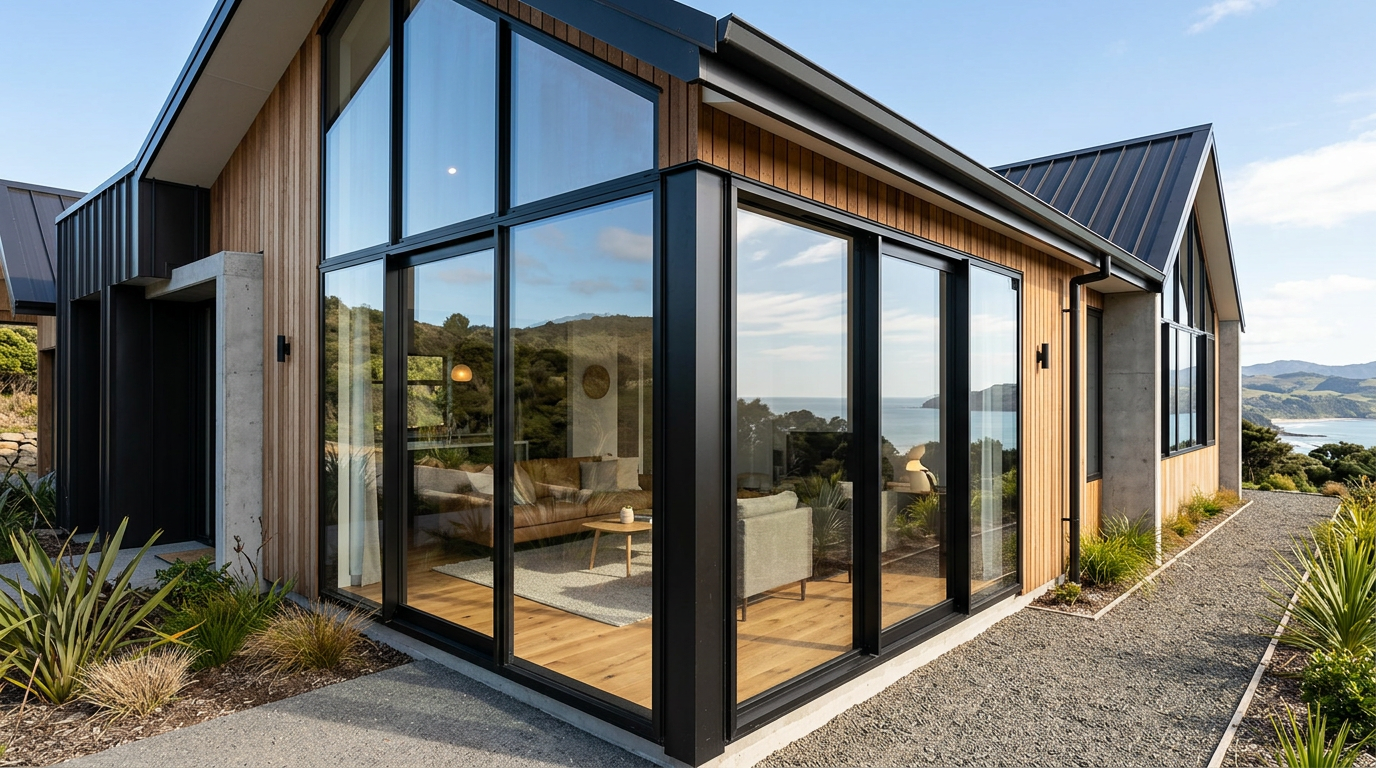
In New Zealand, safety glazing and standard glazing are not interchangeable — and in many locations around your home, using the wrong type is both a Building Code breach and a genuine safety hazard. Safety glazing is specially manufactured or treated glass that, when broken, either stays intact or breaks into small, relatively harmless pieces rather than large, razor-sharp shards. Knowing the difference could prevent a serious injury.
What Is Standard Glazing?
Standard glazing (also called annealed glass) is ordinary float glass that has been slowly cooled during manufacture. It is the most common and least expensive type of glass. When it breaks, it shatters into large, jagged shards that can cause severe lacerations. Standard glazing is perfectly acceptable in many low-risk locations — for example, picture frames, high-level windows well out of reach, or glazed cabinet doors — but it must never be used where the NZ Building Code requires safety glazing.
What Is Safety Glazing?
Safety glazing is a broad term covering several glass types that meet higher impact and breakage standards. The main types used in NZ residential work are:
- Toughened (tempered) glass — Heat-treated to be four to five times stronger than standard glass. When it does break, it shatters into small, blunt-edged cubes rather than sharp shards. It cannot be cut after toughening, so it must be ordered to size.
- Laminated glass — Two or more glass panes bonded with a plastic interlayer (usually PVB). When broken, the interlayer holds the pieces together, preventing them from falling away. It also provides good acoustic and UV performance.
- Wired glass — Glass with an embedded wire mesh that holds pieces together on breakage. Once common in fire-rated applications, it has largely been replaced by toughened or laminated options in modern builds.
- Heat-strengthened glass — Stronger than annealed but not as strong as fully toughened; generally not considered safety glazing for NZ Building Code purposes on its own.
What Does the NZ Building Code Require?
The NZ Building Code Clause F4 (Safety of Users) and Clause F2 (Hazardous Building Materials) set out where safety glazing is mandatory. The relevant standard is NZS 4223, which covers glazing in buildings and specifies minimum glass thicknesses and types for different locations and wind zones.
As a general guide, safety glazing is typically required in:
| Location | Reason |
|---|---|
| Doors (fully or partially glazed) | High impact risk from people walking into or through them |
| Sidelights beside doors (within 500 mm of the door edge and below 1500 mm high) | Risk of someone falling through after missing the door |
| Low-level windows (glazing below 800 mm from floor level) | Risk of people, especially children, falling through |
| Shower screens and bath enclosures | Wet, slippery environment increases fall risk |
| Balustrades and pool fencing | Structural and fall-prevention requirements |
| Stairwell glazing | Fall risk |
Important: The exact requirements depend on glass area, height above floor, proximity to doors, and other factors. Always confirm with your local council or a Licensed Building Practitioner what applies to your specific situation.
How Can You Tell the Difference?
Toughened safety glass is usually marked with a permanent etched or printed safety mark in a corner, showing the manufacturer's name, the standard it meets (such as AS/NZS 2208), and the glass type. If you cannot find this mark, treat the glass as standard annealed glass until a qualified glazier confirms otherwise. Laminated glass often has a visible interlayer edge when viewed from the side.
Does Safety Glazing Need a Building Consent?
Replacing like-for-like glazing (same size, same type) in an existing opening is generally a Schedule 1 exemption under the Building Act and may not require a building consent — but this is not always the case, particularly if you are changing the glass type or size, or if the work is in a heritage building. Always check with your local council before starting work. You can find guidance at MBIE Building Performance.
Cost Difference: Safety vs Standard Glass
As a rough guide, toughened glass typically costs noticeably more than standard annealed glass of the same size, and laminated glass can cost more again depending on thickness and interlayer type. However, prices vary significantly by glass size, thickness, supplier, and region. Get quotes from at least two or three glaziers for an accurate picture.
When to Call a Professional
Glazing work — especially the removal and installation of large panes — carries real risks of cuts, glass breakage, and structural damage if done incorrectly. While a competent homeowner might replace a small, straightforward pane, most glazing work is best left to a qualified glazier, particularly when:
- Safety glazing is legally required (getting it wrong is a Building Code breach)
- The glass is large, heavy, or in a difficult location
- The work involves a shower screen, balustrade, or pool fence
- You are unsure what type of glass is currently installed
For peace of mind, BRANZ provides research and guidance on building materials and best practice. You can find qualified, local glaziers on tradedirectory.co.nz.



 Window & Glass Association