Roofers and waterproofers both work to keep water out of your home, but they are distinct trades with different skills, materials, and areas of focus. In New Zealand, understanding the difference helps you hire the right person for the job — and avoid costly mistakes.
What Does a Roofer Do?
A roofer specialises in the installation, repair, and replacement of roof cladding systems. In NZ, this typically includes:
- Metal roofing — corrugate, standing seam, and long-run steel (common brands include Colorsteel and Dimond)
- Concrete and clay tiles
- Asphalt shingles (less common in NZ but used in some regions)
- Flashings — the metal strips that seal junctions between the roof and walls, chimneys, or skylights
Roofers work to the requirements of the NZ Building Code, particularly Clause E2 (External Moisture), which sets out how roofs must be designed and built to prevent water ingress. Most significant roofing work requires a building consent — always check with your local council before starting, as consent requirements vary.
Roofers may also be Licensed Building Practitioners (LBPs) in the Roofing licence class, which is required for restricted building work on homes. If your project involves restricted building work, you must use an LBP or have the work supervised by one.
What Does a Waterproofer Do?
A waterproofer (sometimes called a waterproofing applicator or membrane installer) focuses on applying specialist liquid membranes, sheet membranes, and coatings to surfaces that need to be completely watertight. Their work is most common in:
- Wet areas — showers, bathrooms, and laundries (covered by NZ Building Code Clause E3)
- Decks and balconies — particularly flat or low-pitch decks where water can pond
- Basements and retaining walls
- Concrete roofs and roof terraces
- Commercial buildings — podium decks, planter boxes, and below-ground structures
Waterproofers use products such as polyurethane membranes, torch-on bitumen systems, and liquid-applied coatings from manufacturers like Sika and Ardex. The correct product choice, surface preparation, and application thickness are critical — a poorly applied membrane can fail within a few years.
Key Differences at a Glance
| Feature | Roofer | Waterproofer |
|---|---|---|
| Main materials | Metal, tiles, shingles, flashings | Membranes, coatings, sealants |
| Typical locations | Pitched and low-slope roofs | Wet areas, decks, basements, flat roofs |
| NZ Building Code clause | E2 (External Moisture) | E2, E3 (Internal Moisture) |
| LBP licence class | Roofing | Not a separate LBP class (but may hold Design or Site licence) |
| Consent often required? | Yes, for new work or major repairs | Yes, for wet areas and structural waterproofing |
Where the Trades Overlap
There is genuine overlap on flat or low-pitch roofs and roof decks. A membrane system on a flat concrete roof could be installed by either a specialist waterproofer or a roofer with membrane experience. On these jobs, it pays to ask the tradesperson specifically about their experience with the system being used and whether they follow the manufacturer's technical data sheets — BRANZ research consistently shows that membrane failures are often caused by poor preparation or incorrect application rather than product failure.
Similarly, some roofing companies offer waterproofing services as part of a full package, particularly for residential deck and balcony work.
Wet Areas: A Special Case
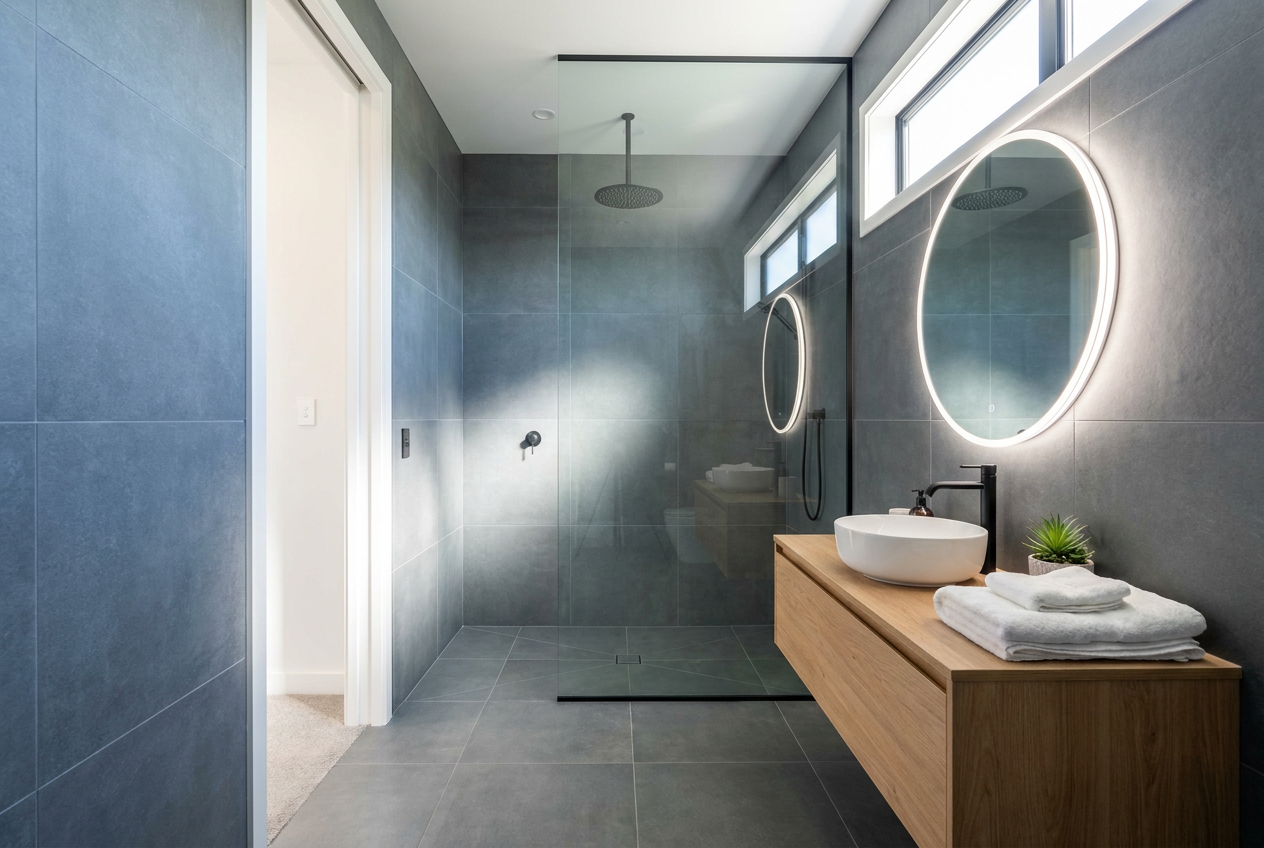
In NZ homes, bathroom and shower waterproofing is one of the most common waterproofing jobs. Under the Building Code (E3), wet areas must be waterproofed before tiling. This work usually requires a building consent for new bathrooms, though repairs to existing waterproofing may sometimes fall under Schedule 1 exemptions — confirm with your council. The Healthy Homes standards set requirements for rental properties including moisture ingress and drainage, making waterproofing relevant for landlords too.
When to Call a Professional
Both roofing and waterproofing are areas where DIY attempts frequently lead to expensive remediation work. You should always hire a qualified tradesperson when:
- Any building consent is required — consented work must be done to code and inspected
- The roof or deck is part of a multi-storey building — safety and liability risks are significant
- You are dealing with a leak you cannot locate — a professional can diagnose the source correctly
- Restricted building work is involved — an LBP must carry out or supervise the work
- Warranty is important — most membrane manufacturers only honour warranties when product is installed by an approved applicator
For electrical or plumbing work that sometimes accompanies roofing or waterproofing (such as roof drainage or heat lamps in bathrooms), remember that this is restricted work requiring a licensed electrician (EWRB) or plumber (PGDB).
You can find qualified local roofers and waterproofers on tradedirectory.co.nz — look for tradespeople who can show their LBP licence number or relevant manufacturer approvals.

 Site Safe


 SiteWise

 Licensed Building Practitioner (LBP)




