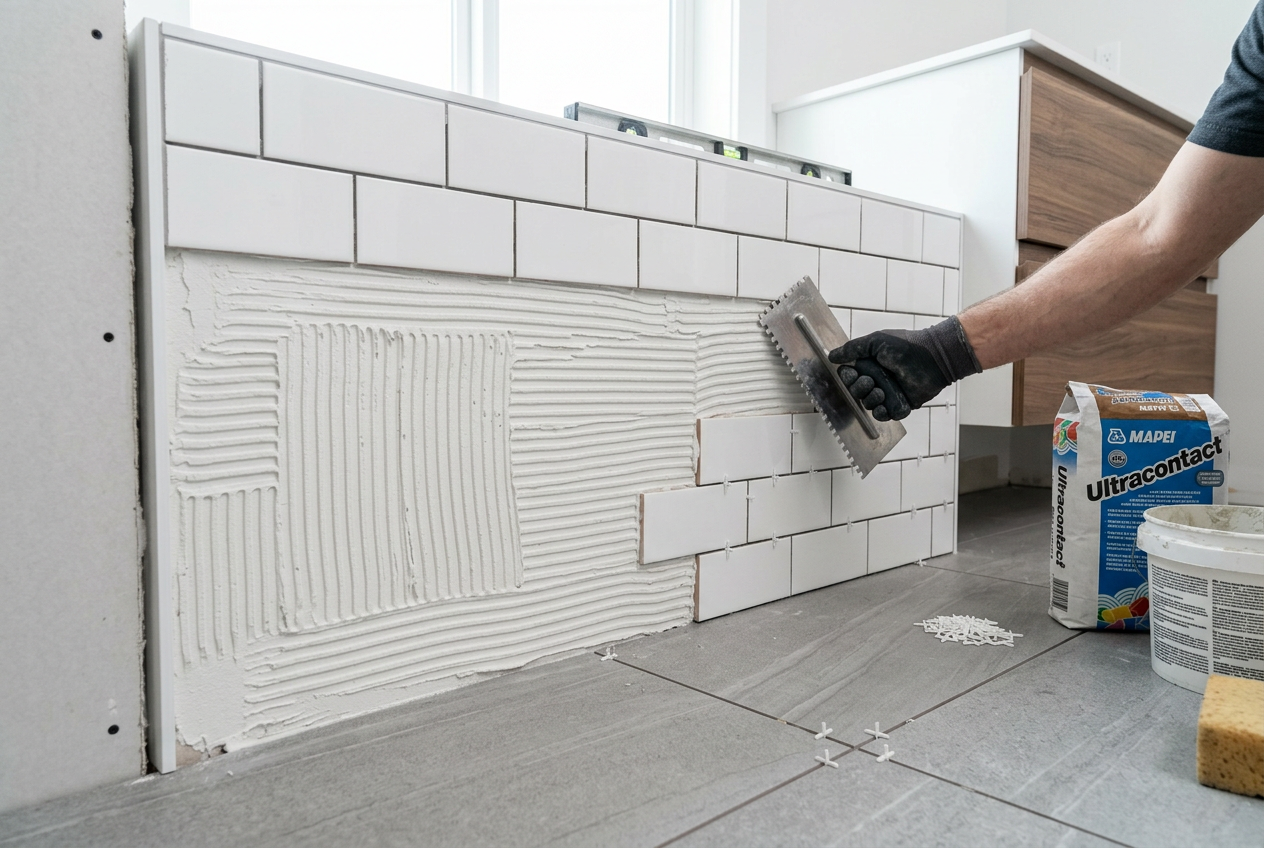
In New Zealand, tilers and waterproofing specialists are closely related trades — and many experienced tilers are skilled in both — but they are not the same thing. Understanding the difference helps you hire the right person, get the right result, and stay on the right side of the NZ Building Code.
What Does a Tiler Do?
A tiler is a tradesperson who selects, cuts, and fixes ceramic, porcelain, stone, or other tile products to floors, walls, and other surfaces. Their core skills include:
- Preparing substrates (levelling, priming, and checking for movement)
- Mixing and applying tile adhesives and grouts
- Laying tiles to pattern, falls, and tolerances
- Cutting tiles accurately around fixtures and edges
- Grouting, sealing, and finishing
Tiling is not a licensed or restricted trade in New Zealand, meaning there is no legal requirement for a tiler to hold a formal licence. However, quality and compliance still matter enormously — especially in wet areas.
What Does a Waterproofing Specialist Do?
A waterproofing specialist focuses specifically on applying membranes and systems that prevent water from penetrating a building's structure. In a residential context this typically means:
- Applying liquid-applied or sheet membranes to shower floors and walls, wet room floors, balconies, and decks
- Detailing around drains, penetrations, corners, and junctions
- Ensuring the system meets the requirements of NZS 4858:2004 (Wet Area Membranes) and the NZ Building Code clauses E3 (Internal Moisture) and E2 (External Moisture)
- Providing a producer statement or similar documentation where required
Waterproofing is not a restricted trade in the same way that plumbing or electrical work is, but it is building work under the Building Act 2004. In many situations — particularly on balconies and decks — a building consent may be required. Always check with your local council before starting work. You can find guidance at MBIE Building Performance.
Where the Two Roles Overlap
In practice, many experienced tilers carry out waterproofing as part of a complete wet area installation. A typical bathroom or shower project might look like this:
| Stage | Who Does It |
|---|---|
| Substrate preparation | Tiler / waterproofing specialist |
| Membrane application | Waterproofing specialist (or qualified tiler) |
| Tile adhesive and laying | Tiler |
| Grouting and sealing | Tiler |
| Compliance documentation | Waterproofing specialist / LBP |
The key point is that waterproofing must be done correctly before tiling begins — tiles do not waterproof a surface on their own. Grout and tile adhesive are not waterproof membranes.
NZ Building Code Requirements
The NZ Building Code is clear that wet areas must be waterproofed to prevent moisture damage to the building structure. Clause E3 (Internal Moisture) sets out performance requirements for internal wet areas, and BRANZ publishes detailed guidance on acceptable solutions for wet area construction.
For showers and bathrooms, the membrane system must comply with NZS 4858:2004. Products from suppliers such as Ardex, Mapei, and Sika are commonly used in NZ and have systems tested to this standard — always check the product's technical data sheet confirms NZS 4858 compliance.
Licensed Building Practitioners (LBPs)
If your project requires a building consent, certain waterproofing and tiling work in wet areas may need to be carried out or supervised by a Licensed Building Practitioner (LBP). LBPs are licensed under the Building Act and are accountable for their work. You can verify an LBP's licence at Licensed Building Practitioners.
Even where consent is not required, hiring someone with LBP status or proven waterproofing experience gives you greater assurance and recourse if something goes wrong.
What a Homeowner Can and Cannot Do
Homeowners can carry out some of their own building work under Schedule 1 of the Building Act, but this has limits — always confirm with your local council what is and isn't exempt. Waterproofing in wet areas is building work, and if done incorrectly it can cause serious structural damage, mould, and costly repairs. For most homeowners, this is work best left to a qualified professional.
Note that if your project involves moving or installing a shower drain or waste pipe, that is restricted sanitary plumbing work and must be carried out by a licensed plumber registered with the Plumbers Gasfitters & Drainlayers Board.
When to Call a Professional
You should engage a qualified tiler and/or waterproofing specialist when:
- Installing or renovating a shower, bathroom, or wet room — waterproofing is non-negotiable
- Tiling a balcony or deck — E2 compliance and possibly a building consent will be required
- Replacing tiles over an existing membrane — the membrane must be inspected and may need repair or replacement
- You notice damp, mould, or soft substrate — this often signals failed waterproofing that needs specialist assessment
A good tradesperson will assess the substrate, recommend the right membrane system, and document their work. You can find qualified local tilers and waterproofing specialists on tradedirectory.co.nz.

 Site Safe
 SiteWise


 BCITO Qualified





