In New Zealand, the terms solid plasterer and GIB stopper are often used interchangeably by homeowners, but they refer to two quite different trades. Understanding which one you need can save you time, money, and the frustration of hiring the wrong person for the job.
What Does a Solid Plasterer Do?
A solid plasterer (sometimes called a traditional or render plasterer) works with cement-based, lime-based, or acrylic render systems applied to hard substrates. These substrates include:
- Concrete block and poured concrete walls
- Brick and stone masonry
- Fibre cement sheet cladding (such as James Hardie products)
- Expanded metal lath over timber framing
- Polystyrene cladding systems (EPS)
Solid plastering is typically an exterior trade, though it also covers internal masonry walls and decorative plasterwork. A solid plasterer applies render in one or more coats — a scratch coat, a brown coat, and a finish coat — building up layers to create a durable, weatherproof surface. They must understand how materials behave in New Zealand's varied climate, from the wet and windy conditions of the West Coast to the UV-intense summers of Hawke's Bay.
Exterior render systems must comply with NZ Building Code Clause E2 (External Moisture), which sets out requirements for keeping water out of the building envelope. BRANZ publishes detailed guidance on render systems and their compliance pathways, which solid plasterers are expected to follow.
What Does a GIB Stopper Do?
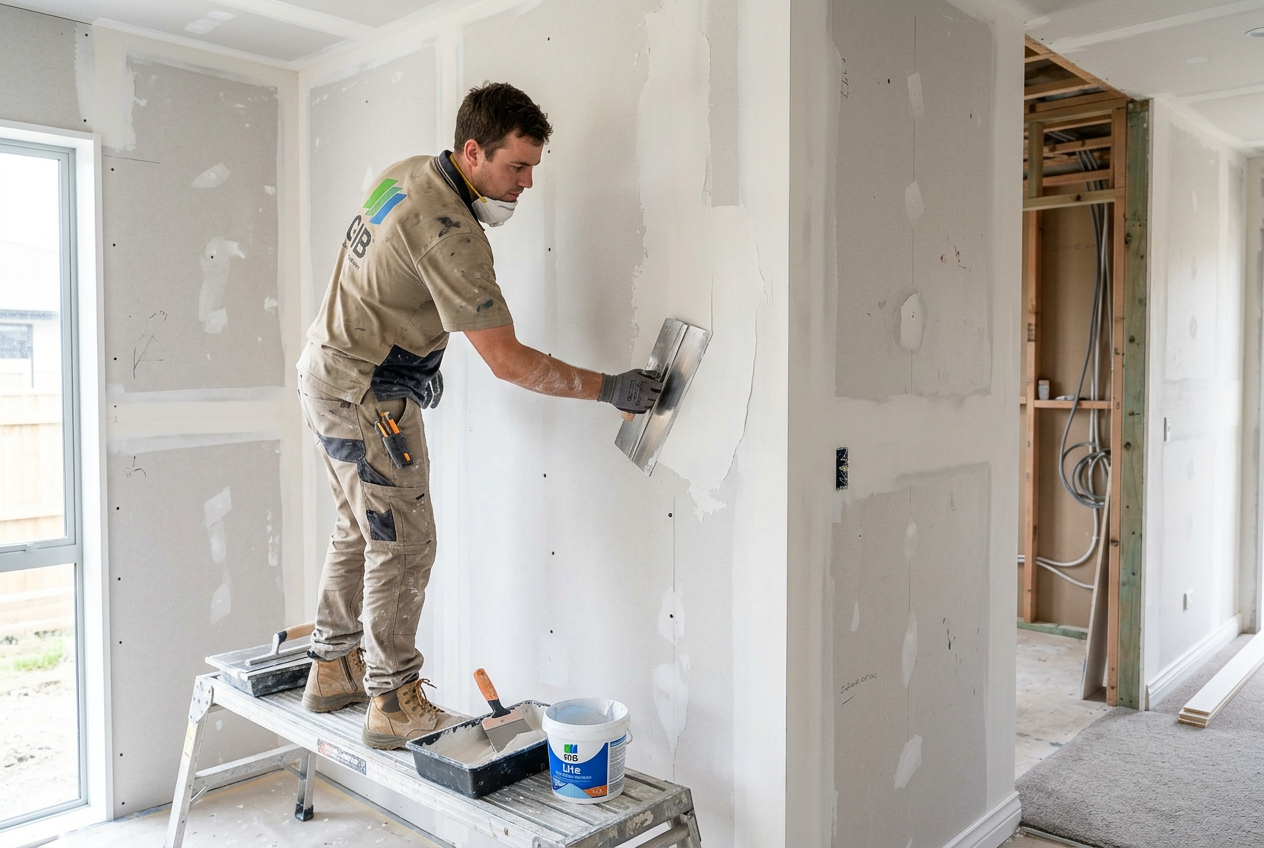
A GIB stopper (also called a plasterboard stopper or drywall finisher) specialises in finishing plasterboard — the flat sheets of gypsum board used to line interior walls and ceilings. In New Zealand, GIB is the dominant brand, which is why the trade is commonly called GIB stopping rather than plasterboard finishing.
The GIB stopping process involves:
- Taping — embedding paper or fibreglass mesh tape over the joints between sheets
- Stopping — applying stopping compound (also called joint compound or mud) in multiple coats over joints, screws, and corners
- Sanding and feathering — smoothing the dried compound so joints are invisible once painted
A skilled GIB stopper can achieve different finish levels depending on the end use. A Level 4 finish is standard for most painted walls, while a Level 5 finish (with a skim coat) is used under gloss paints or in high-light areas where imperfections would show.
GIB stopping is almost entirely an interior trade and is closely linked to the painting and decorating process. The quality of the stopping work directly affects how good the final paint job looks.
Key Differences at a Glance
| Feature | Solid Plasterer | GIB Stopper | |---|---|---|| | Main substrate | Masonry, fibre cement, EPS | Plasterboard (GIB board) | | Location | Mostly exterior, some interior | Interior only | | Materials used | Cement, lime, acrylic render | Joint compound, tape | | Coats applied | Multiple thick coats | Multiple thin coats | | Finish purpose | Weatherproofing & texture | Smooth surface for paint | | Typical projects | New builds, re-rendering, cladding | New builds, renovations, repairs |
Can One Tradesperson Do Both?
Some experienced plasterers are skilled in both trades, but many specialise in one or the other. It's worth asking any plasterer you contact which area they focus on. A solid plasterer who rarely does GIB stopping may not produce the fine, smooth finish a GIB stopper achieves day in, day out — and vice versa.
Do Plasterers Need to Be Licensed?
Plastering is not a restricted building work trade in the same way that electrical or plumbing work is. However, if the plastering work is part of a restricted building work project (for example, exterior cladding on a new home or a significant renovation), the work may need to be carried out or supervised by a Licensed Building Practitioner (LBP). Check the LBP website to understand when this applies, and always confirm with your local council whether a building consent is required before starting work.
For exterior cladding systems in particular, using a plasterer with relevant product training and experience is strongly recommended, as poor workmanship can lead to costly weathertightness failures.
When to Call a Professional
You should hire a qualified plasterer for:
- Any exterior render or re-cladding work — this is complex, weather-dependent, and must meet Building Code requirements
- New GIB lining in a renovation or new build — especially if building consent is involved
- Repairing damaged or cracked plaster — identifying the cause of cracking (settlement, moisture, structural movement) requires experience
- Achieving a high-quality paint-ready finish — poor stopping is very hard to fix once painted
Homeowners can tackle minor interior GIB repairs (small holes, dings) themselves using products available at Bunnings or Mitre 10, but larger repairs or full rooms are best left to a professional.
You can find qualified local plasterers — both solid plasterers and GIB stoppers — on tradedirectory.co.nz.

 Master Painters NZ member








