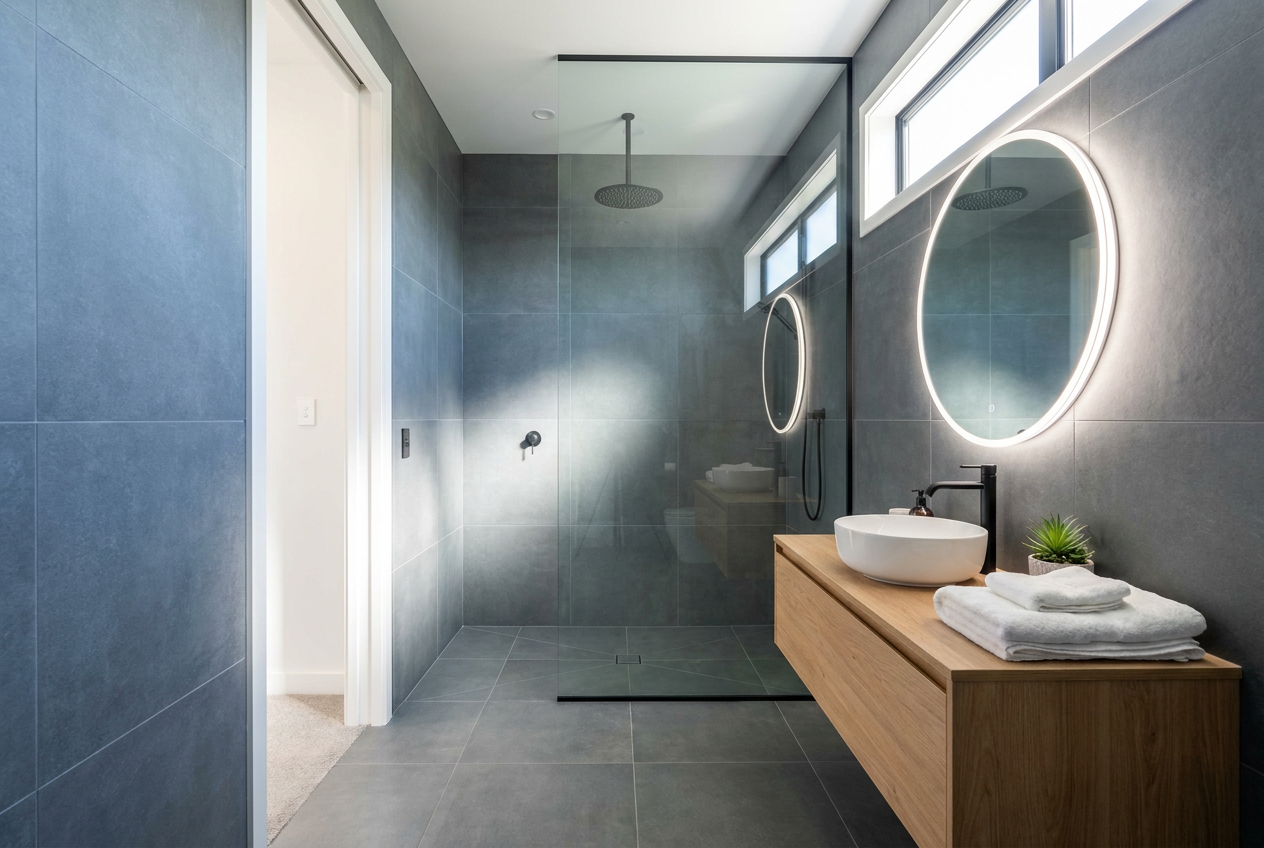
In New Zealand, the terms waterproofer and membrane installer are often used interchangeably — and in many cases, the same tradesperson does both jobs. However, there are meaningful differences in scope, materials, and where each specialist is most commonly found on a building project. Understanding the distinction helps you hire the right person and get a result that meets the NZ Building Code.
What Does a Waterproofer Do?
A waterproofer is a broad term for a tradesperson who applies systems designed to prevent water ingress into a building or structure. Their work covers a wide range of applications, including:
- Wet areas inside the home (showers, bathrooms, laundries)
- Decks, balconies, and podiums
- Basements and retaining walls
- Roofs (flat or low-pitch)
- Foundations and below-ground structures
Waterproofers may use liquid-applied membranes, sheet membranes, cementitious coatings, or a combination of systems depending on the substrate and exposure. Their core skill is understanding water movement, substrate preparation, and product selection to create a continuous, durable barrier.
What Does a Membrane Installer Do?
A membrane installer is typically a specialist who focuses specifically on the installation of sheet or torch-on membrane systems — most commonly on roofs, decks, and podiums. These membranes are usually pre-manufactured products such as:
- Torch-on bituminous membranes
- PVC or TPO single-ply sheet membranes
- EPDM rubber membranes
- Reinforced liquid-applied membranes in sheet form
Membrane installers are often found working on commercial or multi-unit residential projects where large, flat, or low-slope roof areas require a robust, long-term waterproofing solution. Their expertise lies in seaming, detailing, and terminating sheet products correctly — skills that require specific training and, in some cases, manufacturer certification.
Where the Two Roles Overlap
In residential NZ construction, most waterproofers are competent in both liquid-applied and sheet membrane systems. A tradesperson tiling your shower will typically apply a liquid membrane to the floor and walls before the tiles go on — this is waterproofing. The same person may also waterproof a small deck using a sheet or liquid system.
The distinction becomes clearer on larger or more complex projects:
| Scenario | Most Likely Specialist |
|---|---|
| Shower or bathroom wet area | Waterproofer (liquid membrane) |
| Flat roof on a house | Membrane installer or roofer |
| Commercial podium deck | Membrane installer |
| Basement tanking | Waterproofer (cementitious or liquid) |
| Balcony on a multi-storey building | Membrane installer or waterproofer |
| Retaining wall | Waterproofer |
NZ Building Code Requirements
Waterproofing in New Zealand must comply with the Building Code, particularly Clause E3 (Internal Moisture) for wet areas and Clause E2 (External Moisture) for roofs, decks, and cladding. BRANZ publishes guidance on acceptable waterproofing solutions and details that meet these clauses.
For wet areas, the relevant standard is NZS 4858:2004 (Wet Area Membranes), which specifies performance requirements for membranes used in showers and bathrooms. Any membrane system used in a consented building should comply with this standard or have a current CodeMark certificate or BRANZ Appraisal.
Building consent may be required for waterproofing work depending on the scope — for example, a new deck or roof replacement. Always check with your local council before starting work, as Schedule 1 exemptions have specific limits.
Licensing and Qualifications
Waterproofing is not a restricted trade in the same way that electrical or plumbing work is. However, it is often carried out by Licensed Building Practitioners (LBPs) — particularly those with a Roofing or Carpentry licence class — who can legally carry out and sign off on restricted building work (RBW) where it applies.
For work that forms part of a consented project, it's important that the waterproofer understands their obligations under the Building Act. Membrane installers working on commercial projects may also hold manufacturer-specific accreditation, which can be important for warranty purposes.
Products Used in NZ
Both waterproofers and membrane installers work with products from well-known NZ suppliers. Common systems include products from Sika, Ardex, and Mapei, all of which offer liquid-applied and sheet membrane solutions with technical data sheets and installation guides. Always confirm that the product chosen is appropriate for your specific substrate and exposure conditions.
When to Call a Professional
Waterproofing failures are one of the most common and costly defects in NZ buildings — poor waterproofing can lead to structural damage, mould, and moisture and mould issues for rental properties (see Tenancy Services). You should always engage a qualified waterproofer or membrane installer for:
- Any wet area in a bathroom, shower, or laundry
- Decks, balconies, or roofs where water pooling is possible
- Below-ground or basement waterproofing
- Any work forming part of a building consent
DIY waterproofing of a shower or deck is technically possible for a competent homeowner using compliant products, but mistakes are difficult and expensive to fix once tiles or finishes are applied. For peace of mind, hire a professional. You can find qualified local waterproofers and membrane installers on tradedirectory.co.nz.

 Site Safe


 SiteWise

 Licensed Building Practitioner (LBP)




