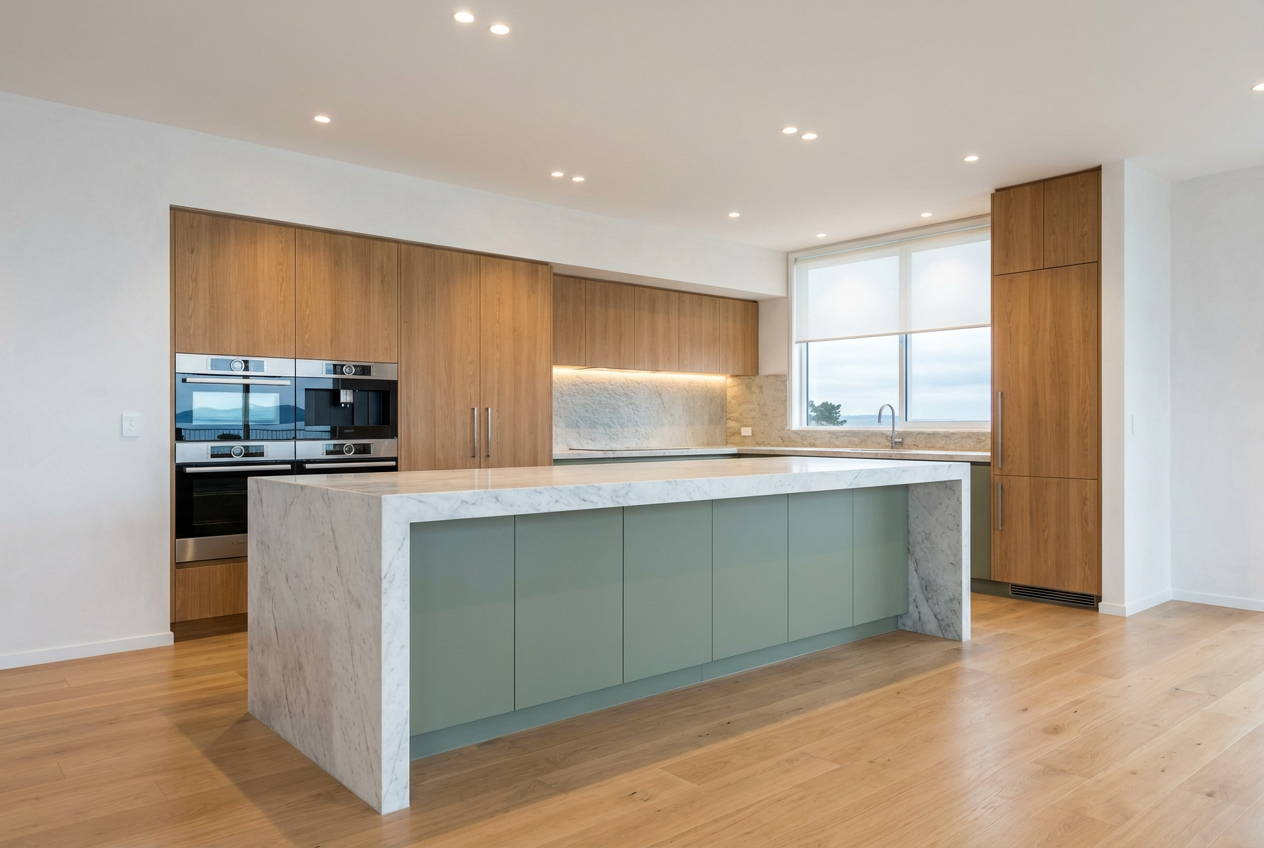
In New Zealand, joiners and carpenters are both skilled timber tradespeople, but they specialise in quite different areas of work. Put simply, joiners typically craft and manufacture timber components — such as doors, windows, cabinetry, and staircases — usually in a workshop setting, while carpenters focus on the structural and on-site timber work that holds a building together. Understanding the difference helps you hire the right person for your project and get the best result.
What Does a Joiner Do?
A joiner is a tradesperson who specialises in making fitted and freestanding timber components that are later installed in a building. The name comes from the craft of joining pieces of timber together with precision — think mortise-and-tenon joints, dovetails, and other fine woodworking techniques.
Common joinery work in NZ includes:
- Kitchen and bathroom cabinetry (custom-built kitchens, vanities, laundry units)
- Doors and door frames (both interior and exterior)
- Windows and window frames
- Staircases and balustrades
- Built-in wardrobes and shelving
- Shopfitting and commercial fitouts
Most joiners work primarily in a joinery workshop or factory, manufacturing components to precise measurements before they are delivered to site. Some joiners also install their own work, while others hand over to a carpenter for installation.
In NZ, joinery businesses often supply products like aluminium windows and doors alongside timber ones, so the term "joiner" can sometimes extend to those who work with aluminium joinery as well.
What Does a Carpenter Do?
A carpenter works predominantly on-site, constructing and assembling the structural and finishing timber elements of a building. Carpentry is one of the most common trades on any NZ residential or commercial build.
Typical carpentry work includes:
- Framing — walls, floors, and roof structures (often to NZS 3604 for light timber framing)
- Roof construction — rafters, trusses, and fascia boards
- Decking and pergolas
- Installing doors, windows, and skirting boards (often manufactured by a joiner)
- Cladding installation (e.g. weatherboards, James Hardie fibre cement products)
- Formwork for concrete pours
- Renovations and alterations
Carpenters are the backbone of the NZ building industry. Much of their structural work must comply with the NZ Building Code and relevant standards, and significant building work requires a building consent from your local council — always check with your council before starting.
How Do the Two Trades Overlap?
In practice, the line between joinery and carpentry can blur, especially on smaller projects or in rural areas where one tradesperson may do both. Some carpenters are highly skilled at fitting and finishing work that edges into joinery territory, and some joiners are equally comfortable on-site.
Here's a quick comparison:
| Aspect | Joiner | Carpenter |
|---|---|---|
| Primary location | Workshop / factory | On-site |
| Focus | Manufacturing timber components | Structural & finishing installation |
| Typical products | Cabinets, doors, windows, stairs | Frames, roofs, decks, cladding |
| Tools | Precision machinery, hand tools | Power tools, framing equipment |
| Training | Apprenticeship (joinery trade) | Apprenticeship (carpentry trade) |
Both trades complete a formal apprenticeship in New Zealand, typically through a provider like Competenz or BCITO, leading to a New Zealand Certificate in their respective trade.
Licensed Building Practitioners (LBP)
For restricted building work — which includes most structural work on homes such as framing, roofing, and cladding — your carpenter must hold a Licensed Building Practitioner (LBP) licence in the relevant category (e.g. Carpentry). This is a legal requirement under the Building Act 2004 and is designed to protect homeowners.
Joiners working on cabinetry and internal fitouts generally do not need an LBP licence for that work, but if their work touches restricted building elements, licensing rules may apply. When in doubt, check with MBIE Building Performance.
Which Trade Do You Need for Your Project?
Here's a rough guide:
- Building a new home or extension? You need a carpenter (and likely an LBP).
- New kitchen or custom cabinetry? You need a joiner.
- New staircase? Usually a joiner to manufacture, sometimes a carpenter to install.
- Replacing windows? Often a joiner (or specialist window installer).
- Building a deck? A carpenter — and check if a building consent is required with your council.
- Renovating a bathroom? Likely both — a joiner for the vanity, a carpenter for any structural or lining work.
For guidance on healthy, well-built homes, BRANZ is an excellent NZ resource covering best-practice construction details.
When to Call a Professional
For any significant building work — structural alterations, new rooms, decks over a certain size, or anything that affects the weathertightness of your home — always engage a qualified, licensed tradesperson. Structural carpentry that forms part of restricted building work must be carried out or supervised by an LBP. Attempting this work yourself without the right credentials can affect your home's insurance, consent compliance, and resale value.
You can find qualified local joiners and carpenters on tradedirectory.co.nz — look for tradespeople with relevant qualifications, LBP licences where applicable, and good reviews.





