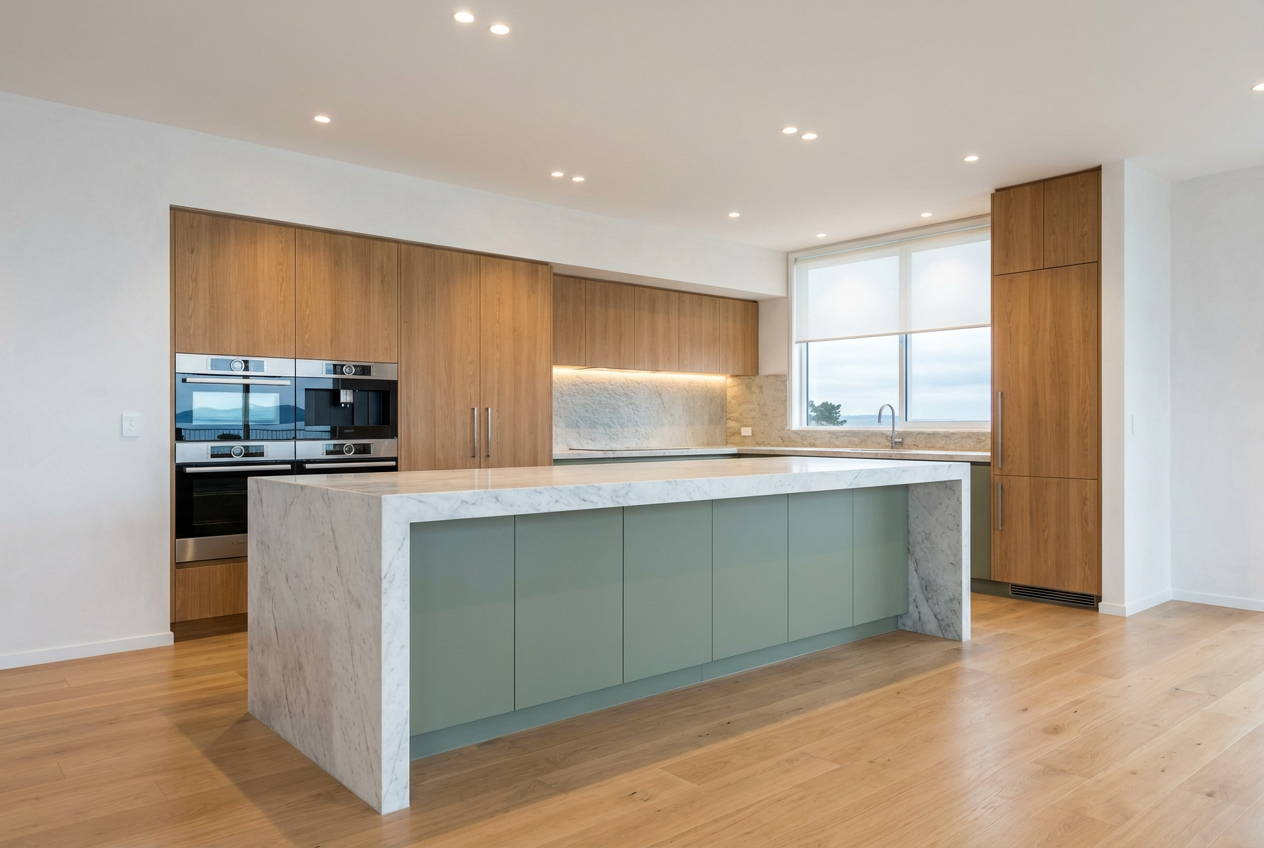
In New Zealand, joiners and builders both work with timber and are often found on the same building site — but they do very different jobs. A joiner specialises in crafting and fitting timber components (like doors, windows, cabinetry, and staircases) usually in a workshop, while a builder focuses on the structural construction of buildings. Knowing the difference helps you hire the right tradesperson and get the best result for your project.
What Does a Joiner Do?
Joinery is a skilled trade focused on creating and fitting timber fittings and fixtures — the parts of a building that are made to measure and fitted in place. A joiner typically works in a workshop environment, using precision machinery and hand tools to craft components that are then installed on site.
Common joinery work includes:
- Kitchen and bathroom cabinetry (custom-built or semi-custom)
- Doors — both internal and external, including frames
- Windows and window frames
- Staircases and balustrades
- Skirting boards, architraves, and mouldings
- Built-in wardrobes and storage units
- Shop and office fitouts
Joiners are craftspeople who take pride in fine finishes and precise measurements. Their work is largely non-structural — it doesn't hold the building up, but it defines how the interior looks and functions.
What Does a Builder Do?
A builder (sometimes called a carpenter or construction tradesperson) is responsible for the structural and weathertight elements of a building. In New Zealand, builders working on residential construction are often required to be Licensed Building Practitioners (LBPs) for certain types of restricted building work.
Typical builder tasks include:
- Laying foundations and framing walls, floors, and roofs
- Installing roof cladding, wall cladding, and weatherproofing
- Fitting structural beams and posts
- Constructing decks, garages, and extensions
- Managing building consents and compliance documentation
Builders work to the NZ Building Code and standards such as NZS 3604 (Timber-framed buildings) and must ensure their work meets requirements around structure (B1), weathertightness (E2), and other clauses. You can learn more about these requirements at MBIE Building Performance.
Where the Two Trades Overlap
The lines can blur in practice. Many builders are also skilled in basic joinery tasks — fitting a pre-hung door or installing skirting boards, for example. Likewise, some joiners are experienced in on-site fitting and installation work.
Here's a quick comparison:
| Task | Joiner | Builder |
|---|---|---|
| Custom kitchen cabinetry | ✅ Primary trade | Sometimes |
| Structural wall framing | Rarely | ✅ Primary trade |
| Door and window installation | ✅ Common | ✅ Common |
| Staircase fabrication | ✅ Primary trade | Rarely |
| Deck construction | Rarely | ✅ Primary trade |
| Architraves and skirting | ✅ Common | ✅ Common |
| Building consent management | No | ✅ Yes (LBP) |
Licensing and Qualifications in NZ
In New Zealand, Restricted Building Work (RBW) — which covers structural and weathertight elements of homes — must be carried out or supervised by a Licensed Building Practitioner (LBP). This applies to builders, not typically to joiners working on non-structural fitouts.
Joiners usually hold a New Zealand Certificate in Joinery (or equivalent), gained through a trade apprenticeship. While joiners don't need an LBP licence for most of their work, they are still expected to meet the NZ Building Code where their work intersects with it — for example, balustrade heights on staircases must comply with the relevant NZ Building Code clause covering safety from falling.
Always check with MBIE Building Performance or your local council if you're unsure whether your project requires a building consent or an LBP.
Do You Need a Building Consent?
Some joinery work — such as replacing like-for-like windows or fitting internal cabinetry — may fall under Schedule 1 exemptions and not require a building consent. However, this depends on the specifics of your project. Always confirm with your local council before starting work, as getting this wrong can cause problems when you sell your home or make an insurance claim. BRANZ also provides useful guidance on building compliance in New Zealand.
When to Call a Professional
- Call a joiner when you need custom cabinetry, bespoke doors or windows, a new staircase, or high-quality timber fitouts. A skilled joiner will measure, manufacture, and install to a precise finish.
- Call a builder (LBP) when you're building a new home, adding an extension, constructing a deck, or doing any structural or weathertight work that may require a building consent.
- Call both on larger renovation projects — a builder to handle the structural work and a joiner to deliver the finished interior.
For healthy homes rental compliance (such as draught stopping), both trades may be involved depending on the scope. See Tenancy Services for Healthy Homes Standards details.
You can find qualified local joiners and builders on tradedirectory.co.nz — always ask to see their qualifications and, for builders, their LBP licence number before work begins.





