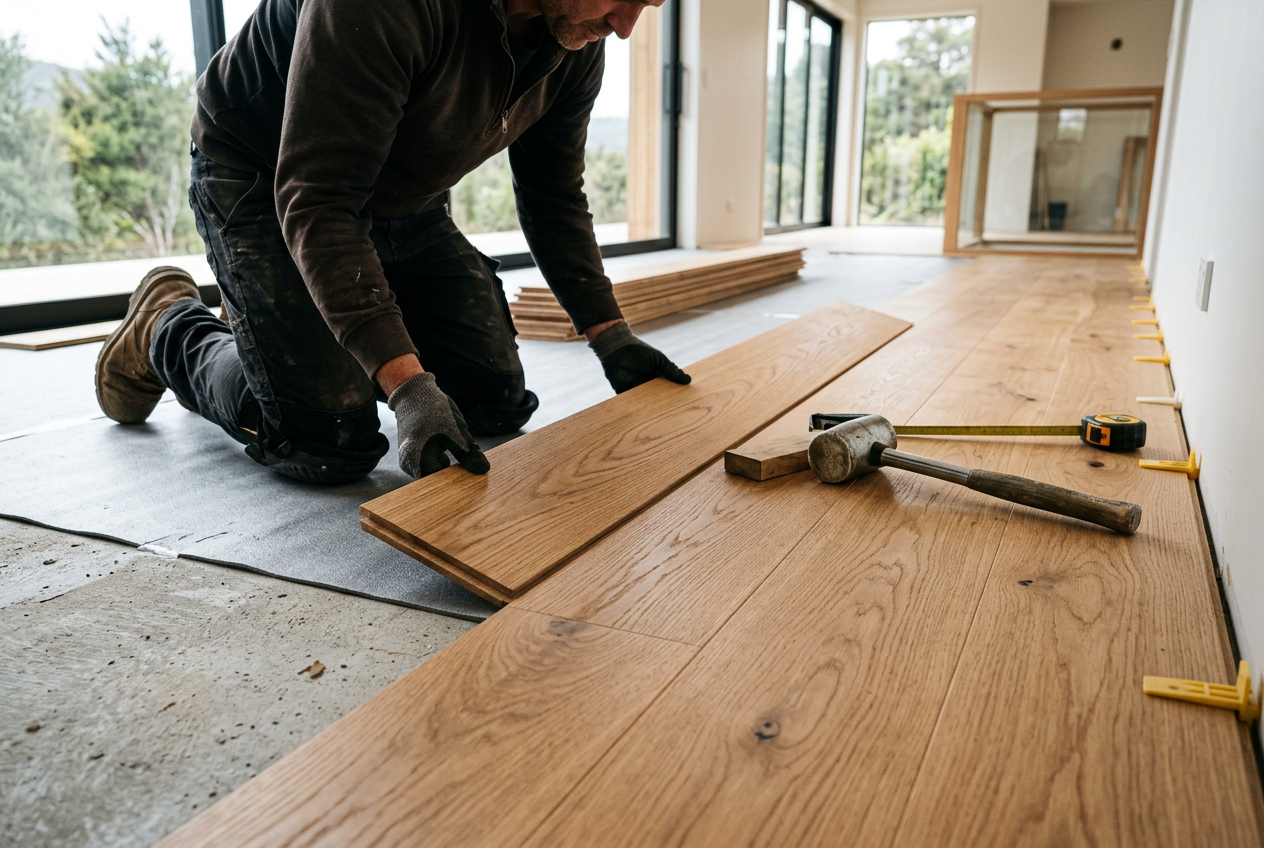
In New Zealand, the terms flooring installer and carpet layer are sometimes used interchangeably, but they actually describe different scopes of work. A carpet layer specialises specifically in carpet and underlay, while a flooring installer typically works across a broader range of floor coverings — including timber, engineered wood, vinyl, laminate, and sometimes tile. Knowing the difference helps you hire the right person for your job and get a quality result.
What Does a Carpet Layer Do?
A carpet layer (also called a carpet fitter) is a tradesperson who specialises in the supply and installation of carpet and associated underlay. Their core skills include:
- Measuring rooms accurately and calculating carpet quantities
- Preparing subfloors (levelling, fixing squeaks, securing boards)
- Laying and cutting underlay to suit the carpet type
- Stretching and securing carpet using gripper rods and knee kickers
- Joining carpet seams neatly and finishing edges at doorways and transitions
- Working with a range of carpet types — loop pile, cut pile, Berber, and more
Carpet layers often work closely with flooring retailers and can advise on the right carpet weight and pile for different rooms, such as a high-traffic hallway versus a bedroom.
What Does a Flooring Installer Do?
A flooring installer has a broader skill set and can work across multiple flooring types. Depending on their experience and specialisation, they may install:
- Solid and engineered timber (nail-down, glue-down, or floating methods)
- Laminate flooring
- Luxury vinyl plank (LVP) and vinyl sheet
- Cork and bamboo flooring
- Carpet (if they have that training)
- Ceramic and porcelain tiles (though dedicated tilers often handle this)
Flooring installers need a strong understanding of subfloor preparation, moisture management, and expansion gaps — all critical in New Zealand's varied climate, where humidity levels can shift significantly between regions and seasons.
Key Differences at a Glance
| Feature | Carpet Layer | Flooring Installer |
|---|---|---|
| Materials covered | Carpet and underlay | Multiple floor types |
| Subfloor prep | Basic levelling | Often more extensive |
| Tools used | Knee kicker, stretcher, gripper | Nailers, saws, adhesive spreaders |
| Moisture considerations | Moderate | High (especially for timber) |
| Typical projects | Bedrooms, lounges, stairs | Kitchens, living areas, whole homes |
Subfloor Preparation — Why It Matters
Regardless of which tradesperson you hire, subfloor preparation is one of the most important steps. In New Zealand, subfloors must meet certain flatness and moisture tolerances before any floor covering is installed. Timber subfloors in older NZ homes can be uneven, and concrete slabs (common in newer builds) must be checked for moisture using a calcium chloride test or similar before glue-down or floating floors are laid.
Poor subfloor prep is one of the leading causes of flooring failures — including bubbling vinyl, cupping timber, and carpet that won't lie flat. BRANZ publishes guidance on acceptable subfloor standards that good tradespeople follow.
NZ Building Code Considerations
Most floor covering work does not require a building consent, but there are exceptions. If you're replacing a floor covering in a wet area (bathroom, laundry, or kitchen), the work must comply with NZ Building Code clause E3 (Internal Moisture) — though note that E3 primarily covers shower and bathroom wet areas; confirm with your council which specific areas and work types require compliance. Waterproofing membranes in wet areas are typically installed before tiling and must meet the requirements of the Building Code. Always check with your local council if you're unsure — what's exempt under Schedule 1 can vary. MBIE Building Performance is a good starting point for understanding consent requirements.
Licensing and Qualifications
Flooring installation and carpet laying are not restricted trades in New Zealand in the same way that electrical or plumbing work is. There is no mandatory licensing body for flooring installers. However, reputable tradespeople may hold qualifications through the Building and Construction Industry Training Organisation (BCITO) or be members of industry associations.
For comparison, if your flooring project involves any electrical work (such as installing underfloor heating), that must be carried out by a registered electrician — see the Electrical Workers Registration Board for details. Similarly, any plumbing connections must be done by a licensed plumber registered with the Plumbers Gasfitters & Drainlayers Board.
Choosing the Right Tradesperson for Your Job
Here's a simple guide to help you decide:
- Replacing bedroom or lounge carpet? → Hire a carpet layer
- Installing engineered timber or LVP throughout your home? → Hire a flooring installer
- Doing a full renovation with multiple floor types? → Look for a flooring installer with broad experience, or hire specialists for each area
- Tiling a bathroom? → Consider a dedicated tiler
Always ask for references, check previous work, and get at least two or three quotes. A good tradesperson will inspect your subfloor before quoting and flag any issues upfront.
When to Call a Professional
While some DIY flooring tasks (like laying a floating laminate floor) are within reach of a capable homeowner, most quality flooring work benefits from professional installation. Mistakes can be costly — wasted materials, failed adhesive bonds, or voided product warranties. Many flooring manufacturers, including those stocking products at Bunnings and Mitre 10, require professional installation to validate their warranties.
If you're unsure about the condition of your subfloor, dealing with an older home, or installing an expensive floor covering, it's well worth engaging a qualified professional. You can find experienced local flooring installers and carpet layers on tradedirectory.co.nz.







