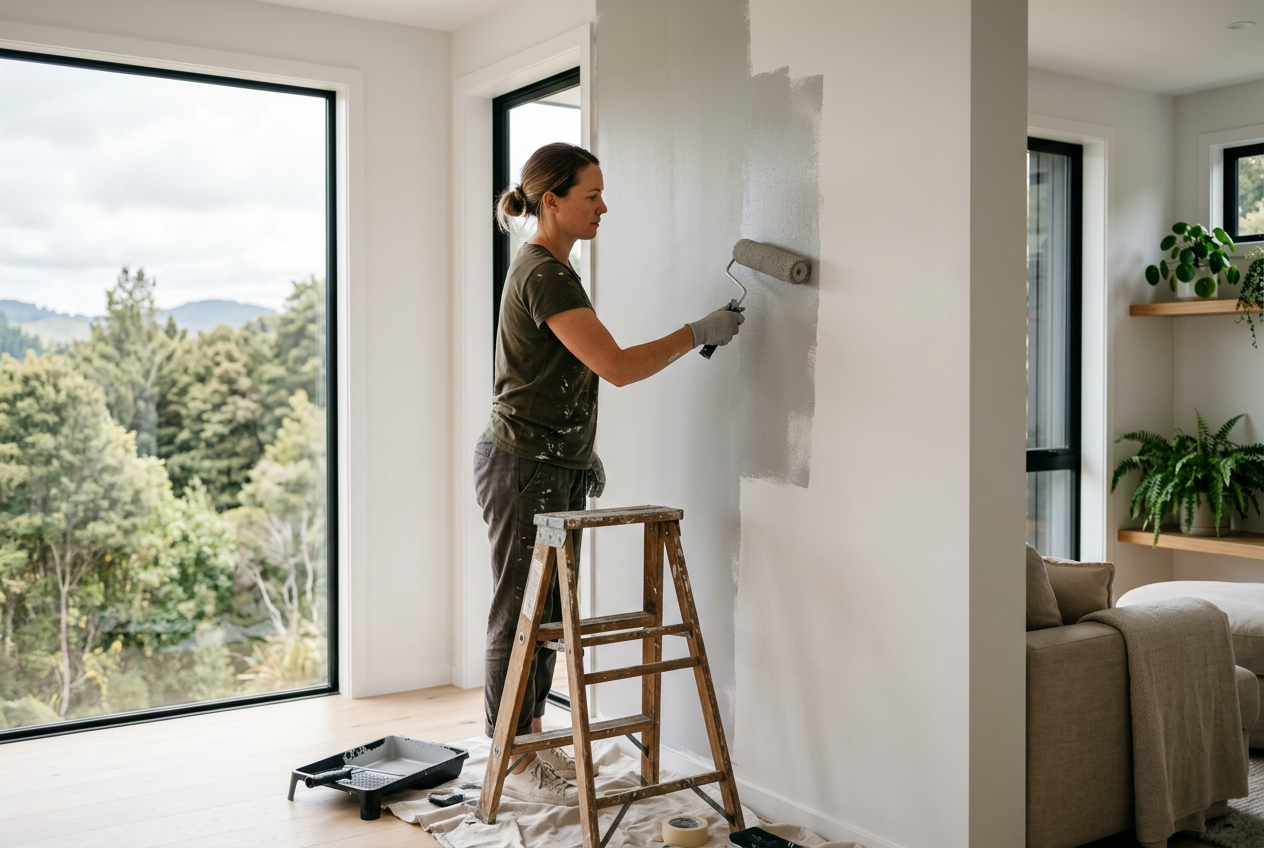
When you're getting painting work done in New Zealand, you'll likely be offered either a fixed-price quote or an hourly rate. Both are legitimate ways to price a job, but they suit different situations — and understanding the difference can save you money and stress.
What Is a Fixed-Price Quote?
A fixed-price quote (sometimes called a lump-sum quote) means the painter agrees to complete a defined scope of work for a set dollar amount. Once you accept the quote, that's the price you pay — regardless of how long the job actually takes.
What's typically included
- Labour for the agreed number of coats and surfaces
- Basic preparation (filling small holes, light sanding)
- Sometimes materials, though many painters quote labour only and list materials separately
Fixed-price quotes work best when the scope of work is clear and well-defined — for example, painting the interior walls and ceilings of a three-bedroom house in a single colour, or repainting exterior weatherboards on a straightforward single-storey home.
Key advantage: You know exactly what you'll pay, making budgeting straightforward.
Key risk: If you change your mind mid-job (adding rooms, changing colours, requesting extra coats), expect a variation — a written change to the original quote that adds to the final cost.
What Is an Hourly Rate Quote?
With an hourly rate (also called time-and-materials), you pay for the actual hours worked plus the cost of materials used. The painter gives you an estimated number of hours, but the final invoice reflects real time on the job.
Hourly rates are common for:
- Small or undefined jobs (touching up a hallway, painting a single room)
- Maintenance work where the full extent isn't known upfront
- Older homes where hidden issues — peeling paint, rotting timber, moisture damage — may be uncovered once work begins
Key advantage: You only pay for what's actually done. If the job is simpler than expected, you pay less.
Key risk: If the job takes longer than estimated — due to surface problems, weather delays, or scope creep — costs can climb beyond your original expectation.
Comparing the Two: A Quick Guide
| Factor | Fixed-Price | Hourly Rate |
|---|---|---|
| Budget certainty | High | Lower |
| Best for | Well-defined, larger jobs | Small or uncertain-scope jobs |
| Risk if scope changes | Variations add cost | Hours simply increase |
| Risk of hidden issues | Painter carries some risk | Homeowner carries more risk |
| Typical NZ use | Full interior/exterior repaints | Touch-ups, maintenance, repairs |
What Affects the Price Either Way?
Whether fixed or hourly, several factors influence what a NZ painter will charge:
- Surface preparation — the more prep needed (stripping, sanding, priming), the higher the cost
- Paint quality — premium paints from brands like Resene or Dulux cost more but often give better coverage and durability
- Number of coats — two coats is standard; going from a dark to a light colour may need more
- Access difficulty — high stud ceilings, steep rooflines, or scaffolding requirements add time and cost
- Condition of existing surfaces — bare timber, weathered cladding, or water-stained walls all need extra work
- Location — labour rates vary across NZ regions
Tips for Getting a Fair Quote
- Get at least three quotes — this gives you a realistic sense of the market rate in your area.
- Make sure the scope is written down — a good quote should specify surfaces, number of coats, paint brand/grade, and what prep is included.
- Ask what's NOT included — materials, primer, and fixing damaged surfaces are sometimes excluded.
- Clarify the variation process — if extra work is needed, how will you be notified and how will it be priced?
- Check the painter's credentials — while painting is not licensed restricted work in NZ, reputable painters often hold trade qualifications and are members of industry bodies. You can find qualified local painters on tradedirectory.co.nz.
Watch Out for These Red Flags
- A quote with no written detail — verbal-only agreements are hard to enforce
- An unusually low fixed price (may mean cut corners or a variation-heavy approach)
- No mention of surface preparation — prep is where quality painting starts
- Requests for large upfront deposits before any work begins
For guidance on your rights as a consumer when hiring tradespeople, Consumer NZ is a useful resource.
When to Call a Professional
Painting is one of the few trades where homeowners can legally do much of the work themselves. However, there are situations where a professional painter is strongly recommended:
- Exterior repaints on multi-storey homes (working at height safely requires proper equipment and experience — see WorkSafe NZ for height safety guidance)
- New build or renovation painting where the finish needs to meet the NZ Building Code requirements for weathertightness (particularly exterior coatings on cladding systems)
- Lead paint in homes built before 1980 — disturbing lead paint requires careful handling; check WorkSafe NZ for safe work practices
- Any painting work tied to a building consent — your local council can advise whether consent applies
For technical information on paint performance and surface preparation, BRANZ publishes reliable guidance relevant to NZ conditions.

 BCITO Qualified

 Master Painters NZ
 Site Safe