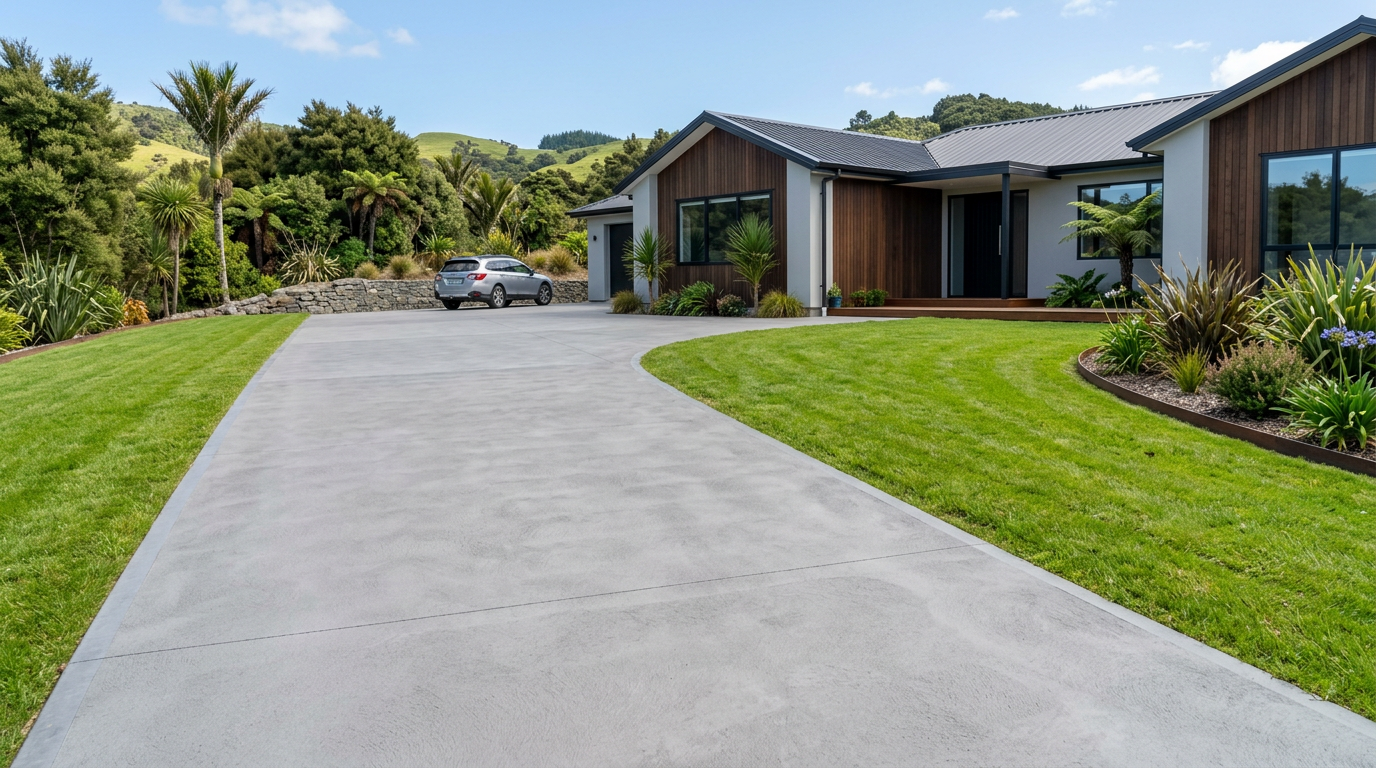
In New Zealand, concreters and civil contractors both work with concrete and construction, but they operate at very different scales and scopes. A concreter typically focuses on residential and light commercial concrete work — think driveways, paths, slabs, and foundations — while a civil contractor takes on large-scale infrastructure projects like roads, bridges, retaining walls, and stormwater systems. Knowing which one you need can save you time, money, and a lot of confusion.
What Does a Concreter Do?
A concreter specialises in the placing, finishing, and curing of concrete for a wide range of projects. In a residential setting, this is the tradesperson you call for:
- Driveways and pathways — including exposed aggregate, broom finish, or coloured concrete
- House slabs and floor slabs — for new builds or additions
- Footings and foundations — for decks, sheds, fences, and extensions
- Concrete steps and retaining walls — smaller-scale residential work
- Pool surrounds and outdoor entertaining areas
A skilled concreter understands mix design, reinforcing steel (reo bar and mesh), formwork, and how to achieve the right finish for the job. They work closely with the NZ Building Code requirements — for example, floor slabs must comply with NZS 3604 for timber-framed buildings, and any concrete work tied to a building consent must meet those standards.
For most residential concrete work, your concreter will be a self-employed tradesperson or run a small crew. They're the right call for the vast majority of homeowner projects.
What Does a Civil Contractor Do?
A civil contractor operates at a much larger scale. Civil contracting covers the construction and maintenance of public and private infrastructure, including:
- Roads, highways, and carparks
- Bridges and culverts
- Stormwater, wastewater, and water supply networks
- Large retaining structures and earthworks
- Subdivisions — bulk earthworks, kerb and channel, and roading
- Commercial and industrial site development
Civil contractors often employ concreters, excavator operators, surveyors, and engineers as part of a larger team. They typically work under contract to local councils, the NZ Transport Agency (NZTA), or large property developers. The scale of plant, equipment, and project management involved is significantly greater than what a residential concreter handles.
Civil contractors must comply with a wide range of regulations, including resource consents, health and safety requirements under WorkSafe NZ, and engineering standards. Projects often require input from a registered engineer.
Key Differences at a Glance
| Feature | Concreter | Civil Contractor |
|---|---|---|
| Typical project size | Small to medium | Medium to very large |
| Common clients | Homeowners, builders | Councils, developers, NZTA |
| Work type | Slabs, driveways, paths | Roads, infrastructure, earthworks |
| Equipment used | Mixer, screed, float, saw | Excavators, graders, large plant |
| Consents required | Sometimes (building consent) | Often (resource & building consents) |
| Team size | 1–5 people typically | Can be dozens or more |
Do You Need a Building Consent?
This is an important question for any concrete work. Many smaller jobs — like a garden path or a freestanding shed slab — may fall under Schedule 1 exemptions of the Building Act and not require a consent. However, concrete work attached to your home, or that forms part of a structural element, will almost certainly need a building consent.
Always check with your local council before starting work. You can also find useful guidance at MBIE Building Performance to understand what triggers a consent requirement.
Licensing and Qualifications
Concreting is not a restricted trade in the same way that electrical or plumbing work is — there is no single licensing body that all concreters must register with. However, quality matters enormously with concrete, as poor workmanship can lead to cracking, subsidence, or structural failure.
For work that forms part of a building consent, certain aspects may need to be carried out or supervised by a Licensed Building Practitioner (LBP). If your project involves structural concrete, your builder or engineer will advise whether an LBP is required.
Civil contractors working on public infrastructure are subject to additional oversight, including quality assurance systems and, in many cases, involvement from a chartered professional engineer (CPEng).
Choosing the Right Person for Your Project
For most homeowners, the answer is straightforward:
- New driveway, path, patio, or house slab? → Call a concreter
- Subdivision, road, or large infrastructure project? → You need a civil contractor
- Not sure? → Talk to your local council or a builder who can point you in the right direction
For residential work, BRANZ is an excellent resource for understanding best practice in NZ construction, including concrete work.
When to Call a Professional
Concrete work looks straightforward but is genuinely skilled — getting the mix, timing, and finish right takes experience. Mistakes are difficult and expensive to fix once concrete has set. Always hire a qualified concreter for anything beyond the most minor DIY tasks. For structural work, consents, or anything involving drainage and ground conditions, professional advice is essential.
You can find experienced, local concreters and civil contractors on tradedirectory.co.nz — it's a good idea to get at least two or three quotes and ask to see examples of previous work.


 Site Safe





