Cabinet makers and carpenters are both skilled timber tradespeople, but they specialise in very different areas of work. Knowing which one to hire can save you time, money, and frustration — and ensure you get the right result for your project.
What Does a Cabinet Maker Do?
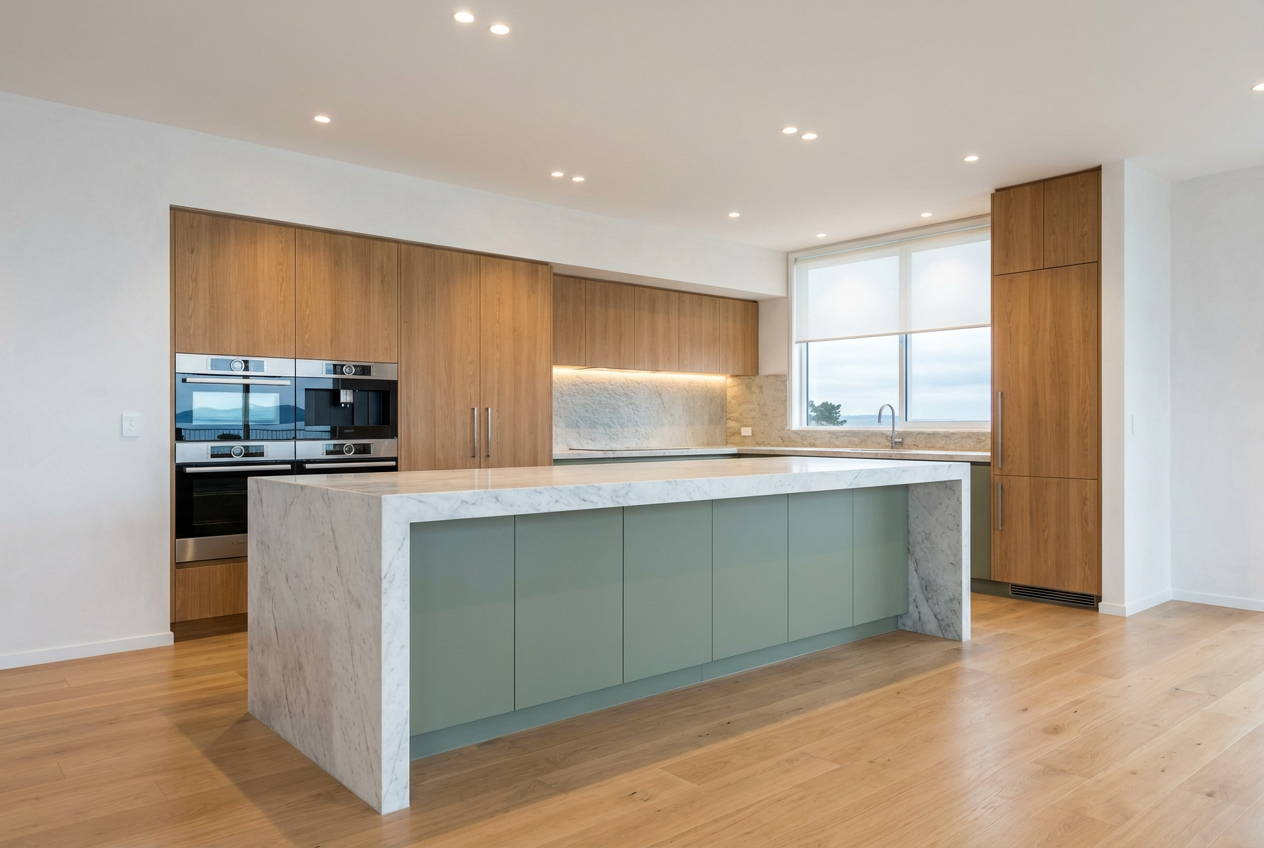
A cabinet maker is a specialist in the design, construction, and installation of fitted furniture and joinery. Their work is typically done in a workshop environment, where precision and fine finishing are paramount. Common cabinet maker projects include:
- Kitchen cabinetry and benchtops
- Bathroom vanities
- Built-in wardrobes and storage units
- Bookshelves, entertainment units, and custom furniture
- Office fit-outs and shop joinery
Cabinet makers work with a wide range of materials including solid timber, MDF, plywood, melamine board, and laminates. They use highly accurate machinery — panel saws, CNC routers, edge banders, and more — to produce components that fit together with very tight tolerances. The finished product is then delivered and installed on-site.
In New Zealand, cabinet makers typically complete a New Zealand Certificate in Furniture and Joinery (or an equivalent apprenticeship), which covers technical drawing, material selection, machinery operation, and finishing techniques.
What Does a Carpenter Do?
A carpenter works primarily on-site and focuses on the structural and finishing timber elements of buildings. Their work is broader in scope and often more physically demanding. Typical carpenter tasks include:
- Framing walls, floors, and roofs (structural carpentry)
- Installing doors, windows, and architraves
- Laying timber and engineered flooring
- Decking and pergolas
- Fixing skirting boards, scotia, and other trims
- Formwork for concrete
Carpenters in NZ generally complete a New Zealand Certificate in Carpentry and many go on to become Licensed Building Practitioners (LBPs). An LBP licence is required to carry out or supervise Restricted Building Work (RBW) — that is, structural and weathertight work on homes and small buildings covered by the NZ Building Code. You can check a tradesperson's LBP status at Licensed Building Practitioners.
Key Differences at a Glance
| Feature | Cabinet Maker | Carpenter |
|---|---|---|
| Primary workspace | Workshop | On-site |
| Focus | Furniture & fitted joinery | Structural & finishing timber work |
| Typical projects | Kitchens, wardrobes, custom furniture | Framing, decking, doors, flooring |
| Licensing | No restricted licence required | LBP required for Restricted Building Work |
| Materials | Timber, MDF, laminates, hardware | Structural timber, sheet goods, trims |
| Finish level | Very high precision | Good finish, broader tolerances |
Where the Trades Overlap
There is some overlap between the two trades. Many carpenters are skilled at installing pre-made cabinetry (such as flat-pack kitchens), and some cabinet makers are experienced enough to handle the on-site installation of their own joinery. However, a carpenter would not typically build bespoke cabinetry from scratch in a workshop, and a cabinet maker would not frame a wall or build a roof structure.
For a new kitchen renovation, for example, you might need both: a cabinet maker to design and build the cabinetry, and a carpenter (or the cabinet maker's own installer) to fit it out — alongside a licensed plumber and electrician for the services. Always check that anyone doing structural work holds a current LBP licence, as required under the NZ Building Code.
Do You Need a Building Consent?
Most cabinet making and joinery installation work does not require a building consent. However, if your project involves structural changes — such as removing a wall to open up a kitchen — a consent will almost certainly be required. Some work falls under Schedule 1 exemptions of the Building Act, but you should always confirm with your local council before starting, as rules can vary. MBIE Building Performance has useful guidance on what requires consent.
Choosing the Right Tradesperson for Your Project
Here's a simple guide:
- Custom kitchen, wardrobe, or fitted furniture? → Hire a cabinet maker
- Deck, framing, doors, or structural timber work? → Hire a carpenter (with LBP if required)
- Flat-pack kitchen assembly and installation? → Either trade may be suitable; ask about their experience
- Full renovation involving both? → You may need both trades, plus other licensed professionals
Always ask to see examples of previous work, check references, and confirm any relevant qualifications or licences before signing a contract. Consumer NZ has helpful advice on hiring tradespeople and understanding your rights.
When to Call a Professional
For any bespoke joinery or custom furniture, a qualified cabinet maker will deliver far better results than a DIY approach — the machinery and expertise required are significant. For structural carpentry, Restricted Building Work must be carried out or supervised by a licensed LBP — this is a legal requirement in New Zealand, not just a recommendation. Attempting structural work without the right licence can affect your insurance and your ability to sell your home later.
You can find qualified cabinet makers and carpenters in your area right here on tradedirectory.co.nz.