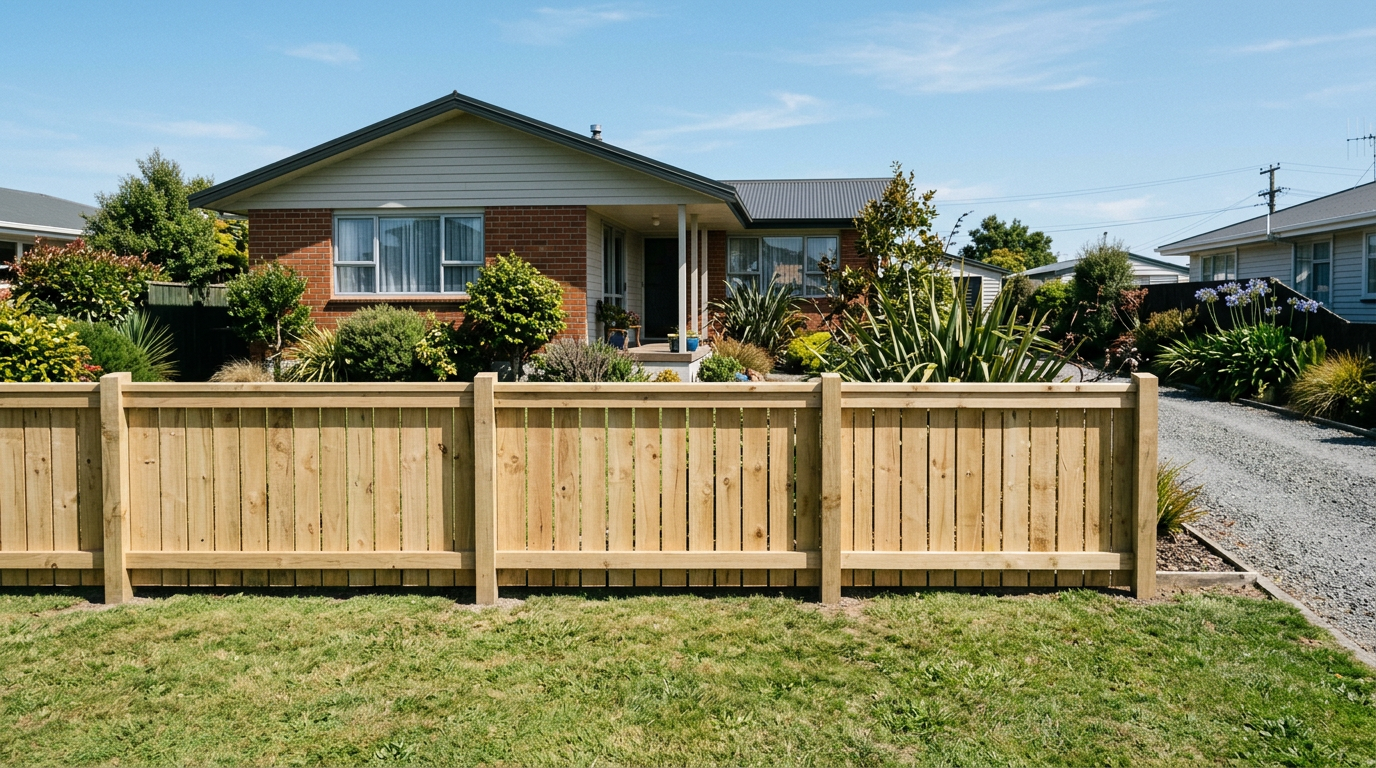
Overlapping fence palings correctly is one of the most effective ways to keep rain out, prevent timber rot, and extend the life of your fence in New Zealand's varied climate. The good news is that with the right overlap, fixings, and finish, a well-built paling fence can last 20 years or more with minimal maintenance.
Understanding the Overlap: How Much Is Enough?
The standard recommended overlap for feather-edge or bevel-back palings is 25 mm minimum, though many experienced fencers prefer 30–35 mm, especially in exposed or high-rainfall areas like the West Coast, Wellington, or Northland. A wider overlap sheds water more reliably and reduces the chance of wind-driven rain penetrating the joint.
For square-edged or flat palings fixed side by side (as in a lapped or hit-and-miss style), the overlap is typically 20–25 mm per side. The key principle is that water must always be directed downward and away from the fence rails and posts — never allowed to pool or wick inward.
A simple rule of thumb: if you can see daylight through the overlap when looking horizontally at the fence, the overlap is too small.
Correct Overlapping Technique: Step by Step
1. Start from the Bottom
Always fix your first paling at the bottom of the fence, with the thick edge down (for feather-edge palings). This ensures each successive paling sheds water onto the one below, like roof tiles. Working upward, each paling overlaps the one beneath it.
2. Maintain Consistent Overlap
Use a spacing block or story pole cut to your chosen overlap depth (e.g., 30 mm) to keep every paling consistent. Inconsistent overlaps look untidy and, more importantly, can create gaps that let water in.
3. Keep Palings Plumb and Straight
Check every few palings with a spirit level. A paling that leans inward creates a gap at the top of the overlap; one that leans outward traps water behind it.
4. Leave a Gap at the Bottom
The bottom of the fence should sit at least 50 mm above ground level (some fencers recommend 75 mm in wet areas). This prevents the end grain — the most absorbent part of the timber — from sitting in soil moisture or pooled water, which is the fastest way to cause rot.
Choosing the Right Fixings
Using the wrong nails or screws is a common mistake that leads to rust staining and premature timber failure.
- Use hot-dipped galvanised or stainless steel fixings — never bright steel, which will rust quickly in NZ's coastal and humid environments.
- Two fixings per paling per rail is standard practice. Single-fixing allows palings to twist and warp over time, opening up gaps.
- Nail or screw through the face of the overlapping paling into the rail, not through both palings at once. Fixing through both palings prevents the timber from moving naturally as it expands and contracts with moisture, which can cause splitting.
- For hardwoods like kwila or treated pine, pre-drilling prevents splitting, especially near the ends of palings.
Timber Selection and Treatment
In New Zealand, all timber used in ground-contact or exposed outdoor situations should meet the requirements of NZS 3602 (Timber and Wood-Based Products for Use in Building). For fence palings, look for:
- H3.2 treated pine — suitable for above-ground exterior use, the minimum for palings in most NZ conditions.
- H4 treated timber — required for any timber in ground contact (posts).
- Durable hardwoods such as kwila (merbau) or macrocarpa, which have natural rot resistance.
Check with your timber supplier or PlaceMakers or Mitre 10 to confirm the correct treatment level for your specific location and exposure.
Finishing for Weather Resistance
Even correctly overlapped palings will deteriorate faster without a good surface finish. Options include:
| Finish Type | Best For | Recoat Interval |
|---|---|---|
| Penetrating oil/stain | Hardwoods, natural look | Every 2–3 years |
| Solid colour stain | Pine, long-lasting colour | Every 4–6 years |
| Paint (acrylic) | Smooth finish, high protection | Every 5–8 years |
Resene and Dulux both offer exterior timber stains and paints well suited to NZ conditions. Always apply a primer or sealer to end grain before fixing palings — end grain absorbs moisture far faster than face grain and is the most common starting point for rot.
Common Mistakes to Avoid
- Too little overlap — less than 20 mm allows wind-driven rain to penetrate easily.
- Butt-joining palings horizontally without overlap — creates a direct water entry point.
- Skipping the bottom gap — timber sitting on soil will rot within a few years.
- Using untreated or under-treated timber — not compliant with NZS 3602 and will fail prematurely.
- Painting over wet or green timber — always allow new timber to dry before finishing.
Do You Need a Building Consent?
Most residential boundary fences in New Zealand are exempt from building consent under Schedule 1 of the Building Act 2004, provided they meet certain height limits (but height limits vary and you should confirm the specific threshold with your local council). However, rules differ between councils and sites — always confirm with your local council before starting. The MBIE Building Performance website is a good starting point for understanding consent exemptions.
When to Call a Professional
If your fence runs along a boundary with a neighbour, involves retaining, is on a sloped or unstable site, or needs to exceed standard height limits, it's worth getting a qualified fencer involved. A professional will ensure the fence is structurally sound, correctly overlapped, and compliant with local rules. You can find experienced local fencers on tradedirectory.co.nz.





