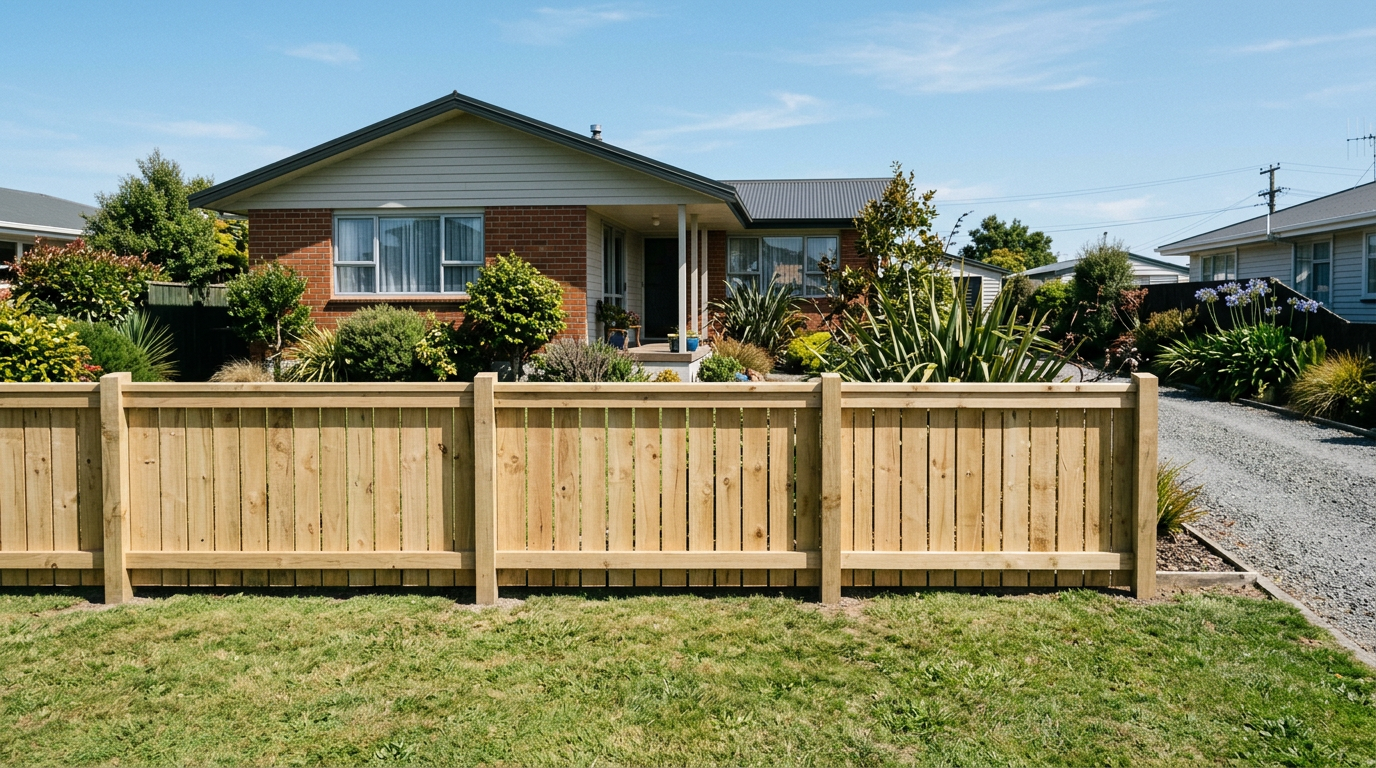
There is no single universal measurement for fence paling spacing in New Zealand — the right gap depends on what the fence is for, your local council rules, and personal preference. That said, there are well-established trade standards and legal requirements (especially for pool fencing) that you should understand before you start building.
Why Paling Spacing Matters
The gap between palings affects privacy, airflow, appearance, and safety. A tightly spaced fence gives full privacy but can act like a sail in strong wind, putting stress on posts and rails. A more open spacing lets air through, reduces wind load, and can still look great — but won't give you full privacy. Getting the balance right for your site and climate is key.
Standard Spacing for Timber Paling Fences
For a typical residential privacy fence, most NZ fencers use one of these approaches:
- No gap (butted palings): Palings are placed edge-to-edge for full privacy. This is common with rough-sawn timber that may shrink slightly as it dries, so a small gap often appears naturally over time.
- 10–15 mm gap: A popular choice that allows some airflow while still providing good privacy. This is a common trade standard for a semi-private fence.
- 25–50 mm gap: Used for a more open, decorative look — good for boundary definition without full screening.
As a general guide, 10 mm is the most widely used spacing for a standard privacy paling fence in NZ. Many fencers use a piece of offcut timber as a spacer to keep gaps consistent along the full run.
Paling Width and Thickness
Common NZ paling sizes are 75 mm, 100 mm, and 150 mm wide, typically 20–25 mm thick. Wider palings with a small gap give a clean, modern look. Narrower palings with a larger gap create a more traditional picket-style effect. Always check that your timber is treated to the correct hazard class (H3.2 minimum) for ground-contact or exposed outdoor use, as required by the NZ Building Code.
Pool and Spa Fencing — Strict Legal Requirements
If your fence forms part of a pool or spa barrier, spacing rules are not optional — they are set by law under the NZ Building Code and the Fencing of Swimming Pools Act 1987 (now administered under the Building Act 2004).
Key requirements include:
- No opening greater than 100 mm that a 100 mm sphere could pass through (this prevents young children climbing through).
- The fence must be at least 1.2 m high (measured on the outside).
- There must be no footholds or handholds within 900 mm of the top of the fence on the outside.
- Gates must be self-closing and self-latching, opening away from the pool.
Your local council inspects pool fencing and can issue notices if it doesn't comply. Always confirm the exact requirements with your council before building, as some territorial authorities have additional rules. You can find general guidance at MBIE Building Performance.
Do You Need a Building Consent?
In NZ, many residential fences are exempt from building consent under Schedule 1 of the Building Act 2004 — but this depends on height and location. As a general guide:
- Fences up to 2.5 m high are typically exempt (but not if they are retaining walls or pool barriers, which have their own rules).
- Fences on or near a boundary, or in a special character zone, may need resource consent under your local district plan.
Always check with your local council before building, as rules vary by region and property. The MBIE Building Performance website has useful guidance on Schedule 1 exemptions.
Neighbour and Boundary Considerations
The Fencing Act 1978 governs disputes between neighbours about boundary fences in NZ. If you and your neighbour share the cost of a fence, both parties should agree on the style and spacing before work begins. A notice to fence can be served if agreement can't be reached informally. Tenancy Services has information relevant to rental properties and fencing obligations.
Spacing Tips From the Trade
| Purpose | Recommended Gap | Notes |
|---|---|---|
| Full privacy | 0–5 mm | Allow for timber shrinkage |
| Semi-private | 10–15 mm | Most common residential choice |
| Decorative/open | 25–50 mm | Good airflow, less privacy |
| Pool barrier | Max 100 mm | Legal requirement — no exceptions |
| Picket fence | 50–75 mm | Traditional style, not private |
- Use a consistent spacer block cut from offcut timber to keep gaps even.
- Treat cut ends of timber with an appropriate preservative to extend the life of the fence.
- In coastal or high-wind areas (common in many parts of NZ), consider a slightly more open spacing to reduce wind load on posts.
When to Call a Professional
While fencing is generally DIY-friendly, there are times when it pays to bring in a qualified fencer:
- Pool or spa fencing must meet strict legal standards — an error can result in a failed council inspection and costly rework.
- Retaining walls combined with fencing may require engineering input.
- Large or complex fence runs on sloping sections or difficult ground benefit from professional post-setting and alignment.
A qualified local fencer will know your council's requirements and can ensure the job is done right first time. You can find experienced fencers in your area on tradedirectory.co.nz.





