See the latest posts from tradesmen around the country
DIY AnswersFencer

What Is the Correct Height for a Fence Rail from the Ground?

Fence rail heights depend on fence type, purpose, and NZ Building Code rules. Here's what you need to know before you build.

What Is the Correct Height for a Fence Rail from the Ground?

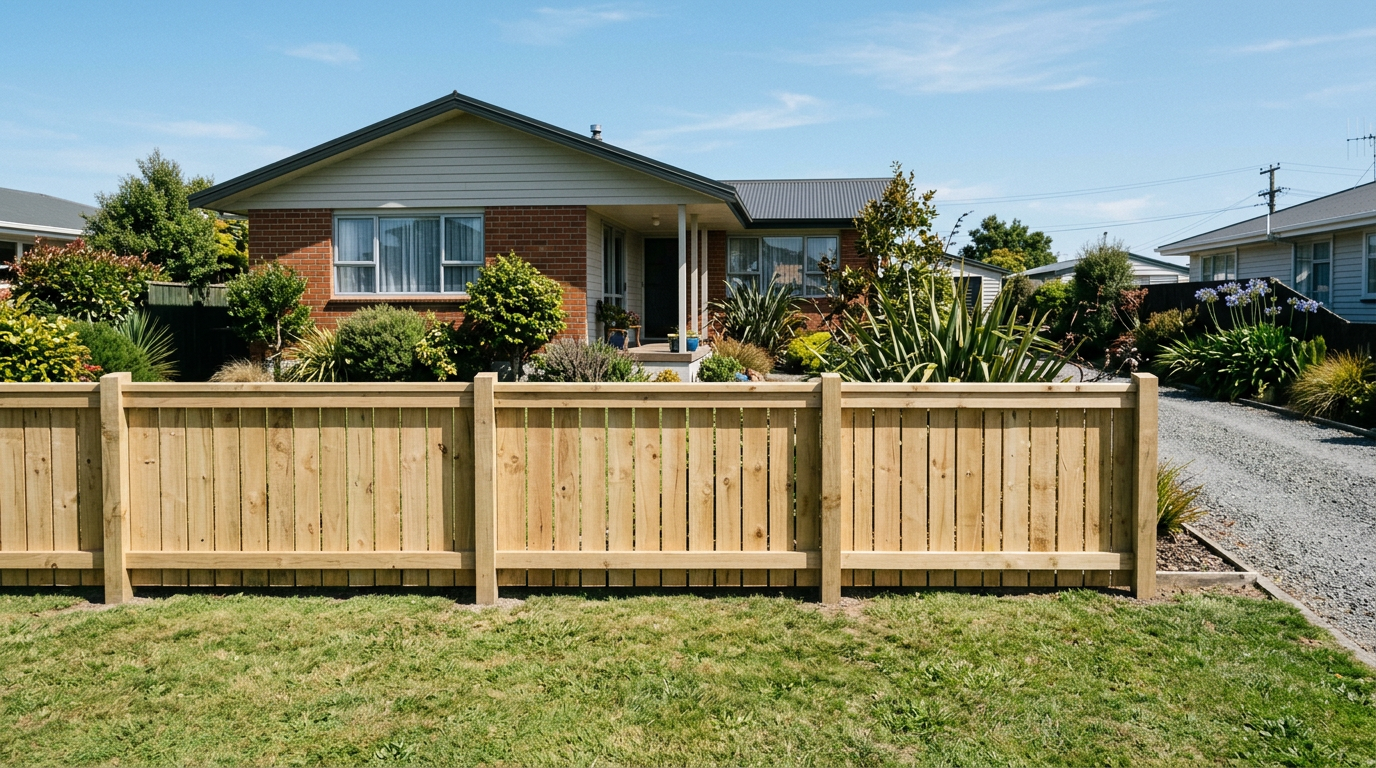
Fence rail heights aren't one-size-fits-all — they depend on what your fence is for, how tall it is, and whether NZ Building Code rules apply. For a standard timber privacy fence, rails are typically positioned around 200–300 mm from the bottom and 200–300 mm from the top, with a middle rail added for taller fences. However, pool fencing and boundary fences near public spaces have strict legal requirements you must follow.

Why Rail Height Matters

Rails give your fence its structural backbone. Poorly positioned rails lead to bowing, sagging, and premature failure — especially in New Zealand's variable climate, where wet winters and dry summers put real stress on timber. Getting rail placement right from the start saves you time and money down the track.

Standard Rail Heights for a Typical Timber Fence

For a common 1.8 m timber paling or picket fence, the standard approach is:

  • Bottom rail: 200–300 mm above ground level. This keeps the rail clear of soil moisture and grass, reducing rot.
  • Top rail: 100–200 mm down from the top of the fence, giving the palings solid support at the top.
  • Middle rail: Required for fences 1.5 m and taller. Typically positioned roughly in the centre between the top and bottom rails — often around 900 mm from the ground on a 1.8 m fence.

For a 1.2 m fence, two rails (top and bottom) are usually sufficient. For fences 1.8 m or taller, three rails are strongly recommended for rigidity.

A Simple Rail Spacing Guide

Fence HeightNumber of RailsApproximate Rail Positions from Ground
Up to 1.2 m2~250 mm, ~1.0 m
1.5 m2–3~250 mm, ~900 mm, ~1.3 m
1.8 m3~250 mm, ~950 mm, ~1.6 m
2.1 m+3–4~250 mm, ~850 mm, ~1.5 m, ~2.0 m

These are general guidelines. Always check with your timber supplier or a qualified fencer for your specific situation.

Pool Fencing: Strict Legal Requirements

If your fence forms part of a pool barrier, rail placement is governed by the NZ Building Code and the Fencing of Swimming Pools Act 1987 (the provisions of which were incorporated into the Building Act 2004). These rules are non-negotiable and enforced by your local council.

Key requirements include:

  • The fence must be at least 1.2 m high (measured on the outside).
  • There must be no climbable footholds within 900 mm of the top of the fence on the outside. This means rails must not be positioned where a child could use them as a step to climb over.
  • Horizontal rails on the outside of a pool fence are generally not permitted within that 900 mm zone.
  • Gaps between rails and pickets must not allow a 100 mm sphere to pass through.

Always confirm pool fence requirements with your local council before building, as inspections are required. You can find general guidance at MBIE Building Performance.

Boundary Fences and Building Consent

Most standard residential boundary fences up to 2.0 m high are exempt from building consent under Schedule 1 of the Building Act — but this depends on your specific situation, including proximity to boundaries, retaining walls, and whether the fence is on a slope. Always check with your local council before starting, as exemptions vary.

For fences over 2.5 m, or those attached to a building, a building consent is likely required. MBIE Building Performance has useful guidance on Schedule 1 exemptions.

Timber and Material Considerations

In New Zealand, H3.2 treated timber is the minimum recommended treatment level for fence rails in ground-contact or exposed outdoor situations. Using untreated or under-treated timber will shorten the life of your fence significantly, particularly in damp regions like the West Coast, Northland, or Wellington.

Common rail sizes are 100 × 50 mm (4×2) or 75 × 50 mm (3×2) timber. Larger spans or heavier fences may need beefier rails — check with your local timber merchant at Bunnings, Mitre 10, or PlaceMakers.

Practical Tips for Getting Rail Height Right

  • Use a string line between posts to keep rails level across the run.
  • Pre-drill fixing holes to avoid splitting treated timber.
  • Allow a small gap between the bottom rail and the ground — direct soil contact accelerates rot even in treated timber.
  • On sloped sections, you can either step the fence (keeping rails level in sections) or rake the rails to follow the slope. Stepped fencing is generally easier for DIYers.
  • Check that your post spacing suits your rail length — standard rails come in 2.4 m and 3.6 m lengths, so plan your post centres accordingly.

When to Call a Professional

While fence building is a popular DIY project, there are times when it pays to bring in a qualified fencer:

  • Pool fencing — must meet strict legal standards and council inspection. Errors can be costly to fix.
  • Retaining fence combinations — if your fence also acts as a retaining wall, engineering input may be required.
  • Large or complex projects — long fence runs, difficult terrain, or automated gates.
  • Boundary disputes — a professional can help ensure the fence is correctly positioned.

You can find qualified, local fencing professionals on tradedirectory.co.nz.

Frequently Asked Questions

How high should the bottom fence rail be from the ground?+

As a general rule, position the bottom rail 200–300 mm above ground level. This keeps the timber clear of soil moisture and grass, which helps prevent rot and extends the life of your fence.

Do I need a middle rail on my fence?+

Yes, for fences 1.5 m tall or higher, a middle rail is strongly recommended. It prevents the fence from bowing or flexing and gives the palings or boards solid support across their full height.

Can I put horizontal rails on the outside of a pool fence?+

Generally no — horizontal rails on the outside of a pool fence within 900 mm of the top are not permitted, as they can act as footholds for children to climb. Pool fencing must comply with the NZ Building Code and the Fencing of Swimming Pools Act. Always check with your local council before building.

Do I need a building consent to build a fence in NZ?+

Most standard residential boundary fences up to 2.0 m high are exempt from building consent under Schedule 1 of the Building Act, but this varies depending on location, slope, and other factors. Always confirm with your local council before starting work.

What timber treatment level should I use for fence rails in NZ?+

H3.2 treated timber is the minimum recommended level for fence rails used outdoors and exposed to the weather. In very wet regions or where timber is close to the ground, H4 treated timber may be advisable. Check with your local timber supplier for the best option for your area.

Need a Fencer?

Find qualified fencers near you in our directory.

Find a Fencer →

Fencers Near You

North Harbour Fencing Ltd logo

Fencer

5.0(1)

Silverdale, Auckland

North Harbour Fencing Contractors specialising in commercial and industrial fencing, automatic gates, timber fencing, safety and security fencing. us today.

Phoenix Fence & Gate logo

Fencer

4.1(10)

Auckland, Auckland

Phoenix Fence & Gate in Auckland specialises in designing and installing aluminium and steel fences, gates, balustrades, and handrails. They offer custom fabrication, automatic gate systems, and maintenance services with a 10-year warranty.

CGF logo

Fencer

Dunedin, Otago

The Big Meow logo

Fencer

Tauranga, Bay of Plenty

Quality Cat Only Boarding Cattery Tap to Call Us Accommodation Information Rates The Big Meow Opening Hours Terms and Conditions Online Booking Premium WordPress Themes with Single Click Installation Premium WordPress Themes with Single Click Installation, Just a Click and your website is ready for use.Premium WordPress Themes. Read More Welcome to The Big Meow. If you wish to make a booking please either book through the Online Booking page in the ...

Fencerite Industries Ltd logo

Fencer

4.5(2)

Auckland, Auckland

Fencerite Industries Ltd is a fencing specialist based in Auckland, providing commercial, industrial, and residential fencing and gate solutions across Auckland, Waiheke, Northland, and Waikato. They offer a range of products including security fencing, sports court fencing, pool fencing, and automated gates.

Future Fencing Ltd logo

Fencer

Clive, Hawke's Bay

Future Fencing Ltd, based in Clive, Hawke's Bay, has over 13 years of experience installing commercial and residential fences and gates. They offer a wide range of options, including automatic, manual, swing, and solar gates, tailored to property needs.

Landscaping & Garden Supplies Stores Near You

Stock up for this job — landscaping & garden supplies suppliers and stores, with address, phone and email.

Aarons Contracting logo

Aarons Contracting

Parnell, Auckland, Auckland

Landscaping & Garden Supplies
Aqualight Ltd logo

Aqualight Ltd

Takapuna, Auckland, Auckland

Landscaping & Garden Supplies

Auckland's irrigation experts. Innovative, intelligent irrigation design & installation for quality residential or commercial landscapes

Bay Landscapes & Garden Centre logo

Bay Landscapes & Garden Centre

Nelson

Landscaping & Garden Supplies

Bay Landscapes – Nelson/Tasman garden centre with a wide range of fruit trees, native plants & expert advice.

BAY Topsoil Ltd logo

BAY Topsoil Ltd

Papamoa Beach, Papamoa, Bay of Plenty

Landscaping & Garden Supplies

Buy premium topsoil, compost, and bark with Tauranga landscape supplies. Shop screened topsoil near me & get quality topsoil today. Order your Tauranga topsoil!

Big Plant Depot logo

Big Plant Depot

Nelson

Landscaping & Garden Supplies
The Yard Central Ltd logo

The Yard Central Ltd

Wanaka, Otago

Landscaping & Garden Supplies

We are a proud and highly experienced landscapers, stone masons, garden designers, and builders based in Wanaka. We strive to create the best outdoor living and entertaining space for your home, inspired and informed by the wonderful nature around us.

Browse all landscaping & garden supplies suppliers →
Last updated: Last reviewed:

The information on this page is provided as a general guide only. Kiwi Trade Directory makes no representations or warranties regarding the accuracy, completeness, or suitability of this information for your specific situation. Costs, timeframes, and recommendations vary significantly depending on your location, property, and individual circumstances. Always obtain multiple quotes from qualified tradespeople and seek independent professional advice before undertaking any home improvement or building work. Kiwi Trade Directory accepts no liability for any loss or damage arising from reliance on the information provided on this site.

