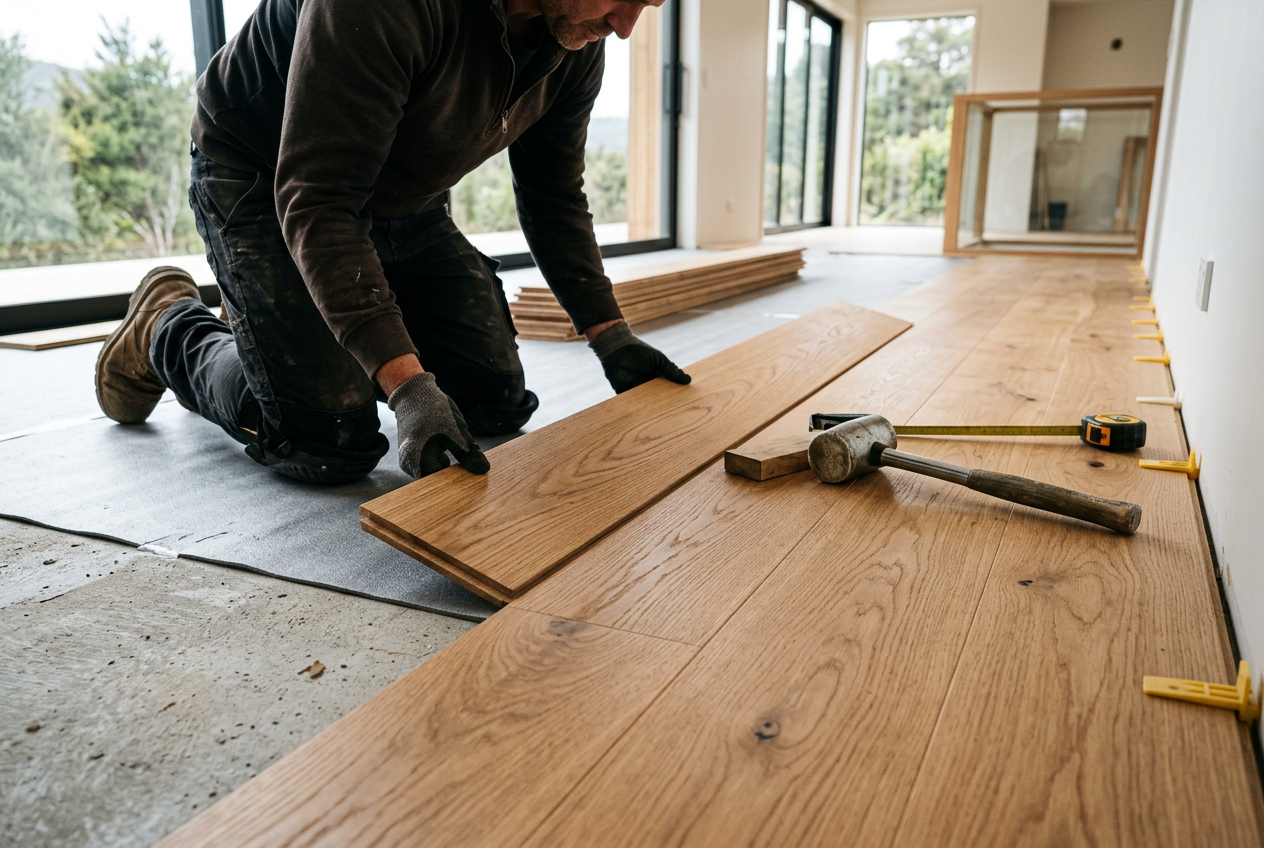
Cutting carpet tiles to fit a straight border edge is one of the most important skills for a neat, professional-looking floor. The good news is that with the right tools and a careful approach, most homeowners can achieve clean, accurate cuts without specialist equipment. The key is measuring twice, using a sharp blade, and always cutting from the back of the tile.
Tools You'll Need
Before you start, gather the following:
- Sharp utility knife or carpet knife – a fresh blade makes all the difference. Dull blades drag and fray the carpet fibres.
- Steel straight edge or metal ruler – at least 600 mm long. Never use a plastic ruler; a knife will ride up and over it.
- Cutting mat or scrap board – protect your subfloor and keep the tile flat while cutting.
- Tape measure and pencil or chalk – for marking cut lines on the back of the tile.
- Set square – useful for confirming 90° corners.
You'll find utility knives, steel rules, and cutting mats at Bunnings or Mitre 10.
How to Measure and Mark the Cut
Accurate measuring is everything. Follow these steps:
- Place the tile to be cut face-down on your cutting mat, directly over the last full tile in the row.
- Slide it to the wall so it butts up against the skirting board or border edge.
- Mark the overlap on the back of the tile — this is the section you'll remove. The remaining piece is what fills the gap.
- Use your set square to confirm the line is perfectly square to the tile edge before cutting.
Tip: Always allow a small gap (around 5–10 mm) next to walls if the manufacturer recommends it for expansion — check the product data sheet for your specific tile.
The Best Cutting Method: Score and Snap vs. Full Cut
There are two main approaches, depending on the tile's backing:
Score and Snap (for hard-backed tiles)
Some carpet tiles have a firm fibreglass or bitumen composite backing. For these:
- Score firmly along your marked line with the utility knife and steel straight edge — two or three firm passes.
- Bend the tile away from the score line and it will snap cleanly.
- Trim any remaining fibres with a single clean pass of the knife.
Full Cut (for soft-backed or cushion-backed tiles)
For tiles with a foam or felt backing:
- Place the tile face-down on the cutting mat.
- Hold the steel straight edge firmly along the marked line.
- Make one confident, firm cut through the full thickness in a single stroke if possible, or use two to three passes with steady pressure.
- Avoid sawing back and forth — this frays the pile.
Always cut from the back of the tile. Cutting from the face risks damaging the visible pile and leaving a ragged edge.
Getting a Clean Edge Along the Border
For the border edge that will be visible (e.g., where carpet tiles meet a hard floor, doorway threshold, or wall), a few extra steps help:
- Run your finger along the cut edge and trim any stray fibres with small scissors or a carpet knife.
- Use a carpet seam roller to press the edge down firmly once the tile is laid — this helps adhesive bond and keeps the edge flat.
- At doorways, consider fitting a carpet-to-hard-floor threshold strip (available at Mitre 10 or Bunnings) to protect the cut edge and give a tidy finish.
- If you're using double-sided carpet tape or pressure-sensitive adhesive, apply it right to the edge of border tiles so they don't lift over time.
Laying Out Your Border Cuts for a Balanced Look
Before cutting anything, plan your layout:
- Find the centre of the room and dry-lay tiles outward to the walls. Adjust the starting point so border tiles are equal on opposite sides and no border tile is less than half a tile wide — narrow slivers look untidy and lift easily.
- In NZ homes, rooms are rarely perfectly square. Use a chalk line snapped across the floor to establish a true straight reference line rather than relying on the wall.
- Check that your subfloor is clean, dry, and flat. BRANZ recommends subfloors be flat to within 3 mm over a 1.8 m straightedge for most resilient and carpet tile installations.
Safety Notes
- Always cut away from your body and keep fingers well clear of the blade path.
- Use a cut-resistant glove on the hand holding the straight edge.
- Dispose of used blades safely — wrap in tape and place in a rigid container before putting in the bin. See WorkSafe NZ for general safe tool-handling guidance.
When to Call a Professional
Cutting carpet tiles is generally a straightforward DIY task and does not involve any restricted or licensed work. However, consider calling a qualified flooring installer if:
- You have a large area with complex angles, curves, or insets (e.g., around pillars or curved walls).
- The subfloor needs levelling, grinding, or moisture remediation before laying — subfloor prep can significantly affect the final result.
- You're unsure about the correct adhesive system for your subfloor type (concrete, particleboard, etc.).
- The job is a commercial or rental property where a professional finish and warranty may be required.
You can find qualified local flooring installers on tradedirectory.co.nz to get the job done right.







