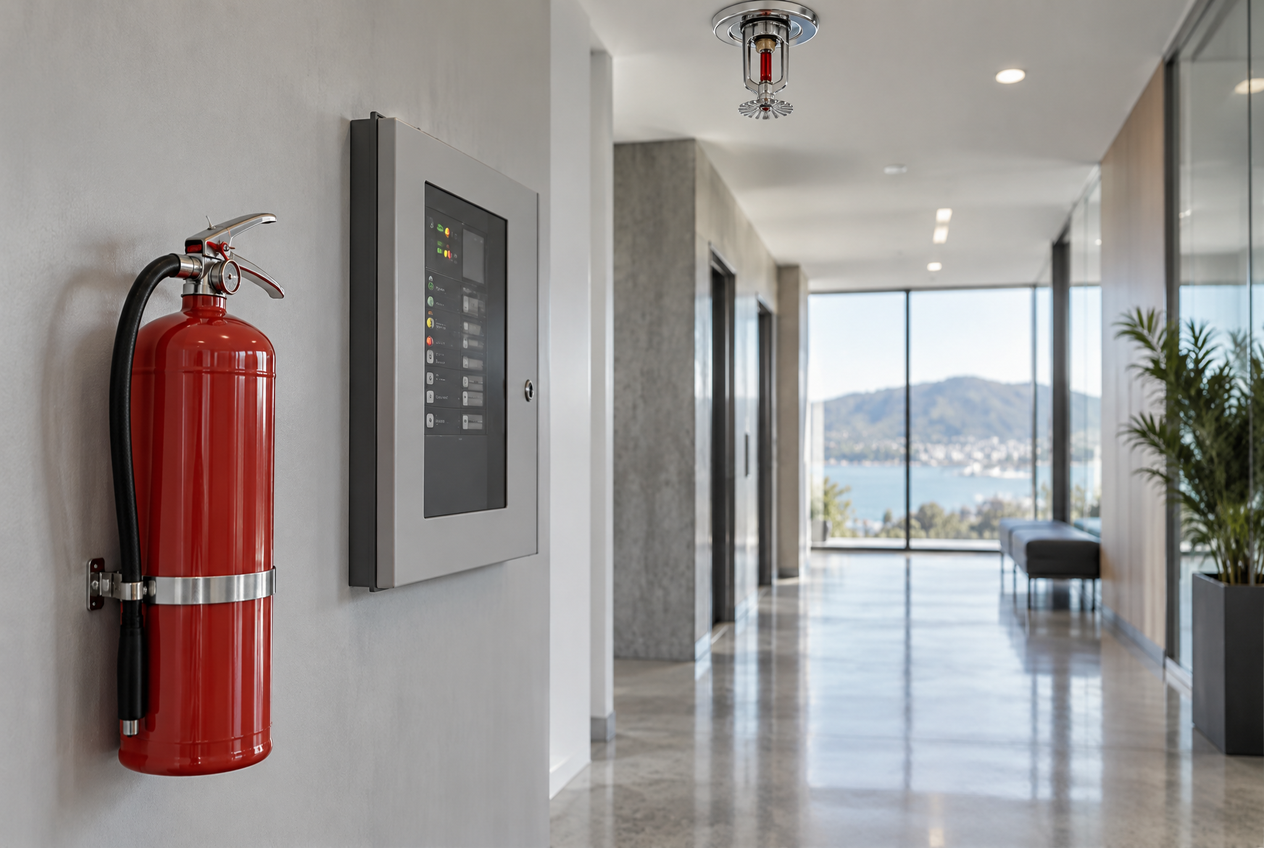
Fire extinguishers are only useful in an emergency if they actually work — and in New Zealand, regular servicing is both a legal requirement for many buildings and simply good practice for everyone. Whether you own a home, a rental property, or a commercial premises, understanding what's involved in annual servicing will help you stay safe and compliant.
Why Annual Servicing Is Required
Fire extinguishers contain pressurised agents (water, dry powder, CO₂, foam, or wet chemical) that can degrade, leak, or become blocked over time. A unit that looks fine on the outside may fail to discharge when you need it most. Annual servicing catches these problems before they matter.
In New Zealand, the relevant standard for portable fire extinguishers is NZS 4503, which covers hand-operated firefighting equipment including extinguishers. This standard sets out inspection, testing, and maintenance requirements. Always confirm the current edition and specific requirements with a licensed fire protection specialist or Standards NZ.
For commercial and public buildings, fire extinguishers that form part of a specified system under the Building Act 2004 must be maintained as part of the building's compliance schedule. The building owner is responsible for supplying an annual Building Warrant of Fitness (BWOF) to their local council, and the servicing of specified systems must be carried out and certified by a suitably qualified person — typically an Independent Qualified Person (IQP) registered with the local council. You can find out more about compliance obligations at MBIE Building Performance.
What Happens During an Annual Service
A qualified fire protection technician will typically carry out the following during an annual service visit:
- Visual inspection — checking the extinguisher body for corrosion, dents, damage, or illegible labels
- Pressure check — verifying the gauge reads in the correct (green) zone and the unit is properly pressurised
- Safety pin and tamper seal — confirming the pin is in place and the seal is intact and unbroken
- Discharge hose and nozzle — inspecting for blockages, cracks, or deterioration
- Weight check — for CO₂ extinguishers especially, weighing the cylinder to confirm the charge hasn't leaked
- Operating mechanism — checking the handle, trigger, and valve operate correctly
- Mounting bracket — ensuring the extinguisher is securely mounted in an accessible, visible location
- Service tag — attaching or updating the tag with the date, technician details, and next service due date
Depending on the extinguisher type and age, the technician may also carry out a discharge test (where the unit is fully discharged, inspected internally, refilled, and re-pressurised). This is typically required at longer intervals — check with your technician for the schedule that applies to your specific units.
Extinguisher Types and Their Differences
| Type | Common Use | Notes |
|---|---|---|
| Water/Water Mist | Paper, wood, textiles | Not for electrical or fat fires |
| Dry Powder (ABE) | Multi-purpose | Messy; can obscure vision |
| CO₂ | Electrical equipment | No residue; check weight annually |
| Foam (AFFF) | Flammable liquids | Check for environmental restrictions |
| Wet Chemical | Commercial cooking/fat fires | Required in commercial kitchens |
Make sure you have the right type of extinguisher for your risk. A fire protection specialist can advise on the correct type and placement for your property.
Rules for Homes and Rental Properties
For private homes, there is no legal requirement to have a fire extinguisher, though it is strongly recommended. If you do have one, annual servicing is best practice.
For rental properties, the Residential Tenancies Act requires landlords to have working smoke alarms — smoke alarms are required — check the current specifications, including alarm type and placement requirements, at Tenancy Services (tenancy.govt.nz). Fire extinguishers are not currently mandated in standard residential rentals, but check the current rules at Tenancy Services and with Fire and Emergency New Zealand (FENZ), as requirements can change.
For commercial buildings, extinguishers are typically a specified system or part of the fire safety design, and annual servicing by a qualified person is a legal requirement under the Building Act.
Placement and Safety Tips
- Mount extinguishers in visible, accessible locations — near exits and potential hazard areas
- Never block or obscure an extinguisher with furniture or stored items
- Train household or staff members in basic use — remember PASS: Pull, Aim, Squeeze, Sweep
- Never attempt to fight a large or spreading fire; evacuate and call 111
- Check your extinguisher yourself between annual services — look at the gauge and check the seal is intact
FENZ has excellent free resources on home fire safety and extinguisher use.
When to Call a Professional
Always have your fire extinguishers serviced by a qualified fire protection specialist. This is not a DIY job — opening a pressurised cylinder without the right training and equipment is dangerous, and self-servicing will not meet NZ Standard requirements or satisfy your compliance obligations.
For commercial buildings, ensure your technician is an IQP registered with your local council if the extinguishers are part of a specified system. Ask to see their credentials and always keep copies of service records and form 12A certificates.
You can find qualified local fire protection specialists on tradedirectory.co.nz.
Sources & Further Reading
- Fire and Emergency New Zealand (FENZ) — fire safety guidance and home fire safety resources
- MBIE Building Performance — Building Warrant of Fitness, compliance schedules, and specified systems
- Standards NZ — NZS 4503 and other relevant NZ fire standards
- Tenancy Services — smoke alarm and rental property requirements
- WorkSafe NZ — workplace fire safety obligations
- BRANZ — building research and fire safety guidance