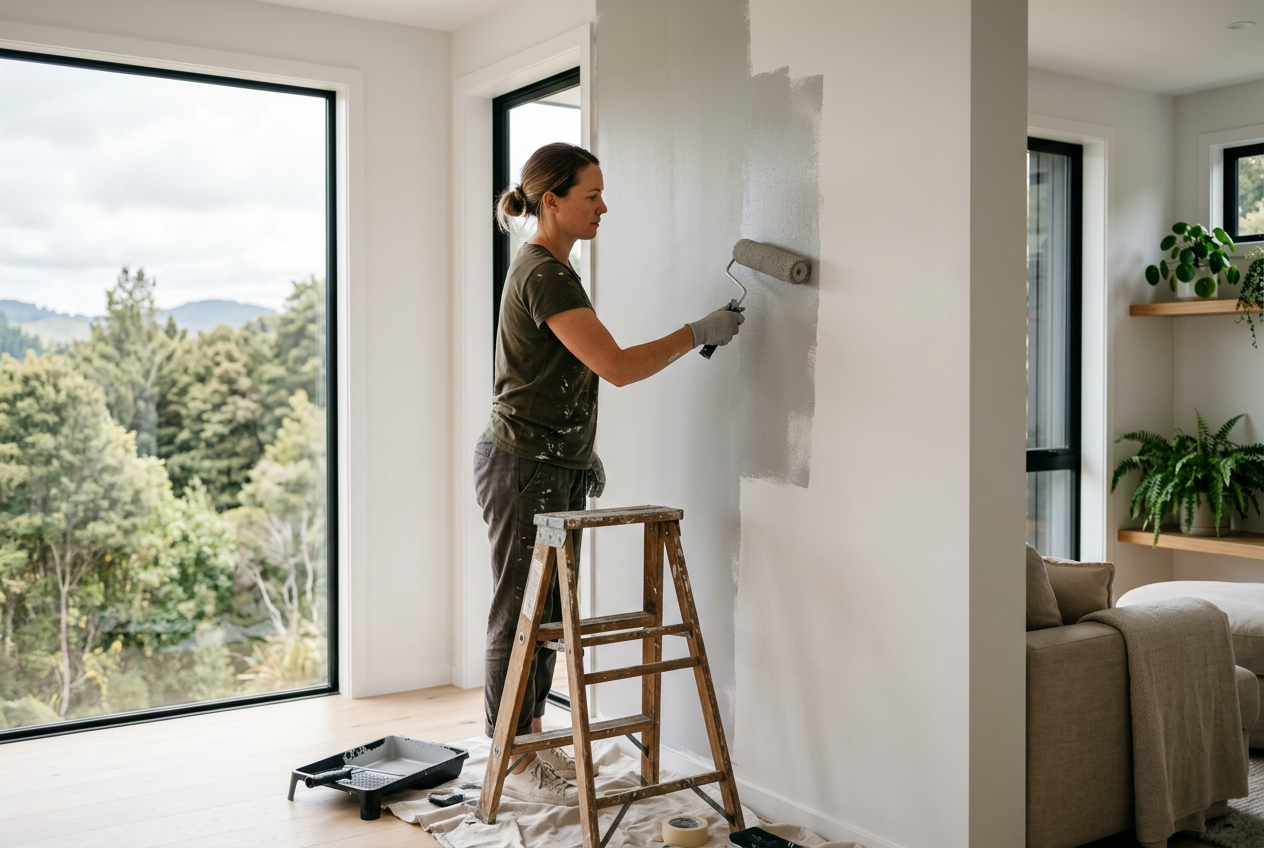
A standard interior paint job in NZ typically includes surface preparation, priming where needed, and two coats of quality paint on walls and ceilings. Most professional painters will also paint trims, doors, and architraves as part of a full interior repaint, though the exact scope depends on what you agree with your tradesperson upfront.
What Surface Preparation Is Included?
Good preparation is the foundation of any lasting paint job. A professional painter should carry out the following before a single drop of paint goes on:
- Filling holes and cracks — nail holes, minor cracks, and dings in plasterboard or plaster walls are filled with a suitable filler and sanded smooth.
- Sanding — rough or previously painted surfaces are sanded to help the new paint bond properly.
- Washing down — walls and ceilings are wiped down to remove dust, grease, and grime, especially in kitchens and bathrooms.
- Masking and protection — floors, carpet edges, light switches, power points, and fixtures are masked or covered with drop sheets to protect them from paint splatter.
If your walls have significant damage, mould, or water staining, additional prep work may be required and could be quoted separately. Always ask your painter what prep is included in their quote.
Priming — Is It Always Necessary?
Primer is applied when surfaces are new, heavily patched, stained, or when you're making a dramatic colour change. On a straightforward repaint where the existing paint is in good condition, a primer coat may not always be needed — but a good painter will assess this and advise you.
For new GIB plasterboard or bare timber, priming is essential and should always be included. Using a quality primer from brands like Resene, Dulux, or Wattyl helps the topcoats go on evenly and last longer.
How Many Coats of Paint Are Standard?
The industry standard in NZ is two topcoats of paint on walls and ceilings. This gives even coverage, good colour depth, and a durable finish. In some cases — particularly with very dark or very light colours, or on new plaster — a third coat may be recommended.
Here's a quick guide to typical coat requirements:
| Surface | Primer | Topcoats |
|---|---|---|
| Repaint (good condition) | Usually not needed | 2 |
| New GIB / plasterboard | Yes | 2 |
| Bare timber trims | Yes | 2 |
| Heavy colour change | Possibly | 2–3 |
| Mould-affected areas | Sealer/primer | 2 |
Walls, Ceilings, and Trims — What's Covered?
A full interior paint job generally includes:
- Ceilings — usually painted in a flat white or low-sheen ceiling paint.
- Walls — painted in your chosen colour and sheen level (flat, low-sheen, semi-gloss).
- Trims — skirting boards, architraves, window sills, and door frames, typically in a semi-gloss or gloss finish for durability.
- Doors — interior doors are often included, though some painters quote these separately.
If you want feature walls, two-tone rooms, or specialty finishes, make sure these are clearly specified in your quote.
Paint Quality and Finish Options
The type of paint used matters. Professional painters in NZ commonly use trade-grade products from Resene, Dulux, or Wattyl. These offer better coverage, washability, and longevity than budget retail options.
Sheen levels affect both appearance and practicality:
- Flat/matt — hides imperfections but harder to wipe clean; good for low-traffic areas.
- Low-sheen — the most popular choice for NZ living areas and bedrooms.
- Semi-gloss/gloss — easy to clean; ideal for kitchens, bathrooms, and trims.
In wet areas like bathrooms, look for paints with mould-resistant properties — important given NZ's often damp climate and the requirements of the Healthy Homes standards.
What Is Usually NOT Included?
Unless specifically quoted, the following are often excluded from a standard interior paint job:
- Moving heavy furniture (you'll usually need to clear the room)
- Repairing significant structural cracks or water damage
- Painting ceilings in very high stud or stairwells (may attract a height surcharge)
- Exterior painting
- Wallpaper removal
- Specialty finishes such as limewash, texture coatings, or faux effects
Always get a detailed written quote so you know exactly what's included.
When to Call a Professional
While homeowners can legally paint their own interiors, a professional painter will deliver a far superior, longer-lasting result — especially on large areas, high ceilings, or where significant prep work is needed. A qualified painter understands surface compatibility, correct product selection, and application techniques that make a real difference to the final finish.
Note that any work involving electrical fittings (such as removing light fittings to paint behind them) must be carried out by a registered electrician under the Electrical Workers Registration Board rules — this is restricted work and cannot be done by a painter or homeowner.
You can find qualified, local painters on tradedirectory.co.nz to get competitive quotes for your interior paint job.

 BCITO Qualified

 Master Painters NZ
 Site Safe