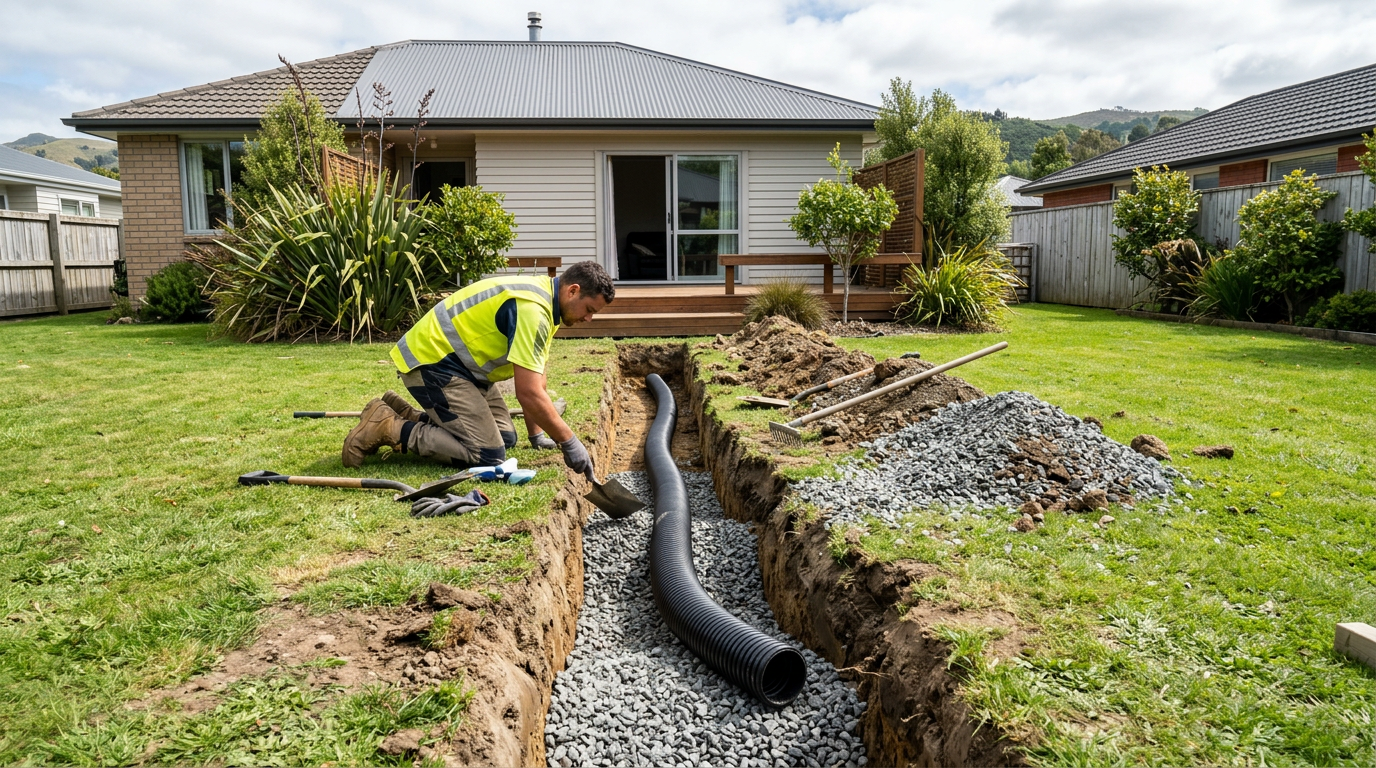
Hiring an excavator operator for earthworks, drainage, or site preparation is a significant investment — and if something goes wrong, the right insurance makes all the difference. In New Zealand, professional excavators should carry several types of cover to protect both their business and you as the homeowner or client. Here's what to look for before you sign anything.
Why Insurance Matters for Excavation Work
Excavation is one of the higher-risk trades on any building site. Heavy machinery, underground services, unstable ground, and proximity to structures all create real potential for damage or injury. If an uninsured excavator accidentally strikes a buried water main, damages your foundation, or injures a bystander, you could find yourself facing costs with no clear path to recovery. Checking insurance upfront is simply good practice.
WorkSafe NZ sets out health and safety obligations for all work sites, and excavation is specifically identified as high-risk work requiring proper planning and controls.
The Key Types of Insurance a Professional Excavator Should Hold
1. Public Liability Insurance
Public liability is the most important cover to ask about. It protects against claims for property damage or personal injury caused to third parties — that's you, your neighbours, or anyone else on or near the site. For excavation work, a minimum of $1 million cover is common, but many reputable operators carry $2 million or more given the scale of damage heavy machinery can cause. Always ask to see the certificate of currency before work begins.
2. Plant and Equipment Insurance
Excavators, diggers, and attachments are expensive pieces of kit. Plant and equipment insurance (sometimes called mobile plant insurance) covers the contractor's machinery against damage, theft, or breakdown. While this primarily protects the contractor's assets, it matters to you because an uninsured machine breakdown can stall your project and leave you in a dispute over delays.
3. Contractors' All Risks (CAR) Insurance
Contractors' All Risks insurance is a broader policy that covers physical loss or damage to the works themselves during construction. On larger projects — such as a new home build or significant earthworks — this policy covers damage to the partially completed work. Sometimes the main contractor holds this policy and subcontractors are included; on smaller jobs, the excavator may hold their own. Clarify who holds CAR cover before work starts.
4. Professional Indemnity Insurance
If the excavator also provides design advice, site assessments, or engineering-related recommendations (for example, advising on cut depths or retaining wall placement), professional indemnity insurance covers claims arising from errors in that professional advice. Not all excavators offer advisory services, but those who do should carry this cover.
5. Employer's Liability / ACC Top-Up
In New Zealand, ACC covers workplace injuries, but it doesn't cover everything. Some contractors carry employer's liability or ACC top-up policies to cover gaps, particularly for lost income or claims that fall outside ACC's scope. This is more relevant to the contractor's own staff than to you directly, but it signals a professional operation.
What to Ask Before Hiring
Use this checklist when vetting an excavation contractor:
| Insurance Type | Minimum to Look For | Ask For |
|---|---|---|
| Public Liability | $1–2 million | Certificate of currency |
| Plant & Equipment | Covers all machinery on site | Policy summary |
| Contractors' All Risks | Relevant on larger projects | Confirmation of cover |
| Professional Indemnity | If advice is given | Certificate of currency |
- Ask for certificates of currency — not just a verbal assurance. A certificate shows the policy is current and active.
- Check the policy expiry date and make sure it covers the full duration of your project.
- Confirm the insured name matches the business or individual you're contracting with.
- Ask whether subcontractors they use are also covered, or whether they hold their own policies.
Underground Services and Excavation Risk
One of the most common and costly excavation incidents in NZ involves striking buried services — gas lines, water mains, fibre, or power cables. Contractors should always contact Dial Before You Dig (now known as Beforeudig in NZ) to locate services before breaking ground. Damage to underground infrastructure can be extremely expensive, and public liability insurance is your safety net if this happens. MBIE Building Performance provides guidance on site safety obligations under the NZ Building Code.
Building Consent and Excavation
Some excavation work requires a building consent — for example, earthworks that affect drainage, retaining walls over certain heights, or work near boundaries. Schedule 1 of the Building Act lists exemptions, but these can be complex. Always check with your local council before starting significant earthworks. A professional excavator should be familiar with these requirements and able to advise you, though the consent obligation ultimately rests with the property owner.
BRANZ is a useful resource for understanding how earthworks interact with building performance and site stability.
When to Call a Professional
Excavation involving machinery is not DIY territory for most homeowners. Beyond the physical risks, there are legal obligations around health and safety, underground services, and resource consents. Always hire a qualified, insured excavation contractor for any significant earthworks. You can find local excavation professionals on tradedirectory.co.nz — and don't hesitate to ask them directly about their insurance before you commit.
If you're unsure whether a contractor's cover is adequate for your specific project, consider speaking with an insurance broker who works with the construction sector.


 Licensed Building Practitioner (LBP)

